
Optogenetic Therapy Restores Partial Vision in 10 Blind Patients
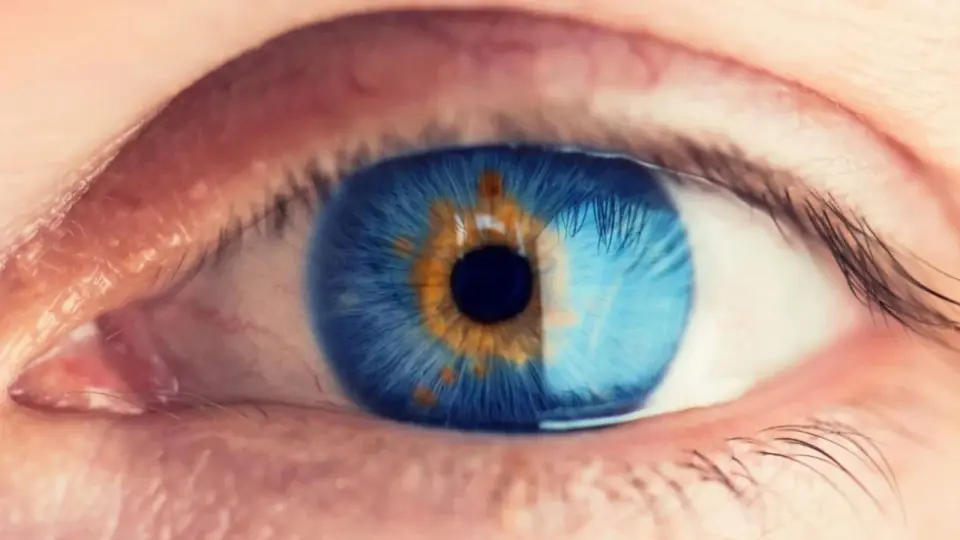
A phase 1 trial published in The New England Journal of Medicine shows that optogenetic therapy can restore limited visual function in patients with advanced retinitis pigmentosa. The treatment combines a gene injection to make surviving retinal cells light-sensitive with special goggles that project amber light patterns. While results are not a cure for blindness, some participants regained the ability to detect objects and navigate simple tasks.
Key points
- The PIONEER study involved 10 adults with profound vision loss due to retinitis pigmentosa, a genetic disorder affecting over 1.5 million people worldwide.
- Participants received a single injection of a modified virus delivering the ChrimsonR protein to retinal ganglion cells, making them responsive to light.
- Specialized goggles capture environmental brightness and project amber light pulses onto the retina to stimulate the modified cells.
- Seven participants showed increased light sensitivity, with six achieving clinically meaningful gains, though detailed vision like reading or face recognition remains impossible.
- Four participants demonstrated consistent improvements in detecting and locating objects, such as notebooks and staple boxes, during behavioral tests.
- Safety data indicated the treatment was generally well-tolerated, with most adverse events being mild or moderate, though one severe but transient retinal artery blockage occurred.
Background
This development builds on a 2021 proof-of-concept study involving a single patient in France, which demonstrated the potential of optogenetic therapy. The current trial expands on that initial success by evaluating a larger cohort and longer follow-up periods. Background research from our archive highlights the broader interest in experimental vision restoration techniques, including other gene therapies and regulatory debates around unapproved treatments. The therapy targets retinitis pigmentosa, a condition with over 100 genetic variants, making a mutation-independent approach like optogenetics particularly significant for diverse patient populations.
How outlets are covering it
ScienceAlert emphasizes the partial nature of the vision restored, noting that while patients can detect objects, they cannot yet read or recognize faces. SWI swissinfo.ch frames the results as a 'milestone' and highlights the potential for future therapies to become more precise, with co-author Stefan Futterknecht expressing optimism about the foundation laid for future treatments. News-Medical provides a detailed technical breakdown, noting that the clinically meaningful threshold for light sensitivity was not prespecified in the trial protocol, which may affect the interpretation of the results. Semmelweis University focuses on the award-winning recognition of the researchers and the long-term collaboration between IOB and Hungarian institutions, highlighting the global interest in the therapy. All sources agree that the treatment is not a cure but a significant step toward restoring some visual function in a currently untreatable condition.
Why it matters
This trial represents a significant step in treating retinitis pigmentosa, a condition with no approved treatments for most genetic variants. The ability to restore even limited visual function could improve the quality of life for millions of people worldwide. The success of this approach may pave the way for broader clinical use and inspire further research into other forms of vision loss. However, the lack of a control group and the small sample size mean that larger, randomized trials are needed to confirm efficacy and safety.
What to watch
Researchers are working to improve the sensitivity of the optogenetic sensor and develop therapies that allow patients to see without goggles. A Swiss-American spin-off company, RhyGaze, plans to launch a clinical trial next year to address the limitation of not being able to recognize faces. If results are encouraging, the therapy could enter widespread clinical use within a few years. At least 10 other companies are also working toward broader clinical use, indicating significant industry interest in the field.
- Partial Vision Restored in Some Blind Patients With New Experimental Treatment ScienceAlert
- NEWSLETTER: Blindness treatment based on Nobel-winning research shows promise Reuters
- Swiss gene therapy for blindness makes further encouraging progress SWI swissinfo.ch
- Gene therapy and special goggles help some blind adults detect objects again News-Medical
- Dr. Botond Roska, a collaborator of Semmelweis University, receives vision research’s top award Semmelweis University
Want the full story? Read the original reporting
Read on ScienceAlert