Tag

Optogenetics

All articles tagged with #optogenetics

Brain circuit links social memory to fear, triggering aversion in mice
science-and-health22 hours ago

Brain circuit links social memory to fear, triggering aversion in mice

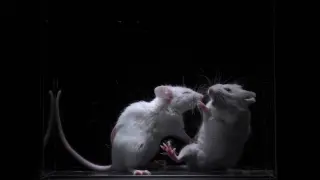
University of Tokyo researchers identify a hippocampus–amygdala circuit that binds the memory of a familiar mouse to fear, causing avoidance after aggressive encounters; using optogenetics they could strengthen or erase this aversion, with the nucleus accumbens helping translate memory and fear into avoidance. While demonstrated in mice, the findings offer clues about how social memory and negative emotions interact, with potential relevance for anxiety and depression in humans.

VIP interneuron activation restores motor function in Huntington’s disease model
science10 days ago

VIP interneuron activation restores motor function in Huntington’s disease model

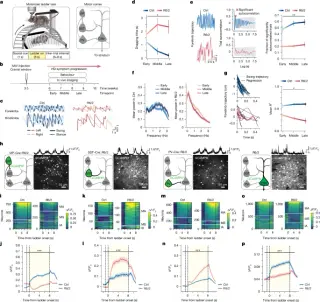
HD mice exhibit reduced activity in VIP inhibitory neurons and corticostriatal neurons in the motor cortex, correlating with motor deficits. Optogenetic activation of VIP interneurons normalizes their activity and rescues downstream corticostriatal neuron function, producing lasting improvements in movement that persist for days, suggesting cortical inhibition modulation as a potential therapeutic strategy for HD.

Inhibitory Overload in the Prefrontal Cortex Linked to Aging Memory Loss
neuroscience20 days ago

Inhibitory Overload in the Prefrontal Cortex Linked to Aging Memory Loss

A Neurobiology of Disease study finds that aging-related memory decline may be driven by an excess of inhibitory synapses in the prefrontal cortex. In aged mice, researchers identified two groups—cognitively susceptible and resilient—with the susceptible group showing higher levels of inhibitory markers (Gephyrin, VGAT) and denser inhibitory synapses in the prefrontal cortex. Using optogenetics, activating inhibitory neurons in young mice reproduced memory and exploration deficits, while similar stimulation in aged impaired mice had no additional effect, suggesting a chronic, structure‑level inhibitory load contributes to cognitive decline. The study warns that treatments increasing inhibition could worsen age-related cognitive deficits and notes limitations, including all-male subjects and the artificial nature of the manipulation.

Histamine Brain Rhythms Gate Real-Time Memory Access
neuroscience29 days ago

Histamine Brain Rhythms Gate Real-Time Memory Access

A Nagoya City University study shows slow, spontaneous fluctuations in histamine neurons bias moment-to-moment memory accessibility in mice: higher histamine activity before a cue improves memory-guided responses, while lower activity reduces them. Using real-time cues and optogenetics, researchers confirm a priming-state mechanism that prepares memory circuits, with the basolateral amygdala acting downstream, suggesting memory lapses can arise from brain state rather than memory decay.

Dragonfly Vision Reveals Deeper Red Light, Paving Optogenetics Advances
science2 months ago

Dragonfly Vision Reveals Deeper Red Light, Paving Optogenetics Advances

New research shows dragonflies see red light at around 720 nm—beyond human vision—via a red opsin, a trait evolved in parallel with humans. This deeper red sensitivity could let optogenetic tools reach deeper tissues noninvasively, potentially aiding neurological research and therapies; male dragonflies may use red cues to tell sexes in flight.

Scientists Identify Brain Circuit for Female Sexual Rejection
neuroscience1 year ago

Scientists Identify Brain Circuit for Female Sexual Rejection

Researchers have discovered that progesterone-responsive neurons in the anterior ventromedial hypothalamus (VMH) of female mice toggle between sexual receptivity and rejection based on fertility. These neurons are active during rejection behaviors outside the fertile phase and receive inhibitory signals during fertility, reducing their activity and allowing mating. Using optogenetics, the study confirmed these neurons act as a neural switch for rejection, offering insights into human sexual behavior and related disorders.

Decoding the Brain Circuits Behind Psychedelics' Anti-Anxiety Effects
neuroscience1 year ago

Decoding the Brain Circuits Behind Psychedelics' Anti-Anxiety Effects

Researchers at UC Davis have identified distinct neural circuits responsible for the anti-anxiety effects of psychedelics, separate from those causing hallucinations. Using the psychedelic DOI in mice, they found that anxiety reduction persists after hallucinatory effects fade. By mapping and reactivating specific neurons in the prefrontal cortex, they demonstrated potential for developing psychedelics-based treatments that alleviate anxiety without inducing hallucinations. This study highlights the complexity of psychedelic effects, involving both direct and downstream neural networks.

Astrocytes and Spaced Learning: Key to Memory Retention
neuroscience1 year ago

Astrocytes and Spaced Learning: Key to Memory Retention

Researchers at Tohoku University have discovered that astrocytes, cells surrounding neurons, play a crucial role in determining which memories are retained or forgotten. By using optogenetics to manipulate astrocytes in mice, they found that acidifying these cells after a traumatic event leads to memory loss, while alkalinizing them preserves memories long-term. This finding challenges the traditional view that short- and long-term memories form sequentially, suggesting they may develop in parallel. The study could inform new treatments for PTSD by targeting astrocyte functions.

"Serotonin's Role in Shaping Behavior and Motivation"
neuroscience2 years ago

"Serotonin's Role in Shaping Behavior and Motivation"

Researchers at OIST and Keio University have discovered that stimulating the brain's dorsal raphe nucleus (DRN), the main source of serotonin, activates areas responsible for behavior and motivation in awake mice. Using opto-functional MRI, they observed that DRN serotonin activation stimulates the cerebral cortex and basal ganglia, providing insights into serotonin's role in mood regulation and cognitive functions. This study could advance understanding of mood disorders and behavioral adaptations.

"Serotonin's Role in Shaping Behavior and Motivation"
neuroscience2 years ago

"Serotonin's Role in Shaping Behavior and Motivation"

A study using optogenetics and high-field MRI on awake mice reveals that activating serotonin neurons in the dorsal raphe nucleus stimulates the cerebral cortex and basal ganglia, impacting behavior and motivation. This research enhances understanding of serotonin's role in brain-wide activation and its implications for mood therapy and behavioral adaptation.

"Light-Controlled Muscles Offer Superior Fatigue Resistance"
neuroscience2 years ago

"Light-Controlled Muscles Offer Superior Fatigue Resistance"

MIT researchers have developed an optogenetic technique to control muscles using light, offering more precise control and significantly reducing fatigue in mice compared to traditional electrical stimulation. This approach, while not yet feasible in humans, could revolutionize prosthetics and aid individuals with impaired limb function. The team is working on safely delivering light-sensitive proteins to human tissue to make this method clinically viable.