
Study Links Sugar Intake to Worsened Gut Microbiome Damage During Antibiotic Treatment
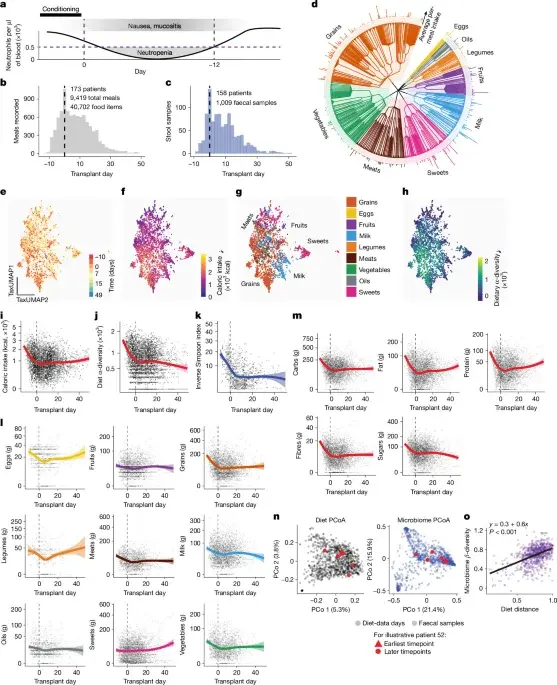
A new study in Nature finds that consuming sugar-rich foods while taking antibiotics worsens gut microbiome disruption. Researchers tracked 9,419 meals from 173 patients undergoing hematopoietic cell transplantation, finding that sugar intake during antibiotic exposure led to lower microbial diversity and increased growth of the pathobiont Enterococcus. Mouse experiments confirmed that sucrose supplementation prolonged this bacterial expansion. The findings suggest that avoiding simple sugars during antibiotic treatment could help mitigate microbiota damage and improve recovery.
Key points
- Researchers analyzed 9,419 meals and 1,009 stool samples from 173 patients undergoing allogeneic hematopoietic cell transplantation (allo-HCT).
- Bayesian inference revealed that intake of sweets and sugars during antibiotic exposure predicted exacerbated microbial dysbiosis, specifically lowered alpha-diversity and greater expansion of Enterococcus.
- Mouse experiments confirmed that sucrose supplementation increased and prolonged antibiotic-induced Enterococcus expansion, even when fiber was withheld.
- The study suggests that short-term sugar avoidance during antibiotic treatment may be a viable strategy to mitigate microbiota disruption in clinical settings.
- The findings highlight the need for further studies in independent cohorts to generalize these results and evaluate microbiota-sparing interventions.
Background
Previous research has established that diet shapes gut microbiota composition, but most studies focused on healthy individuals or chronic conditions rather than acute perturbations like antibiotic treatment. Earlier coverage noted that shorter antibiotic courses are often as effective as longer ones, and that cutting sugar and fried foods may shield against fatty liver disease. This new study extends that understanding by examining how specific food groups, particularly sugar, interact with antibiotics in severely perturbed microbiomes, such as those of patients undergoing intensive medical treatments like hematopoietic cell transplantation.
Why it matters
This research provides concrete evidence that dietary choices during antibiotic treatment can significantly impact gut health. By identifying sugar as a factor that exacerbates microbiome disruption, the study offers a simple, actionable intervention for patients and clinicians. Understanding how to mitigate microbiota damage could lead to better recovery outcomes and reduced risks of adverse clinical events associated with dysbiosis, such as mortality in transplant patients.
What to watch
The researchers plan to conduct further studies in independent cohorts to generalize these findings and evaluate microbiota-sparing interventions. They also aim to explore the mechanistic insights into diet-inducible microbiome modulation, potentially leading to new therapeutic strategies that target the microbiome during acute illness and intensive medical treatment.
Want the full story? Read the original reporting
Read on nature.com