
MEK Inhibitors May Prevent T Cell Burnout in Cancer Therapy
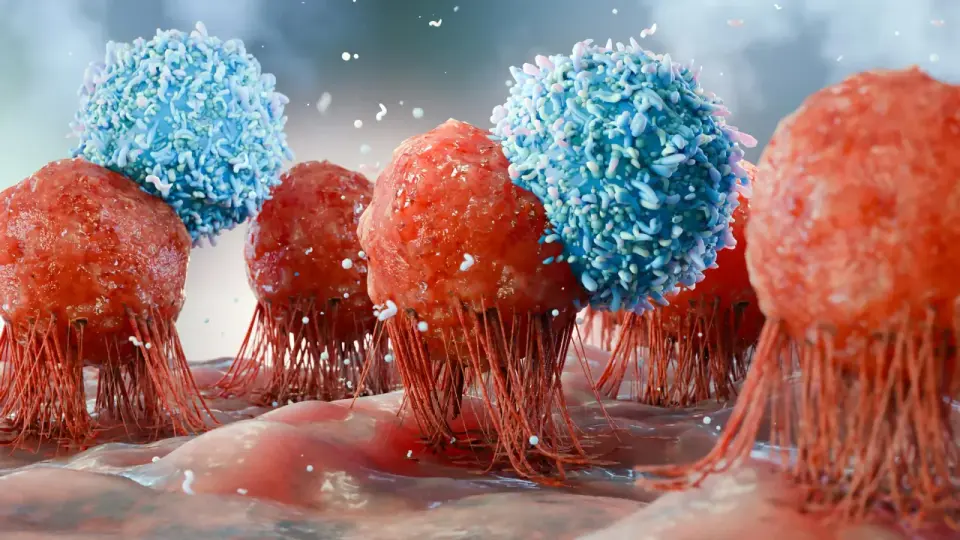
Researchers at Memorial Sloan Kettering Cancer Center have identified the signaling molecule MEK as a key driver of T cell exhaustion, a state where immune cells burn out before eliminating tumors. Published in Immunity, the study suggests that blocking MEK can reduce the metabolic strain on T cells, allowing them to persist longer and potentially enhancing the effectiveness of various immunotherapies. While MEK activity helps T cells attack cancer aggressively, excessive activity leads to rapid energy depletion. By inhibiting MEK, T cells can conserve energy and maintain a sustained response, particularly for patients with large tumors or low immune cell counts. The findings suggest that FDA-approved MEK inhibitors could be repurposed to improve outcomes in checkpoint inhibitor therapy, CAR T cell therapy, and other immune-based treatments, though the approach requires careful patient selection to balance intensity and longevity.
Key points
- T cell exhaustion occurs when immune cells become overburdened by the metabolic demand of producing cancer-killing proteins, leading to a loss of function.
- The signaling molecule MEK regulates this metabolic demand; excessive MEK activity drives T cells toward terminal exhaustion.
- Blocking MEK reduces the energy required for protein production, allowing T cells to conserve resources and remain active for longer periods.
- The strategy is not universally applicable; patients with small tumors and high immune cell counts may benefit more from intense, short-term immune responses rather than prolonged, lower-intensity ones.
- MEK inhibitors could enhance multiple immunotherapy types, including checkpoint inhibitors, CAR T cell therapy, and tumor-infiltrating lymphocyte therapy.
Background
Recent studies have highlighted the complex metabolic and mechanical factors influencing T cell function in cancer. For instance, research from OHSU and Cambridge in September 2026 showed that tumors use antioxidants to neutralize reactive oxygen species, dampening T cell activity, while McGill researchers in August 2026 found that T cells sense tissue stiffness to shape immune memory. Additionally, the evolving landscape of CAR T cell therapy, which has seen FDA approvals for blood cancers but faces challenges in solid tumors, underscores the need for strategies that improve T cell persistence. The current findings on MEK inhibition add to this body of knowledge by addressing the metabolic 'burnout' of T cells, a critical barrier in extending the efficacy of immunotherapy.
How outlets are covering it
The primary source, ScienceDaily, focuses on the metabolic mechanism of T cell exhaustion, emphasizing the role of MEK in driving energy depletion and the potential of MEK inhibitors to extend T cell survival. It highlights the trade-off between intense, short-term immune responses and sustained, lower-intensity ones, suggesting that MEK inhibition is most beneficial for patients with large tumors or low immune cell counts. The secondary source, Bioengineer.org, covers a different aspect of cancer immunology, focusing on how cholesterol metabolism in macrophages affects tumor survival and immunotherapy response in head and neck cancer. While both sources address the metabolic and immune landscape of cancer, they focus on different cell types (T cells vs. macrophages) and mechanisms (MEK signaling vs. LDL metabolism). The primary source provides a direct pathway for improving T cell persistence, while the secondary source highlights how tumor-associated macrophages can create an immunologically cold microenvironment, potentially complicating immunotherapy outcomes. Together, they illustrate the multifaceted nature of immune responses in cancer and the need for tailored therapeutic approaches.
Why it matters
Understanding and addressing T cell exhaustion is crucial for improving the outcomes of cancer immunotherapy. By identifying MEK as a key driver of exhaustion and demonstrating that its inhibition can extend T cell survival, this research offers a potential new strategy to enhance the effectiveness of existing immunotherapies. This could lead to better treatment options for patients who do not respond well to current therapies, particularly those with large tumors or low immune cell counts. The use of FDA-approved MEK inhibitors also suggests that this approach could be tested in humans relatively quickly, potentially accelerating the development of more effective cancer treatments.
What to watch
The next steps involve clinical trials to test the efficacy of MEK inhibitors in combination with various immunotherapies, including checkpoint inhibitors, CAR T cell therapy, and tumor-infiltrating lymphocyte therapy. Researchers will need to determine the optimal patient profiles for MEK inhibition, balancing the intensity and longevity of the immune response. Additionally, further studies will be needed to understand the long-term effects of MEK inhibition on T cell function and whether it can be safely integrated into existing treatment protocols. The findings also suggest the need for more personalized approaches to immunotherapy, taking into account the specific characteristics of each patient's tumor and immune system.
Want the full story? Read the original reporting
Read on ScienceDaily