Tag

T Cell Exhaustion

All articles tagged with #t cell exhaustion

Mapping early β‑cell changes and immune interactions in type 1 diabetes progression
science1 month ago

Mapping early β‑cell changes and immune interactions in type 1 diabetes progression

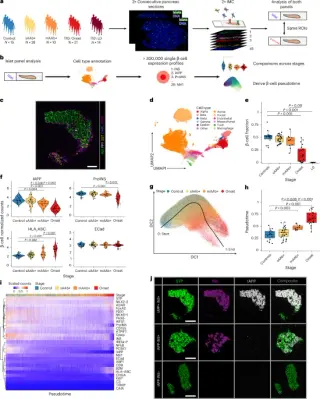
A large-scale imaging mass cytometry study of 88 human pancreata across the type 1 diabetes spectrum profiles 16 million cells to map β-cell states and the islet–immune interface. It finds β-cells show IAPP loss in preclinical stages and increased MHC-I at onset, with no universal rise in selected ER-stress markers. Insulitic islets display IFN signatures. Early disease features include pro‑inflammatory M1/M2‑like macrophages and exhausted‑like PD1+ TIM3+ T cells whose interactions occur at the islet edge and within islets, suggesting antigen presentation and regulatory dynamics. Age-related motifs reveal more TLS-like B/T cell structures and CD11c+ macrophages in younger donors. Pseudotime analysis suggests a single trajectory from healthy to insulitic β-cells, driven by macrophage–DC–exhausted T cell axis as disease progresses. The work provides a rich resource for understanding early T1D progression and identifying potential therapeutic targets and biomarkers.

Atlas-guided transcription-factor map unlocks CD8+ T cell programming for immunotherapy
science6 months ago

Atlas-guided transcription-factor map unlocks CD8+ T cell programming for immunotherapy

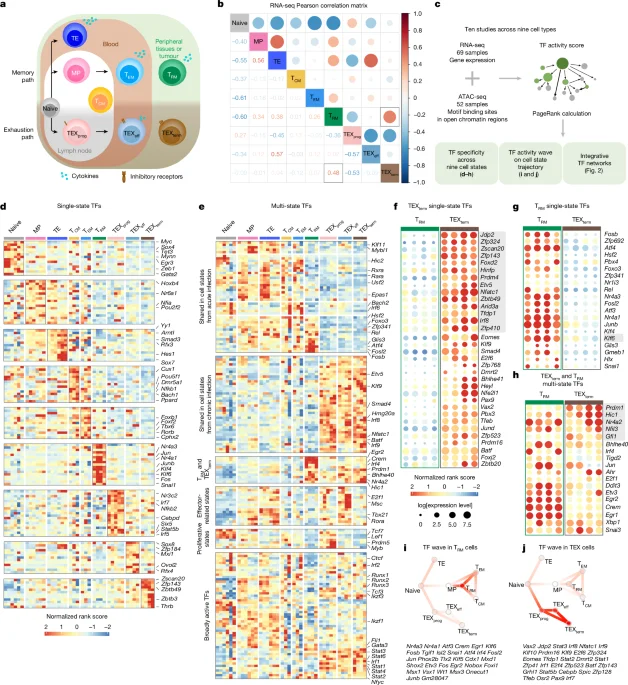
A multi-omics atlas of nine CD8+ T cell states (RNA-seq and ATAC-seq) analyzed with the Taiji network approach reveals state-selective transcription factors that drive protective tissue-resident memory (TRM) versus terminally exhausted (TEXterm) states. The study identifies new TEXterm TFs (e.g., ZSCAN20, JDP2) and shared regulators (HIC1, GFI1), maps TF–TF networks and “waves” coordinating state transitions, and uses in vivo Perturb-seq CRISPR screens to show TEXterm TFs govern exhaustion while preserving TRM formation. Deleting TEXterm-selective TFs enhances tumor control and augments immune checkpoint blockade, with human T cells showing improved effector function upon TF disruption. Overall, the Atlas enables precise engineering of T cell states to design more effective cellular immunotherapies.

KLHL6 tunes T cell fate to boost cancer immunotherapy
cancer-immunotherapy7 months ago

KLHL6 tunes T cell fate to boost cancer immunotherapy

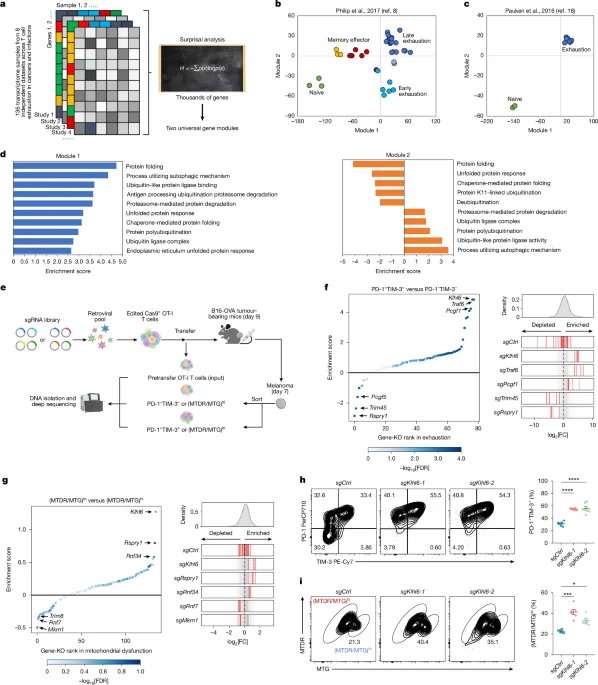
A Nature study identifies the E3 ubiquitin ligase KLHL6 as a dual regulator of CD8+ T cell exhaustion and mitochondrial fitness. KLHL6 promotes TOX poly-ubiquitination and degradation, delaying terminal exhaustion, while also restraining excessive mitochondrial fission via the PGAM5–Drp1 axis to maintain T cell metabolism. TCR stimulation downregulates KLHL6, but enforced KLHL6 expression in adoptively transferred T cells enhances anti-tumor and anti-viral responses, highlighting KLHL6 as a clinically actionable target to improve cancer immunotherapy by tuning proteostasis.

Proteotoxic Stress and Protein Misfolding Drive T Cell Exhaustion and Immune Evasion
health10 months ago

Proteotoxic Stress and Protein Misfolding Drive T Cell Exhaustion and Immune Evasion

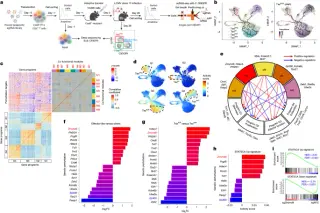
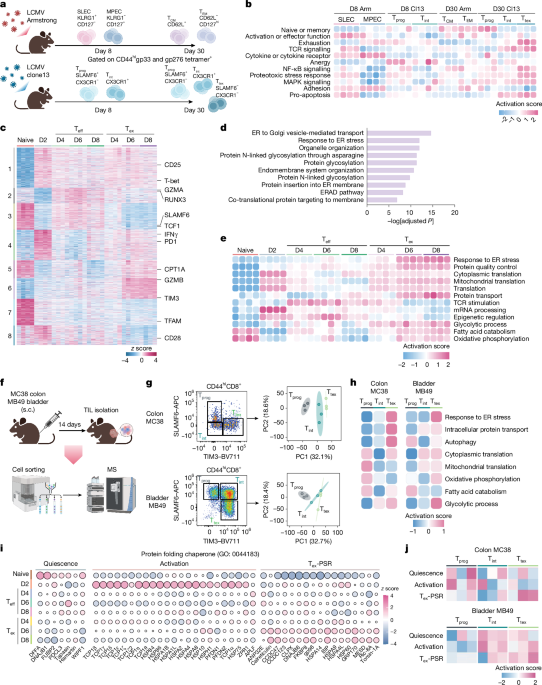
The study reveals that proteotoxic stress response (PSR) drives T cell exhaustion in cancer, characterized by increased protein synthesis, chaperone activation, and protein aggregation, with sustained AKT activity as a key upstream driver. Targeting specific chaperones like gp96 and BiP can mitigate exhaustion and improve immunotherapy outcomes.

The Role of Sympathetic Nerves in T Cell Exhaustion and Suppression
medical-research2 years ago

The Role of Sympathetic Nerves in T Cell Exhaustion and Suppression

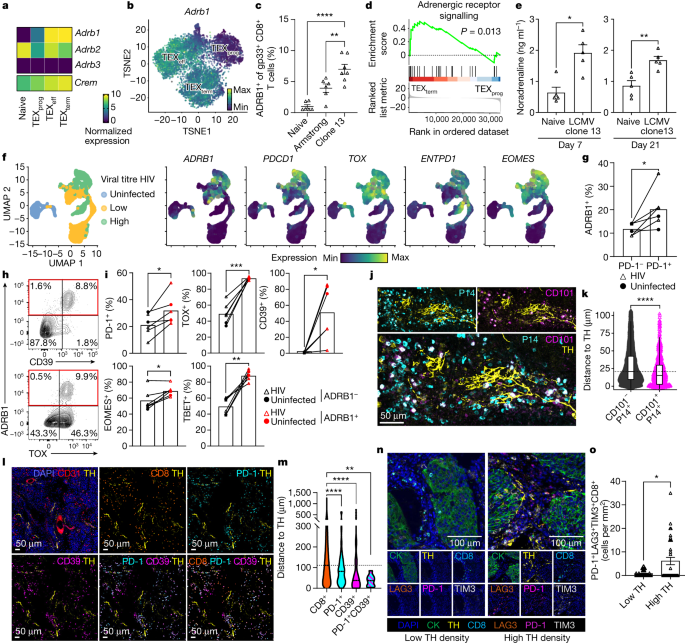
A new study has found that the β1-adrenergic receptor, which links sympathetic nerves to immune cells, plays a crucial role in T-cell exhaustion. T-cell exhaustion is a state of dysfunction that limits the immune response against cancer and chronic infections. The researchers discovered that blocking the β1-adrenergic receptor improved T-cell priming and enhanced the efficacy of cancer vaccines. This finding provides insights into the mechanisms of T-cell exhaustion and suggests potential therapeutic targets for improving immune responses in cancer immunotherapy.