A widely used asthma medication may enhance the effectiveness of cancer immunotherapies, potentially improving patient responses when used in combination, though further clinical validation is needed.
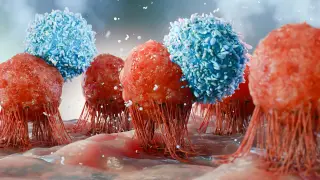
Researchers used cryo-expansion microscopy to preserve near-native cell structure and visualize cytotoxic T lymphocytes at the immune synapse in 3D, revealing a dome-shaped contact interface and variations in cytotoxic granules. Extending the technique to human tumor tissues, the team could observe T cells infiltrating tumors and deploying their killing machinery at nanometer-scale resolution, offering insights that could guide improvements in immuno-oncology therapies.
Scientists are reframing the thymus—a two-lobed gland behind the breastbone—as a central regulator of aging and immune health, with healthier thymuses linked to longer lifespans, lower cancer and heart-disease risk, and better responses to cancer immunotherapy; researchers are pursuing thymus rejuvenation and engineered thymic tissue to boost vaccines and transplant tolerance.
Scientists used cryo-expansion microscopy to visualize, in 3D and near-native conditions, how cytotoxic T lymphocytes form an immune synapse and destroy cancer cells with high precision—revealing a dome-shaped contact and granular cores—and extended the method to human tumor tissues to inform immuno-oncology.
Eli Lilly agreed to acquire Kelonia Therapeutics for up to $7 billion, with $3.25 billion upfront and the rest tied to milestones, in a deal expected to close in the second half of 2026. Kelonia’s in vivo CAR-T technology aims to reprogram patients’ T-cells inside the body to attack cancer, potentially offering a one-time IV therapy compared with traditional ex vivo CAR-T. Lilly plans to apply the tech beyond multiple myeloma to other blood cancers and possibly solid tumors, as part of a broader push to diversify beyond obesity and diabetes drugs amid ongoing biotech dealmaking and competition from J&J and Gilead-backed therapies.
After a turbulent year for funding and public trust, early-stage trials of mRNA cancer vaccines—including a personalized vaccine for pancreatic cancer—are showing strong immune responses and potential long-term benefit, with larger multisite trials and renewed NIH/NCI support underway, though funding and skepticism remain challenges.
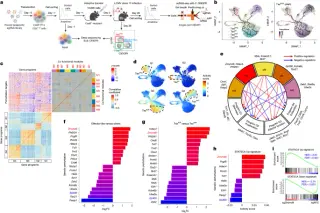
In mice, blocking the Ant2 protein reprograms T cell energy metabolism, boosting their endurance and ability to detect and destroy cancer cells, a finding that could lead to metabolism-based immunotherapies.
Two small Nature Medicine trials suggest oral fecal microbiota transplantation (FMT) pills may boost immunotherapy in advanced cancers: in metastatic kidney cancer, FMT reduced immunotherapy side effects and produced about a 50% response; in advanced lung cancer or melanoma, combining FMT with immunotherapy yielded response rates around 75–80%, higher than typical 39–45% rates. While promising, results are early and require larger trials.
Researchers found that cancer cells load the immune-inhibiting protein PD-L1 into tiny extracellular vesicles via the protein UBL3, helping tumors suppress immune responses. Statins block this UBL3-driven modification, reducing PD-L1 cargo and potentially improving responses to immune checkpoint inhibitors, with supporting evidence from non-small cell lung cancer patients showing fewer PD-L1–containing vesicles in those taking statins.
A Nature study identifies the E3 ubiquitin ligase KLHL6 as a dual regulator of CD8+ T cell exhaustion and mitochondrial fitness. KLHL6 promotes TOX poly-ubiquitination and degradation, delaying terminal exhaustion, while also restraining excessive mitochondrial fission via the PGAM5–Drp1 axis to maintain T cell metabolism. TCR stimulation downregulates KLHL6, but enforced KLHL6 expression in adoptively transferred T cells enhances anti-tumor and anti-viral responses, highlighting KLHL6 as a clinically actionable target to improve cancer immunotherapy by tuning proteostasis.
Scientists have discovered that a vitamin A metabolite, retinoic acid, can suppress the immune system's ability to fight cancer by promoting immune tolerance. They developed inhibitors that block this pathway, restoring immune responses and improving cancer vaccine efficacy, paving the way for new immunotherapy treatments.
Chinese researchers have developed a new scalable and cost-effective method to produce engineered natural killer cells from cord blood stem cells, enhancing cancer immunotherapy potential by improving efficiency and reducing costs, with successful tumor-killing activity demonstrated in preclinical models.
Miriam Merad's 20-year research on macrophages, immune cells involved in inflammation and immune response, is challenging traditional cancer treatments focused on T cells, and early clinical data suggest that targeting macrophages could enhance immunotherapy effectiveness and address aging and autoimmune diseases.
A study finds that COVID-19 mRNA vaccines, like Pfizer and Moderna, can boost the immune system to recognize and kill cancer cells, especially when combined with immunotherapy, potentially extending benefits to more cancer patients. The vaccines act as an immune alarm, helping to turn 'cold' tumors 'hot,' and are being tested in clinical trials for lung cancer.
Scientists at St. Jude's Research Hospital discovered how mitochondria and lysosomes work together to activate and deactivate regulatory T cells, which are crucial for controlling inflammation and immune responses. Their findings reveal metabolic and organelle signaling pathways that influence T cell function, with potential implications for treating autoimmune diseases and enhancing cancer immunotherapy.