
A single brain implant lets paralysed patients speak and gesture through a digital avatar
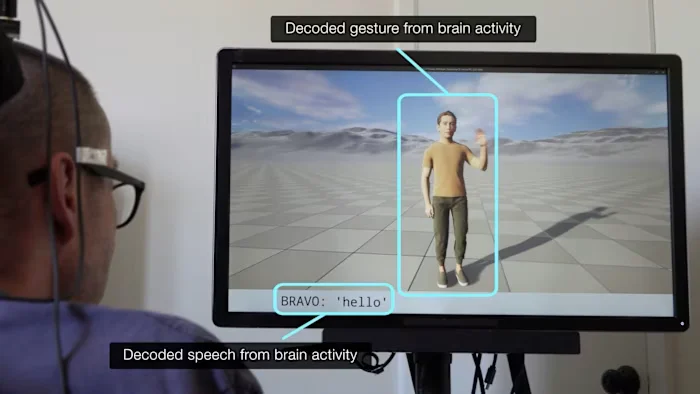
Researchers at UCSF demonstrated a brain-computer interface that decodes both speech and hand gestures from a single brain implant and animates a digital avatar to represent the user. In a proof-of-concept with two paralysed participants, a small set of gestures and spoken words were accurately decoded using machine learning, with the team aiming to expand vocabulary and continuous movements. The work could eventually help millions with speech loss from stroke, ALS and other brain conditions, but ethical, surgical, and generalisation challenges remain, as the approach currently relies on patient-specific models and invasive procedures. The study adds to a growing field alongside companies like Neuralink and Echo Neurotechnologies.
- Brain implant lets paralysed patients speak via digital avatar Financial Times
- Brain Implant Helps Woman Communicate in Real Time The New York Times
- Simultaneous speech and gesture decoding for multimodal communication in paralysis Nature
- 'I Have a Lot to Say': Austin Brain Implant Helps Patient Communicate in Real Time KEYE
- A new device lets severely paralysed patients talk and gesture The Economist
Reading Insights
1
4
4 min
vs 5 min read
88%
924 → 107 words
Want the full story? Read the original article
Read on Financial Times