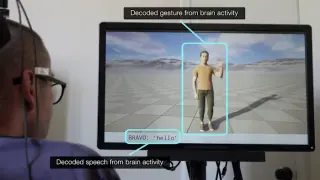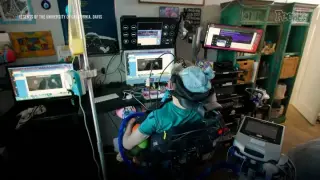
A 47-year-old ALS patient regains the ability to speak and maintains a full-time job thanks to an experimental brain-computer interface, marking a significant advance in assistive neurotechnology for paralysis.
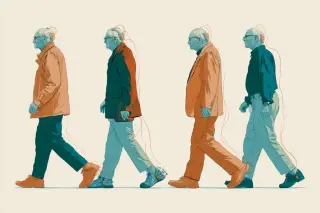
UCSF researchers developed a closed-loop adaptive deep brain stimulation system that detects step-specific brain signals and automatically modulates stimulation within milliseconds, synchronizing with walking to improve gait symmetry and reduce falls in five Parkinson’s patients—evidence supporting a shift from fixed stimulation to behavior-responsive neuromodulation with potential broader applications.
A wireless intracortical visual prosthesis (ICVP) has been implanted in a third blind participant, delivering artificial vision by directly stimulating the brain’s visual cortex instead of the retina. The Rush University procedure involved 34 wireless stimulators and 544 electrodes, part of a multi-institution clinical trial led by IIT, Johns Hopkins Wilmer Eye Institute, and the University of Chicago. After ~four weeks of recovery, the participant will begin training to translate brain signals into usable vision. The study aims to assess usability, safety, and long-term outcomes over one to three years, with ongoing recruitment for more volunteers who lost vision in adulthood but had early sight, to test scalability and future clinical adoption.
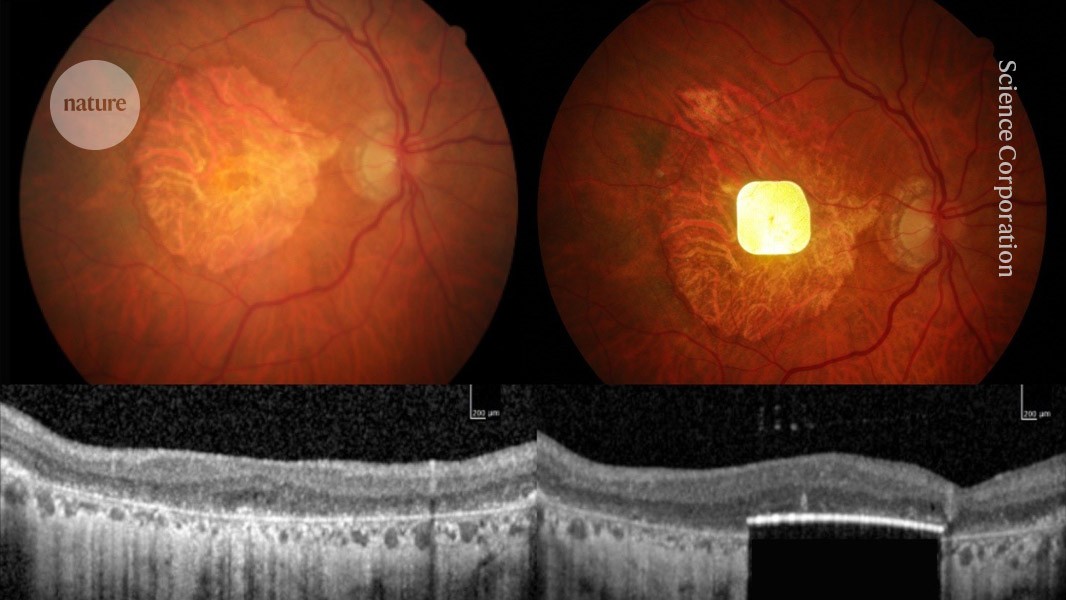
Scientists have developed a retinal implant that significantly improves vision in people with advanced dry age-related macular degeneration, restoring the ability to read and recognize faces, with promising results from a clinical trial involving 38 patients.
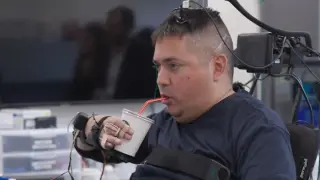
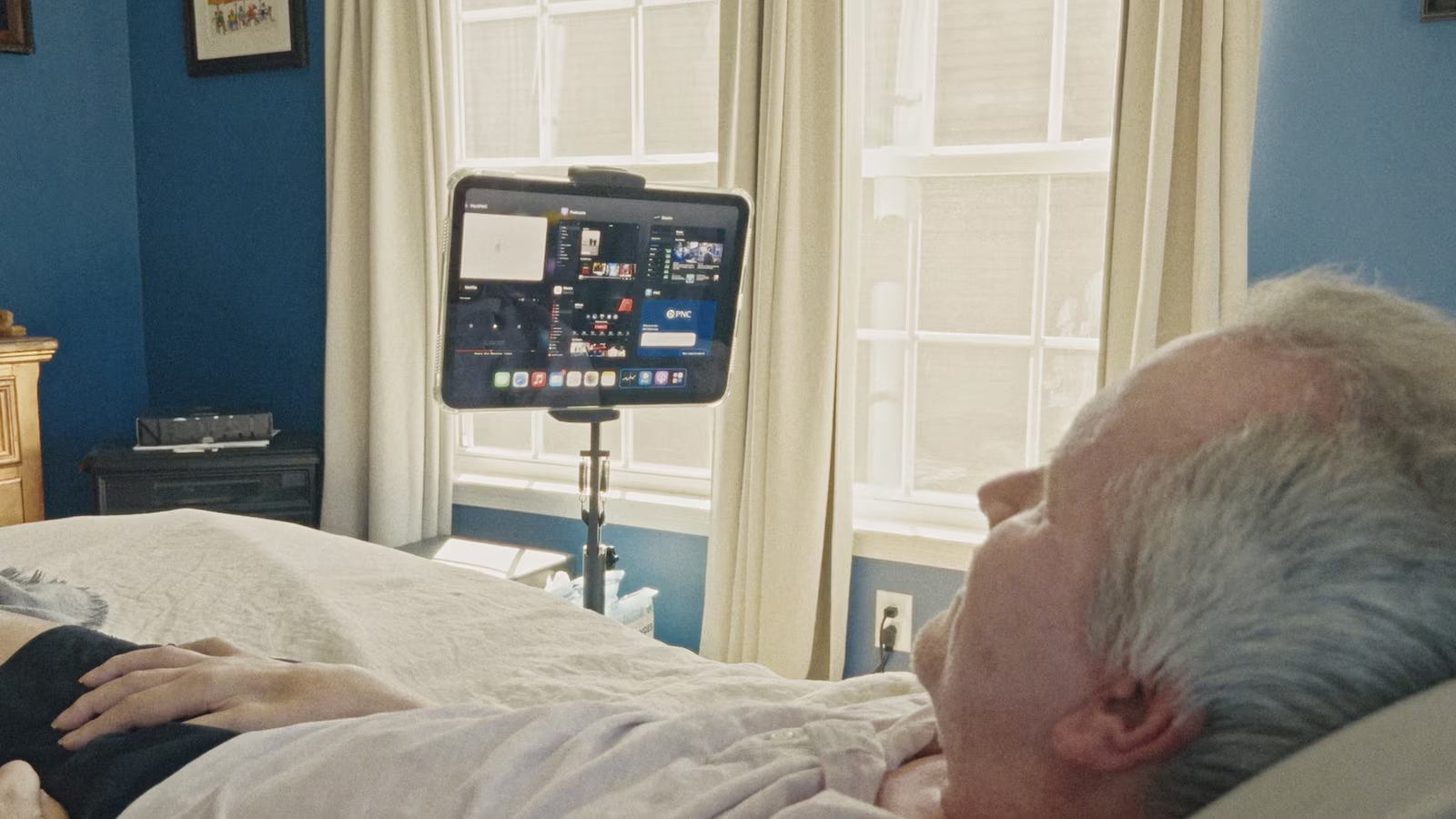
A 65-year-old ALS patient, Mark Jackson, has become the first person to control an iPad solely by thought using an implantable brain-computer interface developed by Synchron, restoring independence in communication and device control. The technology translates brain signals into actions, offering new hope for those with motor impairments, though long-term effects and ethical concerns remain to be addressed.
The article explores Synchron's minimally invasive brain implant technology, the Stentrode, which allows users to control devices with their thoughts, highlighting its potential to revolutionize accessibility and everyday life, while also discussing ethical concerns, privacy issues, and the future of cyborg integration.
Anxiety is the most common mental health issue worldwide, with many people unable to access professional help due to resource limitations and stigma. Emerging technologies like neurostimulation devices, virtual reality, and digital therapy platforms offer promising supplementary options for managing anxiety, potentially improving quality of life and mental health outcomes.
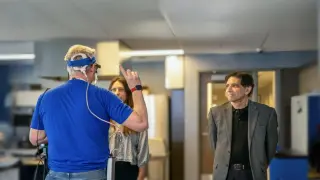
Researchers from the University of Texas at Austin and UCLA have developed printable, temporary 'e-tattoos' as a more convenient alternative to traditional EEG caps for measuring brain activity. These e-tattoos use biocompatible ink and can be applied in about 15 minutes, offering improved comfort and usability for over 24 hours. While they provide signal quality comparable to wet gel electrodes, challenges remain for use on individuals with longer hair and for sleep monitoring. The technology represents a significant advancement in neurotechnology, though commercialization details are yet to be confirmed.
Colorado Governor Jared Polis signed into law the first measure in the U.S. aimed at protecting the data found in a person's brainwaves, as advances in neurotechnology make scanning, analyzing, and selling mental data increasingly possible. The law aims to provide a clear framework to protect Coloradans' personal data from being used without their consent while still allowing the development of these new technologies. The Neurorights Foundation supported the bill, noting that the neurotechnology industry's data privacy protections are often weak or non-existent. This move comes as big tech firms and companies like Neuralink and Synchron are developing technology that can detect brain activity for potential commercial use.
Companies like Synchron, Precision Neuroscience, Blackrock Neurotech, and Neuralink are racing to develop brain-computer interface (BCI) devices with different methods for reading and processing brain signals. Each company has unique approaches, such as inserting stents or electrodes into the brain, and using surgical robots to achieve high fidelity control. While some devices offer minimally invasive procedures, others face challenges like signal degradation and limited control. The BCI field is rapidly advancing, with startups like Science entering the race, indicating the growing interest and investment in neurotechnology.
Researchers in Sydney are making significant strides in brain-computer interface (BCI) technology, with projects ranging from controlling robots with brain signals to developing headsets for ADHD and reconstructing dreams from brain signals. Synchron, a company with a BCI implant technology, is seen as more advanced and safer than Elon Musk's Neuralink, as it does not require open brain surgery. However, concerns about privacy, data security, and equitable access to BCI technologies remain, as the potential for segregation between those who can afford it and those who cannot is discussed.
A groundbreaking graphene-based neurotechnology developed by ICN2 and collaborators has the potential to revolutionize neuroscience and medical applications, offering high-precision neural interfaces and targeted nerve modulation. The technology, known as EGNITE, utilizes nanoporous graphene to create flexible, high-resolution microelectrodes capable of recording high-fidelity neural signals and providing precise nerve stimulation. Preclinical studies have demonstrated its effectiveness, and the technology is being translated into clinical applications by the spin-off company INBRAIN Neuroelectronics, with the aim of conducting first-in-human trials. This innovation represents a significant advancement in neuroelectronic therapeutics and has the potential to transform the field of neurotechnology.
Medical researchers are expressing concerns about the lack of evidence and transparency from Neuralink regarding its brain implant technology, following Elon Musk's claim that the first human recipient was able to control a mouse cursor with their mind. Safety concerns have been raised, particularly in light of leaked documents detailing gruesome injuries to monkeys involved in testing. While Neuralink's purported achievements are overshadowed by these revelations, some experts believe that the involvement of multiple companies in human brain-computer interface research could ultimately benefit the field.
Elon Musk announced that the first human implanted with a Neuralink brain chip has recovered and can control a computer mouse with their thoughts, marking a milestone for the company's efforts to connect brains to computers. The patient is experiencing no ill effects and is able to move the mouse around a screen just by thinking. Neuralink's first products aim to restore lost functions for people with paralysis or vision impairments, with hopes of eventually enhancing memory and intelligence. However, widespread deployment of the technology is still many years in the future, and regulators and consumer demand will set high standards for implanting the device into the brain of a healthy human.
Elon Musk announced that Neuralink's first human patient with a brain-chip implant can now move a computer mouse cursor using their mind, showing full recovery after receiving the implant last month. The neurotech firm is working on enabling recipients to control devices and complete tasks using their thoughts, with the first users being people who have lost the use of their limbs. Neuralink gained FDA approval for human trials of its implant after initial concerns, and Musk revealed plans for a "vision chip" to restore capabilities such as vision, motor function, and speech in the future.