
Hippocampus Under Anesthesia Reveals Language Processing and Rapid Plasticity
TL;DR
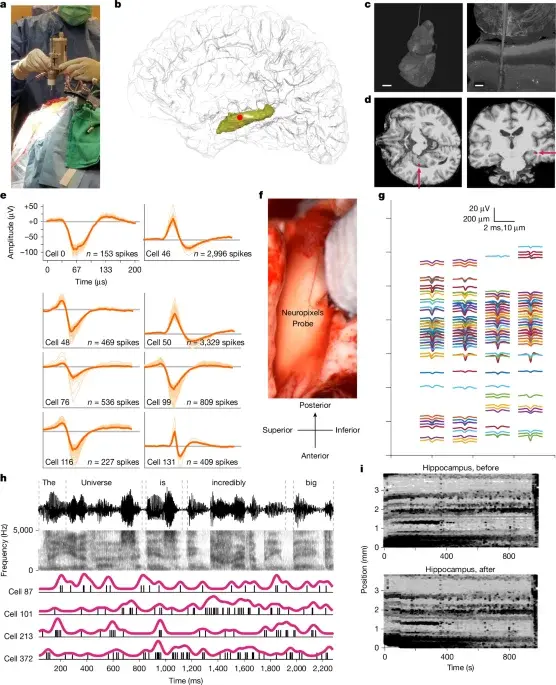
In seven patients undergoing anterior temporal lobe surgery, researchers recorded hippocampal neurons and local field potentials with Neuropixels during anesthesia and found that the hippocampus can still detect oddball sounds and extract semantic/grammatical features from language. The oddball representations grew over ~10 minutes, indicating rapid plasticity, and analyses showed single neurons and LFPs could predict upcoming words. A recurrent network model suggested this learning emerges from flexible tone discrimination, challenging the notion that high‑level processing requires conscious awareness even when consciousness is suppressed.
- Plasticity and language in the anaesthetized human hippocampus Nature
- While patients lay unconscious under anesthesia, their brains kept decoding stories and preparing for what came next Medical Xpress
- The brain may still be able to hear speech under anesthesia Scientific American
- Brains have a mind of their own under general anaesthetic The Times
- Anesthetized Brains Process Speech, Distinguish Word Meanings Unconsciously 조선일보
Want the full story? Read the original reporting
Read on Nature