Tag

Neural Plasticity

All articles tagged with #neural plasticity

Hippocampus Under Anesthesia Reveals Language Processing and Rapid Plasticity
neuroscience21 days ago

Hippocampus Under Anesthesia Reveals Language Processing and Rapid Plasticity

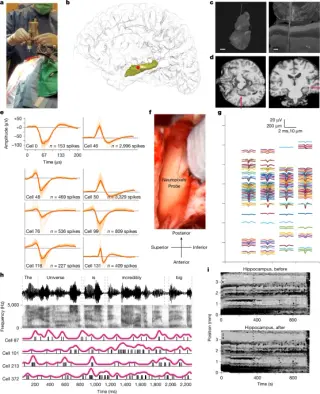
In seven patients undergoing anterior temporal lobe surgery, researchers recorded hippocampal neurons and local field potentials with Neuropixels during anesthesia and found that the hippocampus can still detect oddball sounds and extract semantic/grammatical features from language. The oddball representations grew over ~10 minutes, indicating rapid plasticity, and analyses showed single neurons and LFPs could predict upcoming words. A recurrent network model suggested this learning emerges from flexible tone discrimination, challenging the notion that high‑level processing requires conscious awareness even when consciousness is suppressed.

Brain Rewires End-of-Sound Signals Within 24 Hours of Noise Exposure
science26 days ago

Brain Rewires End-of-Sound Signals Within 24 Hours of Noise Exposure

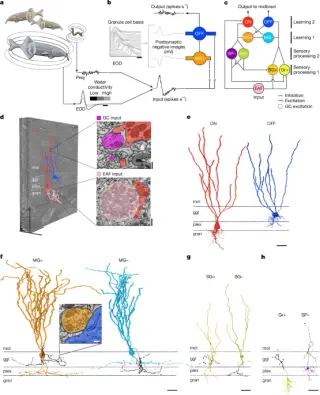
Researchers show that after damaging noise exposure, the brainstem’s superior paraolivary nucleus rapidly re-tunes within 24 hours to restore precise sound-offset signals, compensating for reduced hearing by increasing neuronal excitability and strengthening inhibitory inputs. This fast, circuit-specific adaptation preserves the timing of sound endings even as overall sensitivity declines, highlighting the brain’s resilience and offering potential directions for therapies addressing noise-related hearing loss.

Grey-matter microglia coordinate repair after focal white-matter demyelination
science1 month ago

Grey-matter microglia coordinate repair after focal white-matter demyelination

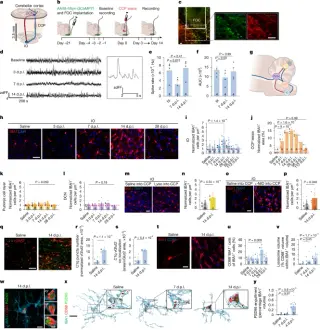
A targeted white‑matter lesion in a defined neural circuit triggers a transient grey‑matter microglial response, synapse loss, and reduced neuronal activity upstream of the lesion; these changes resolve as remyelination proceeds. Blocking microglia impairs remyelination, while aging diminishes this regenerative grey‑matter response, leading to chronic inflammation. The study reveals a circuit‑level regenerative plasticity that couples white‑matter integrity to grey‑matter function and suggests myelin‑regenerative therapies could mitigate chronic neuroinflammation in MS and related diseases.

Lab-grown brain organoids show adaptive learning in a cartpole task
science3 months ago

Lab-grown brain organoids show adaptive learning in a cartpole task

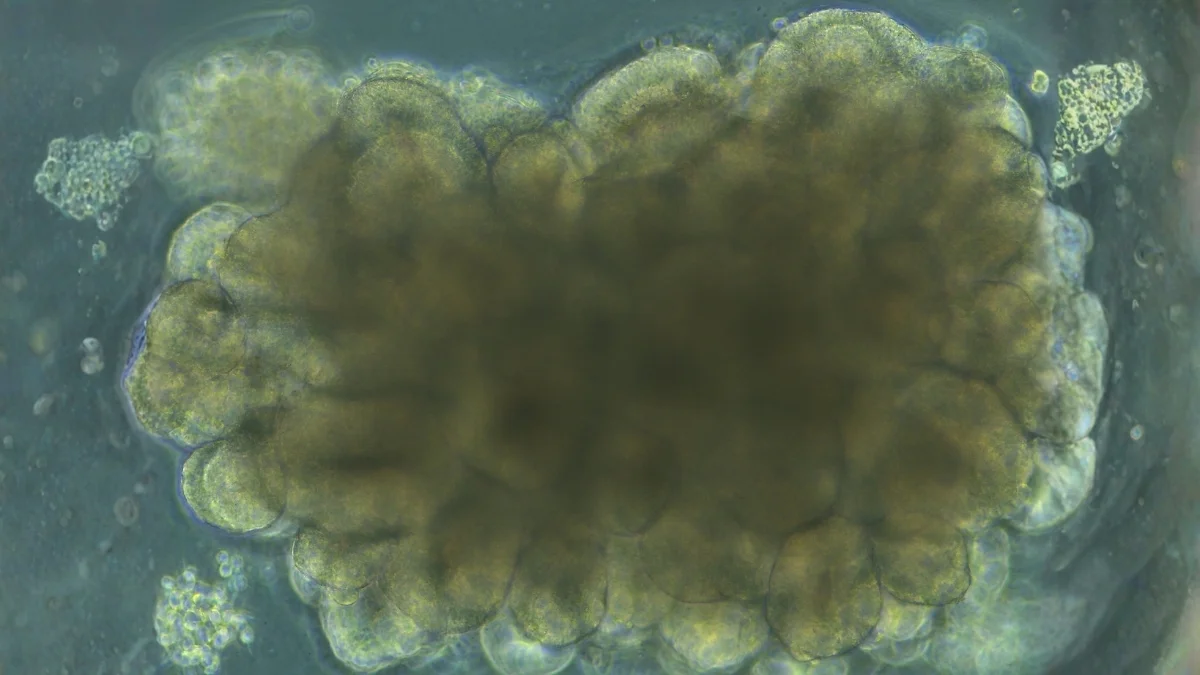
Mouse brain organoids grown in a dish were used in a closed-loop system with performance-based electrical feedback to train them to balance a virtual cartpole, achieving 46% proficiency under adaptive coaching. The results demonstrate short-term learning in neural tissue and offer a platform to study plasticity and neurological disease, while noting that the organoids are not conscious and the approach is not a replacement for traditional computing.

"Advancements in Ultrasound Brain Stimulation for Neurotherapy and Pain Management"
neuroscience2 years ago

"Advancements in Ultrasound Brain Stimulation for Neurotherapy and Pain Management"

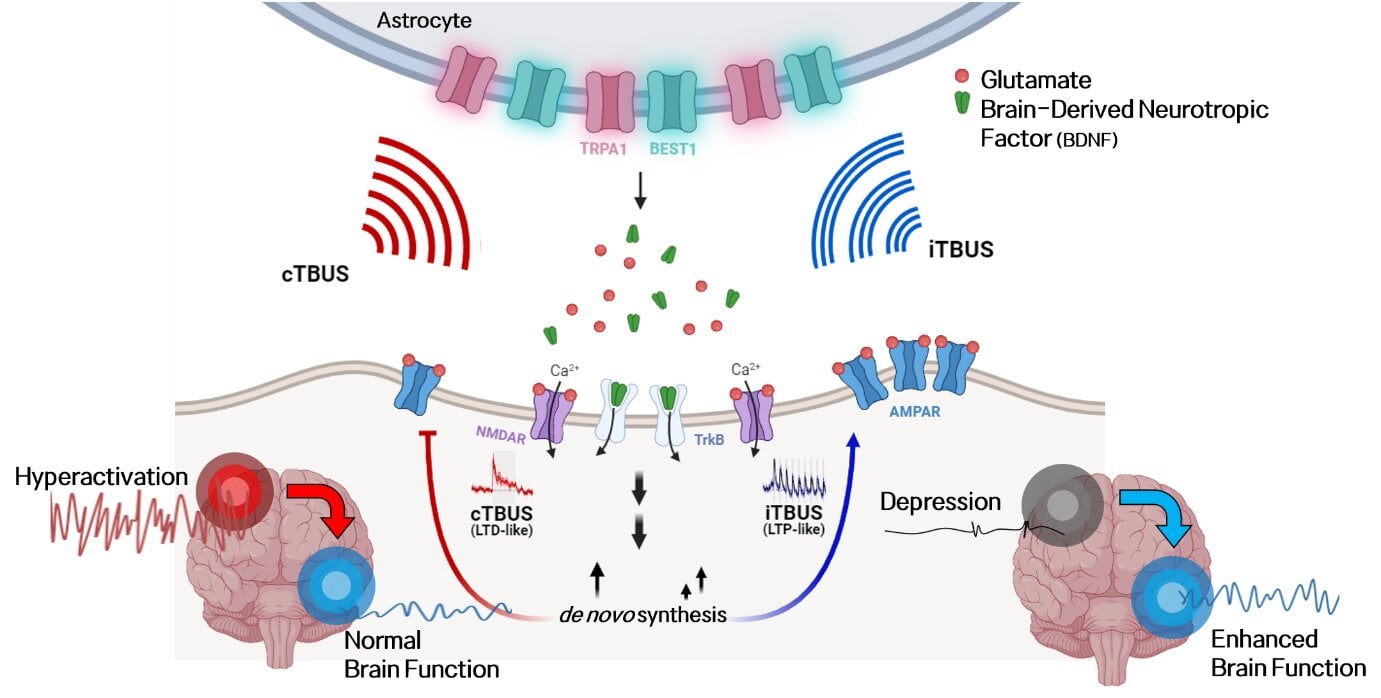
Researchers have developed a non-invasive brain stimulation technique called Patterned Low-Intensity Low-Frequency Ultrasound (LILFUS) that can precisely target and modulate specific brain regions, offering a promising alternative to traditional methods with fewer risks. LILFUS activates mechanosensitive calcium channels in astrocytes, influencing neural plasticity and enabling the control of brain function for improved motor skills and potential treatment applications in various neurological disorders. This advancement represents a significant leap in neurotherapy, with broad therapeutic potential and the ability to enhance cognitive functions without invasive procedures.

"Revolutionizing Neurotherapy: The Promise of Low-Intensity Focused Ultrasound"
health2 years ago

"Revolutionizing Neurotherapy: The Promise of Low-Intensity Focused Ultrasound"

A new non-invasive brain stimulation technique called Patterned Low-Intensity Low-Frequency Ultrasound (LILFUS) has been developed by researchers, showing promise for treating brain disorders. This technique, which uses ultrasound to stimulate specific brain areas, has the potential to induce long-lasting changes in brain function by modulating neural plasticity. The study found that LILFUS can improve motor skill learning and may have applications in treating conditions such as depression. The researchers plan to continue studying the technology for the treatment of brain disorders and the enhancement of cognitive functions.

The Link Between Exercise and Mental Health: A Comprehensive Study
health3 years ago

The Link Between Exercise and Mental Health: A Comprehensive Study

A new study published in NeuroImage: Clinical explored the relationship between exercise, brain functioning, and major depressive disorder. The findings indicate that individuals with major depressive disorder (MDD) who also exercise tend to have better brain functioning than those with MDD who do not exercise. The study suggests that physical fitness may enhance cognitive functioning in individuals with MDD by increasing neural plasticity in the brain. This has important implications for the treatment of depression, as it suggests that exercise may be an effective adjunct therapy for individuals with depression.

5-MeO-DMT induces lasting neural changes in mice.
neuroscience3 years ago

5-MeO-DMT induces lasting neural changes in mice.

A study conducted on mice has found that the psychedelic substance 5-MeO-DMT causes a long-lasting increase in the number of dendritic spines in the brain, which are tiny protrusions that play a crucial role in neural plasticity. The study sheds light on the behavioral and neural mechanisms of 5-MeO-DMT, which is found in the Sonoran Desert toad and has unique pharmacological properties. The researchers found that 5-MeO-DMT elicited acute behavioral effects that were more transient than those of psilocybin, consistent with human data.