Tag

Hippocampus

All articles tagged with #hippocampus

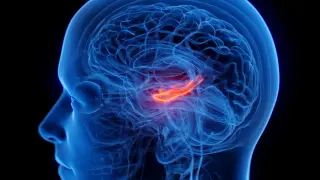
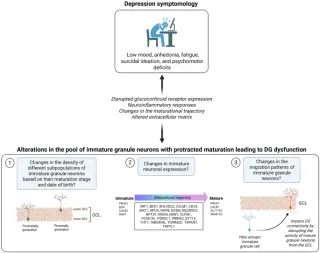
Hippocampus Changes Explain Why Chronic Pain Fuels Depression
science14 days ago

Hippocampus Changes Explain Why Chronic Pain Fuels Depression

A large neuroimaging study shows chronic pain progressively reshapes the hippocampus: early adaptive increases in dentate gyrus activity give way to abnormal microglial activation and hippocampal shrinkage, linked to cognitive decline and depression across various pain types. Animal data suggest minocycline can dampen this process and preserve hippocampal structure; meanwhile, lifestyle factors and mindfulness may boost hippocampal volume and reduce depression risk, implying early, targeted treatment of pain could prevent depressive outcomes.

Caffeine Could Reverse Sleep-Deprivation Memory Deficits, Mouse Study Finds
science15 days ago

Caffeine Could Reverse Sleep-Deprivation Memory Deficits, Mouse Study Finds

Researchers in Singapore found that caffeine can both prevent and reverse social-memory deficits caused by sleep deprivation in mice, by acting on the CA2 region of the hippocampus and dampening adenosine signaling. Regular caffeine exposure before sleep loss preserved social recognition, and applying caffeine to brain tissue from sleep-deprived mice improved CA2 signaling. While the results illuminate a mechanism linking sleep, memory, and caffeine, they are in mice and must be tested in humans to assess relevance for dementia risk and cognitive health.

Reviving Frozen Brain Slices Signals a Leap Toward Cryopreserved Organs
science20 days ago

Reviving Frozen Brain Slices Signals a Leap Toward Cryopreserved Organs

German researchers vitrified 350-micron mouse brain slices, cooled them to -320°F, and after thawing found intact neuronal membranes and preserved hippocampal long-term potentiation, with neurons still responsive to stimulation, suggesting brain function can resume after complete molecular shutdown and opening a path to organ preservation and potential cryopreservation of whole mammals, though translating this to humans and larger organs will require improved vitrification, cooling, and rewarming techniques.

Sluggish Brain Drain in Childhood Signals Psychosis Risk in 22q11.2 Syndrome
science23 days ago

Sluggish Brain Drain in Childhood Signals Psychosis Risk in 22q11.2 Syndrome

A longitudinal study of children with 22q11.2 deletion shows that early impairment of the brain’s glymphatic waste-clearance system is linked to later psychotic symptoms, likely via hippocampal glutamate excess and reduced GABA inhibition; findings highlight a potential early biomarker and suggest interventions focused on sleep and inflammation to delay or prevent a first psychotic episode.

Vitrified Mouse Brains Show Signs of Life After Thaw
science24 days ago

Vitrified Mouse Brains Show Signs of Life After Thaw

German researchers demonstrated vitrification-based cryopreservation of mouse brains, preserving tissue structure and neuronal activity enough for near-normal electrical responses and hippocampal long-term potentiation after thawing; whole brains were kept in a glass-like state at -140°C for up to eight days, yet linking preserved activity to memories and translating the approach to larger organs or human brains remains uncertain and technically challenging.

20-Minute Bike Ride Triggers Memory-Boosting Brain Ripples
science26 days ago

20-Minute Bike Ride Triggers Memory-Boosting Brain Ripples

A 20-minute session of light-to-moderate cycling rapidly increases hippocampal sharp wave-ripples and strengthens connectivity between memory-related brain regions, with higher exercise intensity yielding stronger ripple dynamics, providing the first direct human evidence that a single workout can modulate memory-related brain rhythms (observed in epilepsy patients and aligning with prior noninvasive imaging).

Mouse hippocampus regains electrical activity after week-long vitrified freezing
science28 days ago

Mouse hippocampus regains electrical activity after week-long vitrified freezing

Scientists chilled mouse hippocampal slices to a vitrified, glasslike state and stored them at −150°C for seven days before carefully warming them. When thawed, the tissue showed spontaneous synaptic activity and preserved neural structures, indicating functional recovery after extended freezing and suggesting vitrified suspended states can preserve neural circuitry in brain tissue (though this does not demonstrate memory preservation or viability of whole brains).

The Brain's Emotional GPS: Mapping Feelings Across Valence and Arousal
science1 month ago

The Brain's Emotional GPS: Mapping Feelings Across Valence and Arousal

New research shows the hippocampus and ventromedial prefrontal cortex create a map-like representation of emotions in a two-dimensional valence–arousal space. The interior hippocampus stores broad emotion categories, the posterior hippocampus handles finer distinctions, and the vmPFC tracks relationships between them. Using fMRI, pattern recognition, and the Tolman–Eichenbaum Machine AI model with the Emo-FiLM film dataset, researchers replicated brain patterns and highlighted how greater emotional granularity correlates with better mental health, suggesting affect labeling could help expand the emotional map and aid in treating depression and anxiety.

Vitrified mouse brain slices briefly regain activity after thaw
science1 month ago

Vitrified mouse brain slices briefly regain activity after thaw

German researchers demonstrate that ice-free vitrification can preserve and recover functional activity in mouse brain slices (including hippocampus) after thawing, with intact membranes, preserved mitochondrial activity, near-normal neuronal responses and lasting long-term potentiation for hours. While this marks the first demonstration of revived activity in frozen brain tissue, full brain function restoration and large-scale organ preservation remain out of reach due to ice-crystal damage, osmotic stress and cryoprotectant toxicity; the work hints at potential future applications in disease protection, organ banking and even whole-body cryopreservation, but is limited to slices and short observation windows.

Hippocampus Emerges as a General-Purpose Statistical Learner Across Species
science1 month ago

Hippocampus Emerges as a General-Purpose Statistical Learner Across Species

A new cross-species preprint shows the hippocampus encodes both the identity of auditory sequences and how often they occur, enabling passive statistical learning in humans and mice. Blocking dorsal CA1 disrupts passively learned rules and generalizations without harming task performance, while neurons rapidly encode both sequence structure and statistics in separate patterns. The findings support the hippocampus as a general-purpose statistical learning machine, potentially via distinct pathways from the entorhinal cortex to CA1 (monosynaptic) and through the trisynaptic circuit (DG→CA3→CA1).

One-dose DMT restores mood and brain circuitry in stressed mice
neuroscience1 month ago

One-dose DMT restores mood and brain circuitry in stressed mice

A single dose of DMT given after chronic stress reverses depression-like behaviors in mice, restoring pleasure-seeking and improving cognitive performance, with brain data showing increased hippocampal neurogenesis and corrected neuron placement. In many measures DMT outperformed fluoxetine, and benefits persisted even when dosing occurred under anesthesia, suggesting the conscious psychedelic experience may not be strictly necessary. Timing mattered: post-stress dosing yielded stronger cognitive recovery, underscoring a brain-plasticity window, but researchers caution that mouse results do not guarantee human outcomes and call for further translational work.

SuperAgers’ brains stay sharp through extra neuron growth
health1 month ago

SuperAgers’ brains stay sharp through extra neuron growth

A Nature study finds SuperAgers (people 80 and older with unusually preserved cognition) generate more new neurons in the hippocampus than other older adults, suggesting that increased neurogenesis may help maintain brain health. The findings point to a unique resilience signature in SuperAgers but are based on post‑mortem, cross‑sectional data, so they show associations rather than proving that boosting neurogenesis prevents dementia. The researchers and clinicians emphasize that lifestyle factors—regular aerobic exercise, a Mediterranean-style diet, lifelong learning, social engagement, and adequate sleep—may support brain renewal and cognitive health.

Brain’s DeltaFosB as Switch Behind Cocaine Relapse, Study Finds
science1 month ago

Brain’s DeltaFosB as Switch Behind Cocaine Relapse, Study Finds

Chronic cocaine use rewires the brain by accumulating DeltaFosB in the ventral hippocampus–nucleus accumbens reward-memory circuit, altering gene expression and driving compulsive drug-seeking. CRISPR experiments show DeltaFosB is necessary for these changes, and calreticulin helps rev the brain’s engine toward cocaine seeking. With no FDA-approved meds for cocaine addiction, researchers are pursuing DeltaFosB-targeting compounds as a potential future treatment to reset brain circuits and reduce relapse.