A new study suggests that general anesthesia, despite being 180 years old, operates through a universal neural mechanism. Researchers found a common dynamic signature across six animal species, indicating that unconsciousness involves a breakdown in brain coordination rather than a total shutdown.
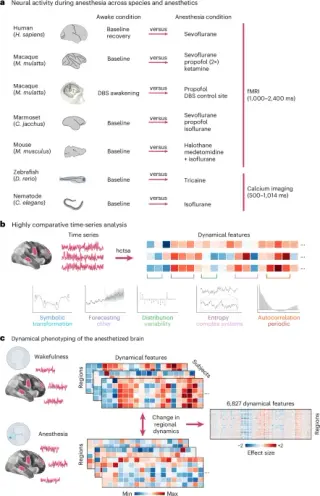
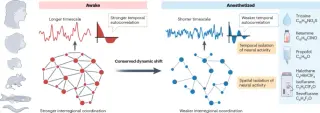
A new study in Nature Neuroscience reveals that general anesthesia induces a conserved neural dynamic across six species spanning 700 million years of evolution. Led by Andrea Luppi of the University of Oxford, the research shows that while brain regions remain active under anesthesia, their coordination and temporal predictability break down. This 'spatiotemporal isolation' suggests a universal mechanism for unconsciousness, distinct from simply shutting down the brain. Concurrently, UCLA researchers demonstrated that human stem cell-derived brain assembloids can replicate these slow-wave electrical patterns without a thalamus, confirming that minimal cortical circuits are sufficient to generate anesthetic signatures.
New research identifies a conserved neural signature of anesthesia across species and demonstrates that lab-grown human brain models can replicate these effects without deep brain structures.
New research reveals that the neural dynamics of anesthesia are conserved across hundreds of millions of years of evolution and can be replicated in human stem cell-derived brain models. While a landmark study by Luppi and colleagues identifies a universal dynamic signature of unconsciousness, UCLA researchers demonstrate that minimal cortical circuits in lab-grown assembloids reproduce the slow brain waves of anesthesia without requiring deep brain structures like the thalamus.
A large UK study reveals that patients taking GLP-1 drugs like Ozempic or Mounjaro face an 11-fold higher risk of regurgitation or pulmonary aspiration during surgery compared to non-users. While the absolute risk remains low, the consequences of inhaling stomach contents while unconscious can be fatal. Experts debate whether stopping the medication before surgery is effective, noting that the drugs' long half-lives may mean standard fasting periods are insufficient to clear the stomach.
Olympic gymnast Shawn Johnson shared on Instagram that her 2-year-old son Barrett “Bear” recently underwent a second set of ear tubes and removal of his adenoids. She said the surgery went well, but Bear’s wake-up from anesthesia was “pretty rough.” He’s now home and steadily improving, even suddenly hungry and asking for a lot of food. Johnson and husband Andrew East, who have three kids, don’t plan to expand their family further.
Experts say being upfront with your anesthesiologist about key factors—hair color, cannabis and alcohol use, age, and overall health—can tailor anesthesia and pain management for safer, more effective surgical care.
An atomic-level study shows the anesthetic sevoflurane binds a pocket at the edge of the voltage-gated sodium channel pore, stabilizing the channel in an inactive state and dampening neuronal signaling—a finding that explains how inhaled anesthetics induce unconsciousness and could guide the design of safer drugs.
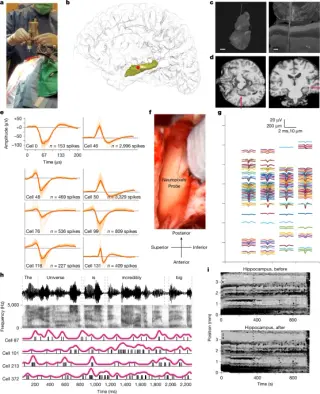
Researchers recorded neurons in the hippocampus of patients under general anesthesia and found that the unconscious brain can process language—distinguishing nouns, verbs, and adjectives—and even predict upcoming words while listening to stories. This suggests core cognitive tasks can occur without conscious awareness and prompts a rethink of consciousness, with implications for brain–computer interfaces and speech prosthetics. The findings stem from a single anesthesia type and a limited brain region, so more work is needed before broader generalization.
Researchers recorded hippocampal neurons in seven epilepsy patients under propofol anesthesia and found real-time processing of sounds and language, including predicting upcoming words. The findings suggest certain cognitive tasks can occur without conscious wakefulness and raise questions about consciousness as well as potential future brain-computer interfaces or speech prosthetics.
Researchers report that the hippocampus continues to process language and even predict upcoming words during general anesthesia, suggesting learning and predictive coding can occur without conscious awareness. Using Neuropixels probes during epilepsy surgeries, they observed language processing and differentiation of parts of speech in real time, though the findings apply to a single anesthesia type and brain region. The work challenges traditional views of consciousness and could inform AI comparisons and future speech prosthetics, while highlighting the need for broader studies.
Yale scientists used full-head EEG to monitor patients under propofol anesthesia and found the brain can enter states that resemble both sleep and coma, challenging the idea that anesthesia is simply deep sleep. The findings could guide better, individualized anesthesia care to minimize postoperative cognitive effects and push toward a sleep-like brain state during procedures.
A Yale-led study using full-head EEG recordings shows anesthesia does not simply put the brain to sleep; instead, anesthetized brains can exhibit sleep-like and coma-like patterns in different regions, challenging the sleep-vs-coma dichotomy and highlighting the potential for real-time brain monitoring to tailor anesthesia and reduce post-surgical cognitive effects.
In seven patients undergoing anterior temporal lobe surgery, researchers recorded hippocampal neurons and local field potentials with Neuropixels during anesthesia and found that the hippocampus can still detect oddball sounds and extract semantic/grammatical features from language. The oddball representations grew over ~10 minutes, indicating rapid plasticity, and analyses showed single neurons and LFPs could predict upcoming words. A recurrent network model suggested this learning emerges from flexible tone discrimination, challenging the notion that high‑level processing requires conscious awareness even when consciousness is suppressed.
Researchers recording brains of epilepsy patients under propofol anesthesia found that the hippocampus remains active, parsing spoken language and even predicting the next word during podcasts. The study shows unconscious semantic processing and learning, with neuron responses during anesthesia resembling those of awake individuals.