Dogs Mimic Infant Language Processing by Tracking Consonants in Speech
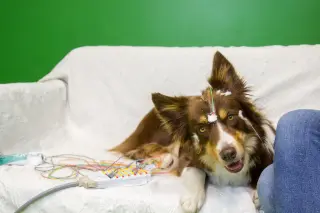
A new study from Hungary reveals that dogs use consonant patterns to segment words in human speech, mirroring the cognitive strategy used by human infants. Brain activity data shows dogs prioritize consonants over vowels to detect word boundaries, suggesting that living in a speech-rich environment has shaped their neural pathways.