
Human cortical organoids form integrated xenocortex in mice
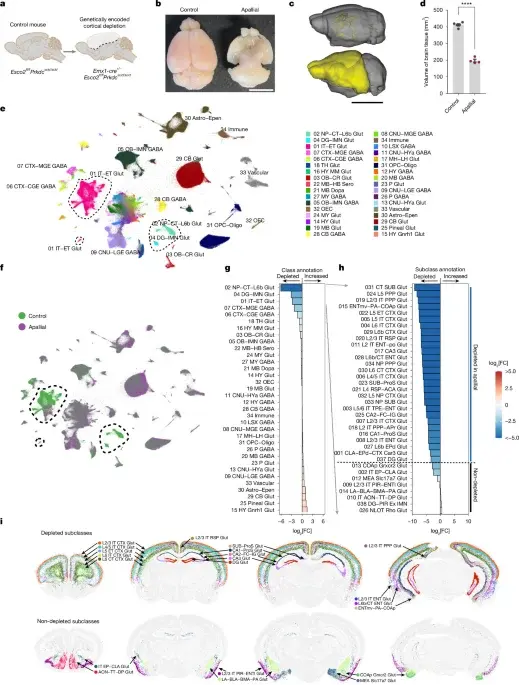
Researchers depleted the mouse dorsal pallium and neonataly engrafted human stem-cell–derived cortical organoids (hCOs) to create xenocortical (XCX) mice, in which hCOs expand to occupy most of the cortex, differentiate into diverse human cortical cell types (including layer 5 ET neurons), and integrate with host circuits as shown by in vivo calcium imaging and electrophysiology. Behavioral analyses reveal largely preserved locomotion with selective deficits in tasks needing neocortex/hippocampus, while unsupervised MoSeq analysis indicates grafts yield distinct but intermediate behavioral repertoires. The platform also enables modeling of hypoxic injury to developing human cortical tissue and could facilitate disease modeling and therapeutic discovery using large human-derived cortical grafts and behavioral readouts.
- Developmental xenocortication using human-derived organoids in mice Nature
- Scientists create mice with part-human brains The Guardian
- Mice with human brain cells offer a tool to study disease. Ethicists ask: What’s next? NPR
- Scientists Fuse Human Neurons Into the Brains of Mice The New York Times
- Mice with human brain cells open a new testing ground for drugmakers to study disease Endpoints News
Want the full story? Read the original reporting
Read on Nature