Tag

Neural Circuits

All articles tagged with #neural circuits

From a cyclops-like ancestor to modern eyes: new theory on vertebrate eye origin
science1 month ago

From a cyclops-like ancestor to modern eyes: new theory on vertebrate eye origin

Researchers propose vertebrate eyes evolved from a cyclops-like, midline median eye in a 600-million-year-old ancestor; as the lineage regained mobility, parts of that central eye were repurposed to form image-forming eyes, while the pineal gland in the brain may preserve this ancient vision lineage, helping explain why vertebrate retina develops from brain tissue.

Single Dose of Rapamycin Rapidly Reverses Autism-Like Symptoms in Adult Mice
science1 month ago

Single Dose of Rapamycin Rapidly Reverses Autism-Like Symptoms in Adult Mice

Maternal inflammation during pregnancy induces lasting autism-like brain changes in mice; a single dose of rapamycin quickly normalized neuronal activity, reduced seizures, and improved sensory processing and repetitive behaviors within about two hours. The effects were temporary and rapamycin is not a practical human treatment, but the study highlights the brain's functional adaptability and points to new targets in mTOR signaling and circuit modulation.

Light Awakens the Darkness: Blind Cavefish Move More in Illumination
science1 month ago

Light Awakens the Darkness: Blind Cavefish Move More in Illumination

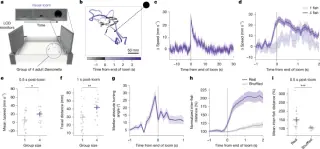
Florida Atlantic University researchers found that the blind Mexican cavefish become more active when exposed to light, a light-evoked photokinesis opposite to surface fish, driven by dopamine signaling and repurposed brain circuits; the behavior appears heritable, offering insights into brain evolution and potential relevance to human neurological conditions.

science2 months ago

Fruit fly connectome reveals distributed, modular motor control across brain and nerve cord

The first densely reconstructed adult Drosophila connectome spanning brain and ventral nerve cord shows effector neurons are largely governed by local sensory inputs within the same body part, while long-range ascending and descending circuits link parts into behavior-centric modules. Brain regions tied to learning and navigation supervise these circuits, revealing a distributed, parallel, embodied control architecture reminiscent of engineered distributed systems.

Targeted amygdala circuit tweak reverses anxiety in mice
science2 months ago

Targeted amygdala circuit tweak reverses anxiety in mice

A study in iScience links imbalanced activity of a Grik4/GluK4-rich neuron group in the basolateral amygdala to anxiety-like and social withdrawal behaviors in mice. Restoring this balance to improve signaling with centrolateral inhibitory neurons reversed anxiety and social deficits in both a genetic model and wild-type mice with high anxiety, though some memory issues persisted, hinting at broader circuit targets for affective disorders.

Designer electrical synapses enable long-term, cell-type-specific circuit editing in mammals
science3 months ago

Designer electrical synapses enable long-term, cell-type-specific circuit editing in mammals

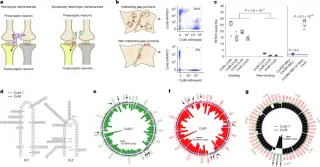
A team engineered a heterotypic electrical synapse using Morone americana connexins Cx34.7 and Cx35 (Cx34.7(M1)–Cx35(M1)) that dock exclusively with each other and not with endogenous mammalian connexins. They developed FETCH to screen docking compatibility, used computational modeling to design docking-specific mutants, and demonstrated functional, selective coupling in vitro and in vivo. In C. elegans, the designer synapse recoded a thermotaxis circuit similarly to native Cx36–Cx36 connections; in mice, targeted LinCx editing between PYR neurons and PV+ interneurons in the prefrontal cortex enhanced theta–HFO coupling and altered neuronal dynamics and social/exploratory behaviors. This work establishes a platform for durable, precise circuit modification with potential therapeutic applications.

Relapse Switch: PV Neurons Regulate Addiction Circuits
science5 months ago

Relapse Switch: PV Neurons Regulate Addiction Circuits

New findings show relapse in addiction results from a circuit-level imbalance in the prefrontal cortex: parvalbumin-positive (PV) inhibitory neurons act as a gate on the PFC-to-VTA reward pathway. Suppressing PV cells reduced cocaine-seeking in mice, while activating them sustained drug-seeking after withdrawal; the effect is specific to drug rewards, not sugar, and not observed in other inhibitory cells. This reveals a targetable mechanism for relapse and suggests precision therapies to rebalance this circuit.

Pyramidal cells steer interneuron fate to shape cortical circuits
science7 months ago

Pyramidal cells steer interneuron fate to shape cortical circuits

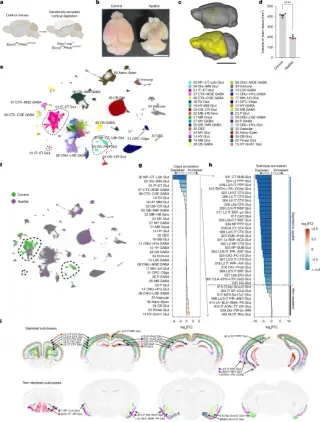
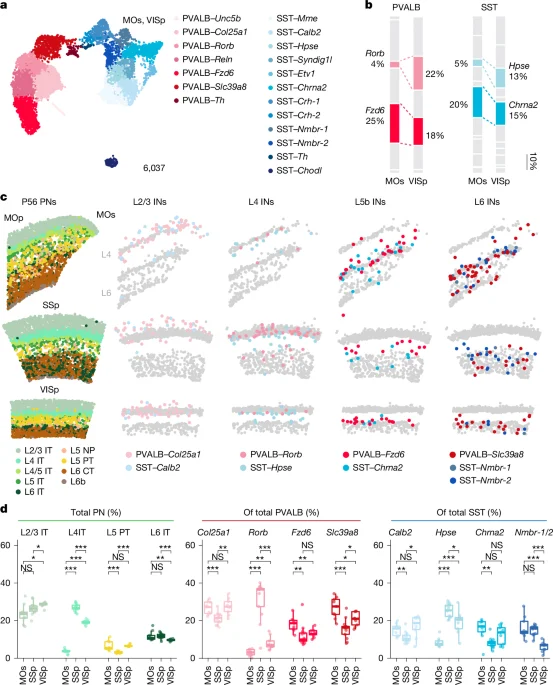
A Nature study shows pyramidal neuron subtypes actively sculpt cortical interneuron diversity by promoting their survival and terminal differentiation; in Fezf2 mutants lacking L5b pyramidal neurons, SST interneurons alter programmed cell death and PVALB interneurons switch subtype identity, via activity-independent PN–interneuron signaling and multiple molecular pathways, with a bioinformatic screen identifying candidate ligands and adhesion molecules.

Neural Mechanisms Regulating Fly Leg Movement and Balance
science11 months ago

Neural Mechanisms Regulating Fly Leg Movement and Balance

Researchers discovered that nerve cells sensing limb motion in fruit flies are turned off during movement, allowing the brain to switch between stabilizing posture and enabling dynamic action. This neural circuit, involving interneurons, helps balance stability and movement, with potential implications for treating human motor disorders and injury recovery.

Amygdala-Liver Signaling Regulates Stress-Induced Blood Sugar Changes
science11 months ago

Amygdala-Liver Signaling Regulates Stress-Induced Blood Sugar Changes

The study uncovers a novel amygdala–liver pathway that rapidly regulates blood glucose during stress independently of traditional hormonal systems, involving specific neurons in the medial amygdala projecting to the hypothalamus and liver, which are activated by stress and control hepatic glucose production. Repeated stress disrupts this circuit, linking chronic stress to metabolic disorders like type 2 diabetes.