Tag

Transplantation

All articles tagged with #transplantation

Genetically engineered pig kidney sustains patient for 271 days as transplant bridge
health9 days ago

Genetically engineered pig kidney sustains patient for 271 days as transplant bridge

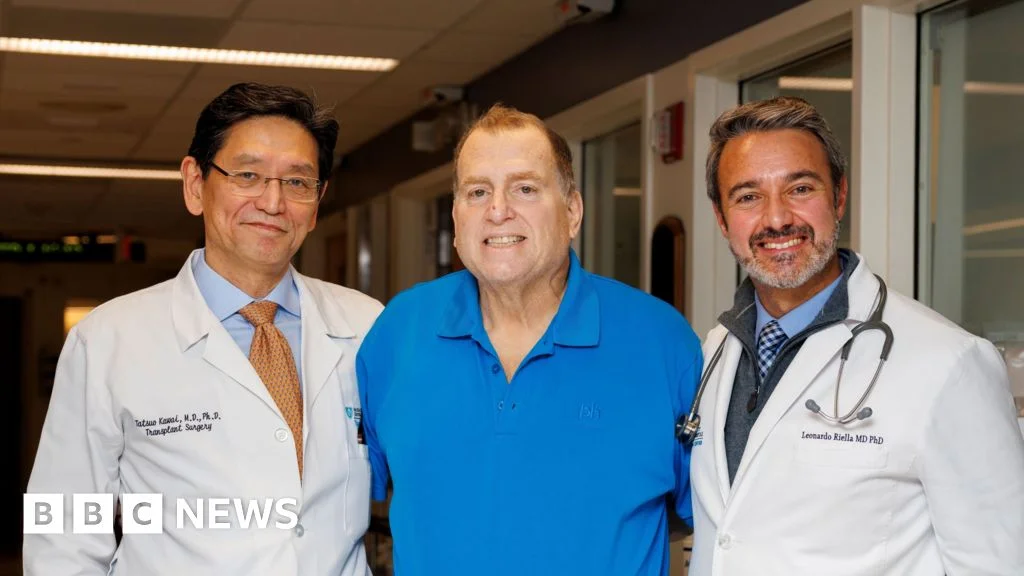
A kidney from a genetically engineered pig kept Tim Andrews alive and functioning for 271 days—the longest xenotransplant on record—before it was removed. He then needed dialysis for 82 days until a human donor kidney was found. Published in Lancet, the case demonstrates xenotransplantation as a potential bridge to transplantation amid organ shortages, while also highlighting immune and vascular challenges that must be overcome.

Leg-Derived Mitochondria Injected Into Human Eyes Show Safety, Hint at Vision Therapy Potential
science18 days ago

Leg-Derived Mitochondria Injected Into Human Eyes Show Safety, Hint at Vision Therapy Potential

Scientists performed the first human ocular mitochondrial transplantation by injecting mitochondria isolated from a leg biopsy into both eyes of a 26-year-old woman with severe vision loss. The procedure appeared safe with no immune reaction, and post-treatment results included temporary improvements in pupil light responses and evidence of organized visual-cortex activity, though there was no restoration of visual acuity. The study is a single-patient, uncontrolled case, so causation cannot be established, but it suggests a potential for repeated mitochondrial dosing and warrants further, controlled trials to explore whether healthy mitochondria can energize damaged retinal cells.

Gentle stem-cell transplant hints at rejuvenating aging blood and immunity in mice
science1 month ago

Gentle stem-cell transplant hints at rejuvenating aging blood and immunity in mice

A study in mice shows that transplanting young, lab-expanded blood-forming stem cells into aged animals—without chemotherapy or radiation—restores blood production and rebirths of immune cells (naive B and T cells), effectively reshaping the aging immune system. While the approach worked in mice and used a gentler method (including targeted helpers to spare healthy cells), it is far from clinical use in humans and faces safety, regulatory, and scalability hurdles; nonetheless, experts see potential for future therapies that renew the body’s blood-forming system rather than wide-ranging anti-aging cures.

Stanford Study Reverses Type 1 Diabetes in Mice with Dual-Transplant, No Immunosuppression
science6 months ago

Stanford Study Reverses Type 1 Diabetes in Mice with Dual-Transplant, No Immunosuppression

Stanford researchers cured type-1 diabetes in mice for six months using a dual transplant of pancreatic islet cells and donor hematopoietic stem cells to create a hybrid immune system, eliminating the need for insulin or immune-suppressing drugs. In the study, 19 of 19 treated mice remained diabetes-free and 9 of 9 long-standing diabetics were cured, though translating the approach to humans will require overcoming donor cell sourcing and scaling challenges.

Lab-grown human brain cells steer rat behavior in a first-of-its-kind integration
science7 months ago

Lab-grown human brain cells steer rat behavior in a first-of-its-kind integration

Scientists transplanted human brain organoids into developing rat embryos, enabling vascularization and functional integration that allowed the human cells to respond to stimuli and influence a rat’s behavior — a breakthrough for human-brain models, but raising ethical questions about consciousness, donor consent, and animal welfare.

"Extended Heart Preservation Offers Hope for Transplant Patients"
health-and-medicine2 years ago

"Extended Heart Preservation Offers Hope for Transplant Patients"

A groundbreaking study demonstrates the successful preservation of pig hearts for over 24 hours using normothermic ex-vivo heart perfusion (NEHP), potentially revolutionizing heart transplantation by extending the viability period beyond the current six-hour window. By incorporating techniques like hemofiltration, plasma exchange, and intermittent left atrial perfusion, this research could increase the donor heart pool and improve logistics in heart transplantation, offering hope for more hearts to be available for those in need.

"Controversial Training Sessions at Oxford University for Chinese Doctors Accused of Organ Harvesting"
healthinternational-relations2 years ago

"Controversial Training Sessions at Oxford University for Chinese Doctors Accused of Organ Harvesting"

Oxford University organized training sessions for Chinese transplant doctors, including those accused of illegal organ harvesting, despite warnings about collaborating with the Chinese transplant sector due to widespread allegations of harvesting organs from political prisoners and Falun Gong practitioners. Concerns have been raised about inadvertent complicity in organ harvesting, and the involvement of senior NHS clinicians in the training programmes. The Chinese Communist Party's influence on international medical collaborations and the lack of transparency around organ sourcing in China have raised global concerns about unethical conduct in organ donation and transplantation.

Revolutionary Nanotechnology Treatment for Degenerative Vision in the Elderly
health3 years ago

Revolutionary Nanotechnology Treatment for Degenerative Vision in the Elderly

Scientists have utilized nanotechnology to develop a 3D scaffold that supports the growth of healthy retinal cells, potentially revolutionizing the treatment of age-related macular degeneration (AMD), a leading cause of blindness. By using electrospinning technology and treating the scaffold with the steroid fluocinolone acetonide, researchers have enhanced the resilience and growth of retinal pigment epithelial cells, offering a promising approach for the development of ocular tissue transplantation. This breakthrough could have significant implications for the treatment of vision loss caused by AMD.

Breakthrough: Successful Second Transplant of Genetically Modified Pig's Heart
health3 years ago

Breakthrough: Successful Second Transplant of Genetically Modified Pig's Heart

Surgeons at the University of Maryland Medical Center have successfully transplanted a genetically modified pig's heart into a second patient with terminal heart disease. The first patient who received a pig heart died after two months, but the organ functioned well with no signs of acute organ rejection. The second patient, a Navy veteran, underwent the transplant surgery and is currently recovering well. The procedure offers hope to those facing a shortage of human donor organs, although it is still in the early stages of development. The pig heart used in the transplant underwent genetic modifications to reduce the risk of rejection by the human immune system.

Stem Cell Breakthrough: Replacing Diseased Brain Cells for Healthier Ones
neuroscience3 years ago

Stem Cell Breakthrough: Replacing Diseased Brain Cells for Healthier Ones

Transplanted healthy glial cells have been found to outcompete and replace diseased or aged brain cells, offering potential for restoring normal brain function and treating neurodegenerative diseases. The study, conducted on humanized mouse brains, demonstrated that healthy glial cells can replace both diseased and aged cells, paving the way for clinical trials on diseases such as Huntington's, ALS, and genetic schizophrenia within the next two years.