Tag

Organoids

All articles tagged with #organoids

Stiffer Colon Tissues in Youth Linked to Early-Onset Colorectal Cancer
science1 month ago

Stiffer Colon Tissues in Youth Linked to Early-Onset Colorectal Cancer

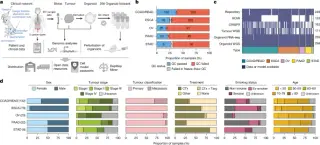
UT Dallas and UT Southwestern researchers found that colon tissue from younger colorectal cancer patients is abnormally stiff due to fibrotic collagen, in both tumor and nearby healthy tissue, and experiments with cells on stiff substrates and patient-derived organoids show stiffness promotes faster cancer growth; the study suggests biomechanical forces may contribute to rising cases of early-onset colorectal cancer and could guide future diagnosis and therapy, published in Advanced Science.

Plant Compound DHL-11 Targets IMPDH2 to Halt Triple-Negative Breast Cancer
science1 month ago

Plant Compound DHL-11 Targets IMPDH2 to Halt Triple-Negative Breast Cancer

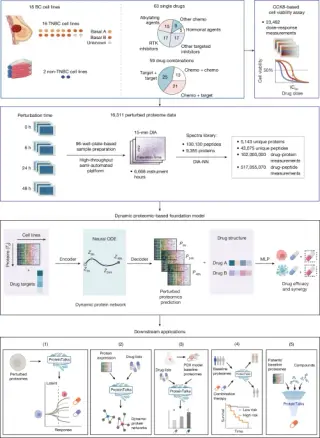
A plant-derived limonoid named DHL-11, isolated from Munronia henryi, binds a non-catalytic pocket on IMPDH2 to trigger its degradation, reduce GMP synthesis, elevate ROS and DNA damage, and induce G2/M arrest and apoptosis in triple-negative breast cancer cells. The compound also suppressed growth and metastasis in patient-derived organoids and in vivo TNBC models, marking it as a promising IMPDH2-targeted therapy for IMPDH2-positive tumors.

Beyond animal testing: NAMs reshape the path of science
science1 month ago

Beyond animal testing: NAMs reshape the path of science

Governments from the UK, US, and EU are accelerating plans to reduce or phase out animal testing, backed by rapid advances in new approach methodologies (NAMs) such as organs-on-chips, organoids, and AI-based models. Regulators are beginning to accept NAM data and fund or pilot related tools (e.g., FDA ISTAND), and industry is investing in human biology models. Yet experts warn that many biological systems remain too complex for non-animal methods, and full replacement will take time; the trend is a staged 3Rs-driven decline, not an immediate end to animal research.

Dancing molecules drive repair in lab-grown human spinal cords
science1 month ago

Dancing molecules drive repair in lab-grown human spinal cords

Northwestern researchers grew 3-millimeter-wide human spinal cord organoids from iPSCs, injured them in two ways, and treated them with IKVAV-PA 'dancing' supramolecular peptides that form a scaffold and promote axon regrowth. The treated tissues showed reduced glial scar and inflammation and enhanced neurite growth, aligning with prior mouse data and suggesting potential for human therapies—though clinical use is years away. The work was published in Nature Biomedical Engineering.

Lab-grown human brain cells steer rat behavior in a first-of-its-kind integration
science2 months ago

Lab-grown human brain cells steer rat behavior in a first-of-its-kind integration

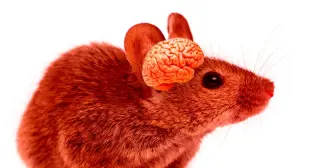
Scientists transplanted human brain organoids into developing rat embryos, enabling vascularization and functional integration that allowed the human cells to respond to stimuli and influence a rat’s behavior — a breakthrough for human-brain models, but raising ethical questions about consciousness, donor consent, and animal welfare.

Diverse autism mutations converge on a shared chromatin-regulation network in stem-cell–derived human cortex
science2 months ago

Diverse autism mutations converge on a shared chromatin-regulation network in stem-cell–derived human cortex

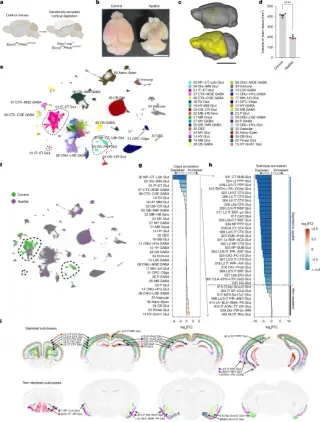
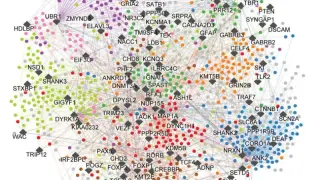
A large hiPSC-based study generated cortical organoids from eight ASD-risk mutations, idiopathic ASD, and controls, profiling gene expression across 25–100 days. Early mutation-specific changes give way to convergent transcriptional and chromatin-regulatory disruptions enriched for ASD risk genes, including SWI–SNF components. CRISPRi validation supports key regulators driving this convergent network, suggesting that diverse genetic risks in ASD propagate through shared transcriptional pathways that affect early neurodevelopment, while idiopathic cases show less convergence.

Rapid Nasal Interferon Response May Stop Colds Before Symptoms Start
science2 months ago

Rapid Nasal Interferon Response May Stop Colds Before Symptoms Start

Lab-grown human nasal tissue reveals that an early interferon-driven antiviral defense in nasal cells can stop rhinovirus infection and prevent illness. When this response is fast, the virus is contained with few or no symptoms; if it lags, infection spreads, triggering inflammation and mucus. The findings point to therapies that boost the body's own defenses rather than targeting the virus itself.

Embracing Alternatives to Animal Testing for a Sustainable Future
science5 months ago

Embracing Alternatives to Animal Testing for a Sustainable Future

Innovative approaches called NAMs are replacing animal testing in biomedical research, offering more human-relevant, ethical, and cost-effective methods for drug testing and understanding biology. Despite progress and regulatory support, adoption faces resistance, especially in publishing and funding, highlighting the need for systemic change in scientific practices.