
Chinese researchers develop 'Detangle' electric comb that restores 99% of hair in mice
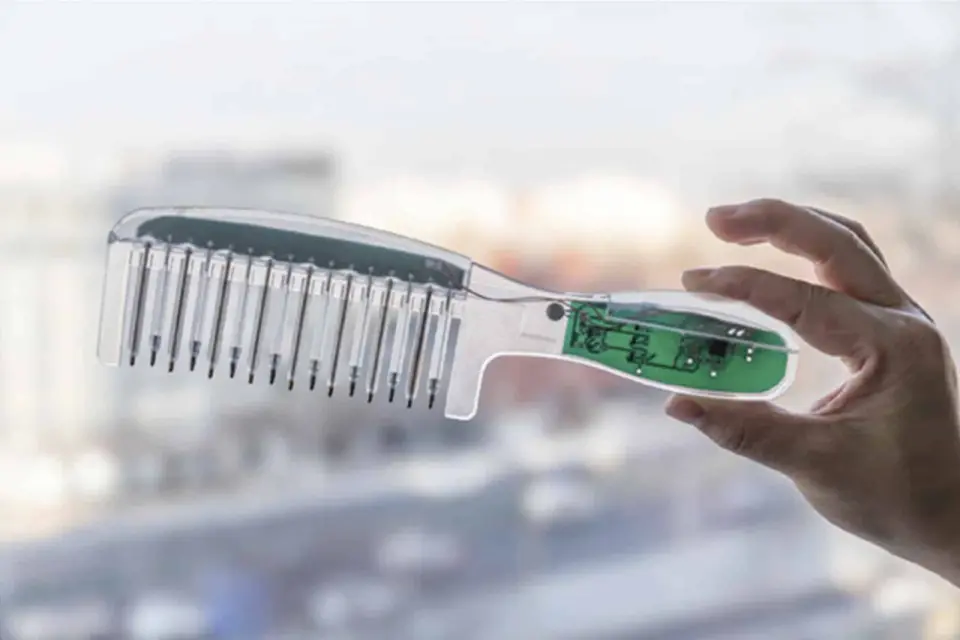
A new bioelectronic comb called Detangle, developed by researchers at Beihang University in China, achieved near-total hair regrowth in mice with pattern baldness within 30 days. The device uses electrical pulses to deliver genetic therapies deep into hair follicles, outperforming standard treatments like minoxidil in animal trials. While the results are promising, the technology remains in the early stage of animal testing and has not yet been validated in humans.
Key points
- Detangle is a comb-shaped bioelectronic device that uses electrodes to generate an electric field, increasing cell membrane permeability to deliver therapeutic substances approximately 660 micrometers deep into the skin.
- The device delivers two genetic treatments simultaneously: a DNA plasmid to promote blood vessel growth and siRNA to suppress the enzyme that produces dihydrotestosterone (DHT), a hormone linked to hair loss.
- In trials, mice treated with Detangle every three days for 28 days regained nearly 100% of their hair, compared to roughly 70% regrowth in mice treated with daily minoxidil.
- The device aims to overcome the limitations of topical treatments, which often fail to penetrate the skin sufficiently, and oral medications, which can cause systemic side effects.
- Researchers note that while the mouse results are significant, human hair follicles and hormonal responses differ, requiring further studies to determine safety, dosage, and long-term efficacy in people.
Background
This development follows a trend of innovative approaches to tissue regeneration, such as recent Stanford research on regrowing knee cartilage using 15-PGDH inhibitors. It also joins a broader wave of hair loss treatments, including new oral minoxidil formulations and topical combinations, aimed at addressing the 1.5 billion people worldwide affected by androgenetic alopecia. Previous coverage noted the potential of this specific device, but this update confirms the specific genetic mechanisms and comparative efficacy against standard drugs in peer-reviewed trials.
How outlets are covering it
ZME Science and Gizmodo emphasize the dual mechanism of Detangle, highlighting how it addresses both blood vessel formation and DHT suppression. The New York Post focuses on the device's name, inspired by the Disney film 'Tangled,' and its potential to outperform existing FDA-approved drugs like Rogaine. New Atlas provides a broader context, noting that while the mouse results are impressive, human tolerability and long-term safety remain open questions. All sources agree that the device represents a significant proof of concept for deep tissue delivery in dermatology, but caution that human trials are necessary to confirm these results.
Why it matters
If successful in humans, Detangle could offer a non-invasive, daily treatment option for the 1.5 billion people affected by androgenetic alopecia. It addresses the limitations of current treatments by ensuring therapeutic agents reach the hair follicles effectively, potentially reducing the need for systemic medications with side effects. The technology could also be adapted for other dermatological conditions requiring deep tissue delivery.
What to watch
Researchers will need to conduct human trials to determine the appropriate treatment frequency, dosage, and long-term safety. They must also verify if the device can produce comparable results in human hair follicles, which may differ from those in mice. Further studies will explore the device's potential for other skin conditions.
- Electric Comb Regrows Nearly All Lost Hair in Balding Mice in Just 30 Days ZME Science
- Could this experimental electric comb be a cure for baldness? Medical Xpress
- Device inspired by Disney’s ‘Tangled’ could help battle hair loss even better than Rogaine New York Post
- Electric comb could give thinning hair a chance to bounce back New Atlas
- An Experimental Electric Comb May Stave Off Baldness Gizmodo
Want the full story? Read the original reporting
Read on ZME Science