Tag

Bioelectronics

All articles tagged with #bioelectronics

Beihang University’s 'Detangle' Comb Achieves Near-Total Hair Regrowth in Mice
science9 days ago

Beihang University’s 'Detangle' Comb Achieves Near-Total Hair Regrowth in Mice

Researchers at Beihang University in Beijing have developed a bioelectronic comb named 'Detangle' that achieved nearly 100% hair regrowth in mice with androgenetic alopecia within one month. Published in Nature Communications, the study shows the device outperforms minoxidil, which typically yields around 70% restoration. The comb uses height-differentiated electrodes and drug-loading molecules to stimulate follicles, though it remains in the animal testing phase with no human trials yet conducted.

Beihang University's 'Detangle' Comb Shows 100% Hair Regrowth in Mice, Outpacing Minoxidil
science-and-health10 days ago

Beihang University's 'Detangle' Comb Shows 100% Hair Regrowth in Mice, Outpacing Minoxidil

Researchers at Beihang University in Beijing have developed an electronic comb called 'Detangle' that achieved nearly 100% hair regrowth in mice with androgenetic alopecia within one month. Published in Nature Communications, the study indicates the device outperforms minoxidil, which typically yields around 70% restoration. The comb uses height-differentiated electrodes and drug-loading molecules to stimulate follicles, though it remains in the animal testing phase with no human trials yet conducted.
Beihang University’s 'Detangle' Comb Achieves 98% Hair Regrowth in Mice
science-and-health12 days ago

Beihang University’s 'Detangle' Comb Achieves 98% Hair Regrowth in Mice

Researchers at Beihang University in Beijing have developed a bioelectronic comb called Detangle that achieved near-total hair regrowth in mice with pattern baldness. Published in Nature Communications, the study shows the device uses electrical pulses and genetic therapies to restore hair coverage by 97.85% in 28 days, outperforming standard treatments like minoxidil. While the results are promising, the technology remains in early animal testing stages and has not yet been validated in humans.

Chinese researchers develop 'Detangle' electric comb that restores 99% of hair in mice
science-and-health15 days ago

Chinese researchers develop 'Detangle' electric comb that restores 99% of hair in mice

A new bioelectronic comb called Detangle, developed by researchers at Beihang University in China, achieved near-total hair regrowth in mice with pattern baldness within 30 days. The device uses electrical pulses to deliver genetic therapies deep into hair follicles, outperforming standard treatments like minoxidil in animal trials. While the results are promising, the technology remains in the early stage of animal testing and has not yet been validated in humans.

biomedical-engineering20 days ago

Penn State Team Develops Suture-Free Hydrogel Implant to Lower Blood Pressure in Rats

Researchers at Penn State have created CaroFlex, a soft, 3D-printed bioelectronic implant designed to treat drug-resistant hypertension. The device attaches to the carotid sinus without stitches, using electrical stimulation to activate the body’s natural baroreflex. In rat trials, it reduced blood pressure by over 15% with no tissue damage, offering a potential alternative to multiple medications for difficult-to-control cases.

Ink-on-skin tattoo reads ECG and drives a robotic hand
technology4 months ago

Ink-on-skin tattoo reads ECG and drives a robotic hand

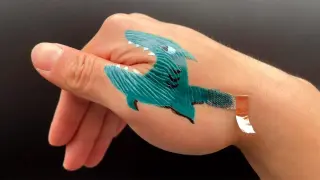
Penn State researchers created a washable, paint-on electronic tattoo using conductive ink that dries on the skin to form an electrode for ECG/EMG/EEG signals. The tattoo connects to a Bluetooth module via a porous silver textile and can control a robotic hand in tests. It can be customized with colors and is designed to stay attached during movement, offering a more comfortable alternative to traditional patches. Future work could include monitoring biomarkers like glucose or cortisol and even plant health, but the technology is not yet ready for consumer use or clinical diagnosis, and it has not been tested on heart-attack patients.

Layered soft transistors bridge biology and electronics
technology6 months ago

Layered soft transistors bridge biology and electronics

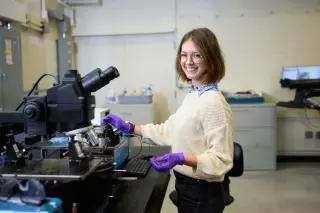
MIT DMSE PhD Camille Cunin developed mille-feuille-like polymer–metal stacks to make soft, stretchable organic transistors for bioelectronic interfaces, addressing ion–electron transport in hydrated tissues and mechanical compatibility with the body; the layered design, created with collaborators, advances brain-implantable electrode concepts and has led to a patent application. She completed her PhD in February and now works near Boston on soft electrodes, while also organizing MIT Polymer Day and pursuing salsa dancing and Blender-based journal art.

Printed Neurons Talk to Living Brain Cells, Paving Energy-Efficient Neuromorphic Tech
technology7 months ago

Printed Neurons Talk to Living Brain Cells, Paving Energy-Efficient Neuromorphic Tech

Northwestern University researchers developed flexible, aerosol-jet-printed artificial neurons made from MoS2 nanosheets and graphene that generate complex, neuron-like signals and can reliably stimulate living mouse brain tissue, signaling a scalable, energy-efficient route to brain–machine interfaces and brain-inspired computing.

Low-voltage artificial neuron enables direct communication with living tissue
science8 months ago

Low-voltage artificial neuron enables direct communication with living tissue

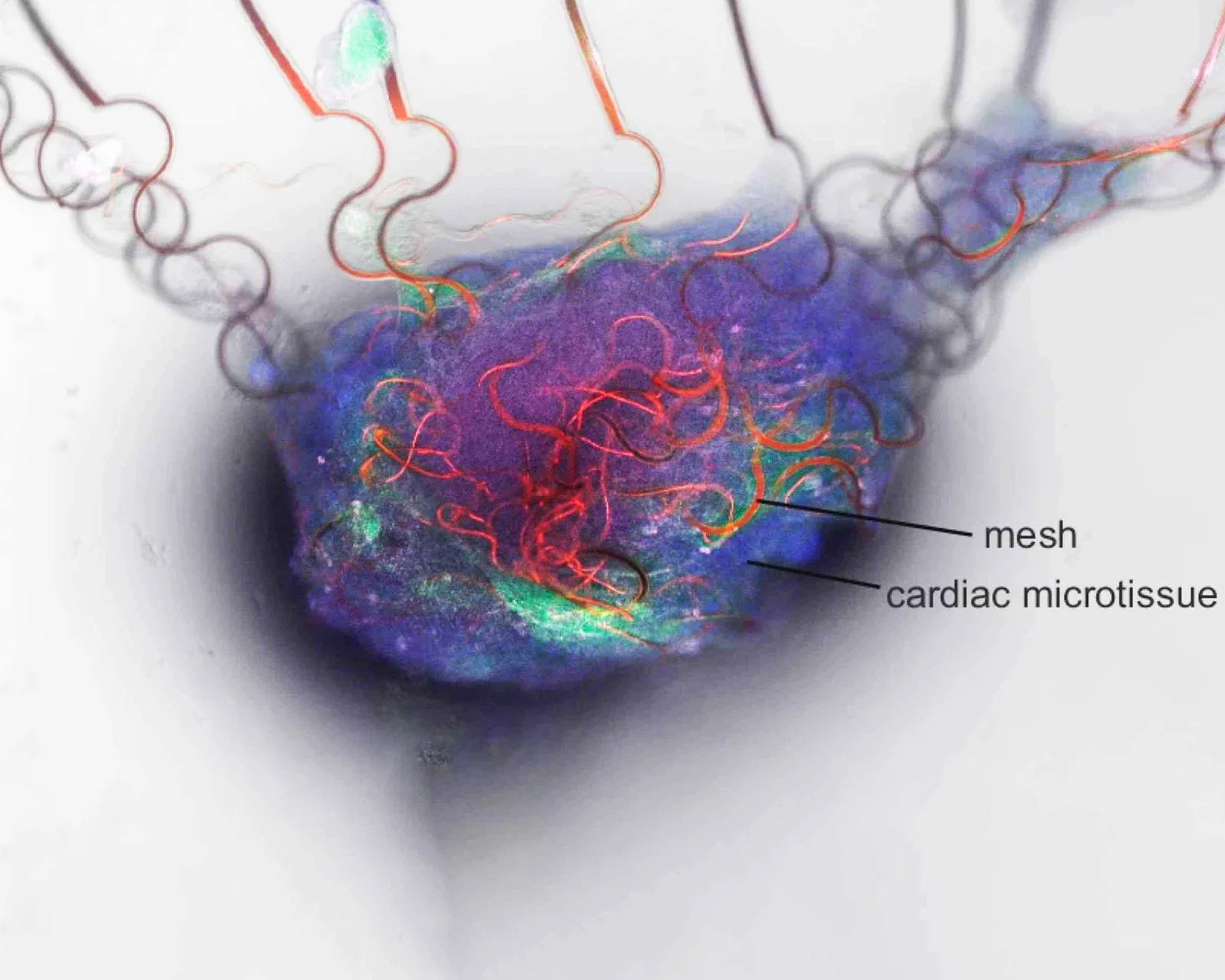
Researchers built a low-voltage artificial neuron that operates at biological neuron voltages (~60–130 millivolts) using a memristor tuned with Geobacter nanowires, producing neuron-like spikes and enabling real-time communication with living cells (initially cardiomyocytes), with energy efficiency and fewer amplification needs—paving the way for closer brain–machine integration, though not yet a medical device.

Soft-filament probe enables real-time multimodal fetal monitoring in utero
technology10 months ago

Soft-filament probe enables real-time multimodal fetal monitoring in utero

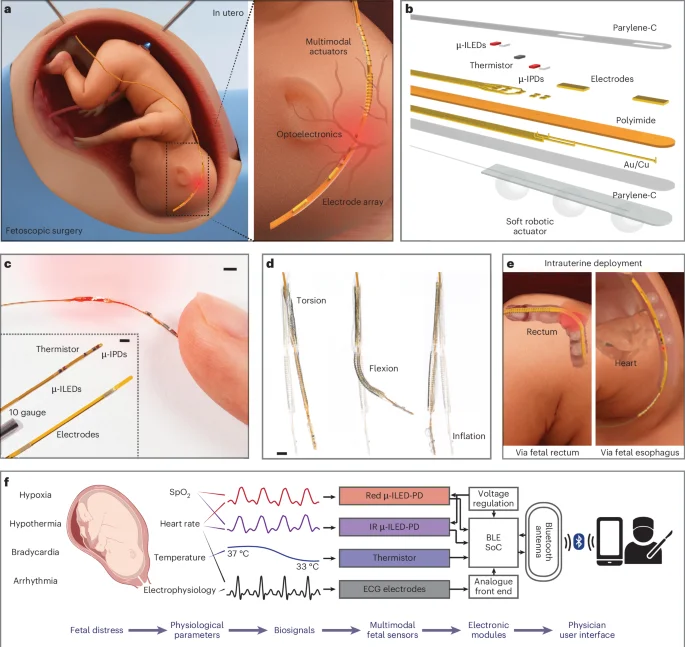
A filamentary, steerable soft robotic probe with integrated multimodal sensors interfaces directly with the fetus to monitor vital signs and physiology in real time during fetoscopic and open fetal surgeries in rodent and sheep models, enabling detection of bradycardia, hypoxia and hypothermia and offering a path toward translation to human fetal care.

Revealing Health Insights Through Sweat Analysis with Wearable Sensors
health-and-science1 year ago

Revealing Health Insights Through Sweat Analysis with Wearable Sensors

The podcast discusses how sweat, which contains biomarkers similar to blood, could revolutionize health monitoring through non-invasive, continuous wearable devices, enabling insights into hydration, nutrient levels, kidney health, and more, with Professor John Rogers highlighting recent technological advances in sweat collection and analysis.

"Invisible 'Spider Silk' Sensors Printed Directly on Skin"
technology2 years ago

"Invisible 'Spider Silk' Sensors Printed Directly on Skin"

Researchers at the University of Cambridge have developed eco-friendly, adaptive sensors inspired by spider silk that can be imperceptibly printed onto various biological surfaces, including human skin and flower petals. These lightweight, high-performance bioelectronic fibers can be used for continuous health monitoring, virtual reality, and environmental monitoring, offering a sustainable and low-waste alternative to traditional sensor technologies.