
Engineered Bacteria Deliver Prophylactic Phage Defense Against Salmonella in Mice
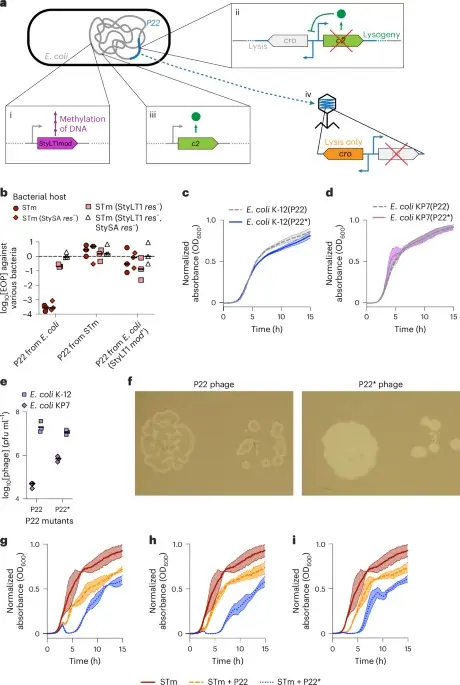
Researchers have developed a new prophylactic strategy using engineered non-pathogenic E. coli to produce lytic phages that prevent Salmonella enterica Typhimurium (STm) infection in mice. By establishing high concentrations of phage in the gut before exposure, this 'prophage therapy' overcomes the limitations of traditional post-infection phage treatments, significantly improving survival and reducing bacterial colonization in colitis models.
Key points
- Engineered E. coli strains were modified to encode a P22 prophage that produces obligately lytic phages targeting STm, bypassing host defense systems like restriction-modification mechanisms.
- Prophylactic administration of these 'lyto-lysogens' established high phage levels in the gut, inhibiting STm establishment and improving survival in mouse models of colitis.
- The approach outperformed conventional therapeutic phage administration, which failed to prevent infection due to rapid phage clearance and low phage-to-bacteria ratios in the gut.
- Using a mutant STm strain limited to intestinal colonization, the engineered bacteria consistently eliminated the pathogen, demonstrating effective colonization resistance against enteric infections.
Background
This study builds on growing interest in phage therapy as an alternative to antibiotics, particularly in the context of rising antimicrobial resistance. Previous efforts have focused on treating established infections, often with mixed results for enteric pathogens. Recent developments, such as AI-engineered phages and smart probiotics, highlight the potential of synthetic biology in targeting specific pathogens. However, this research shifts the paradigm from therapeutic to prophylactic application, addressing the challenge of achieving high phage concentrations before infection occurs.
Why it matters
This proof-of-concept demonstrates a viable strategy for preventing enteric infections like Salmonella, which poses a significant global health burden, especially in vulnerable populations. By leveraging engineered bacteria to produce phages in situ, the approach overcomes the logistical and biological barriers of traditional phage therapy, offering a potential new avenue for combating antibiotic-resistant pathogens and reducing the need for broad-spectrum antibiotics.
What to watch
Future research will focus on translating this approach to human clinical trials, addressing challenges such as the use of human commensal E. coli strains, the absence of antibiotics in human hosts, and the biogeographical compatibility between the engineered bacteria and the targeted pathogens. Additionally, expanding the host range of the phages and testing against other enteric pathogens will be crucial for broadening the applicability of this prophylactic strategy.
Want the full story? Read the original reporting
Read on Nature