
Pilot Trial Finds 10-Minute Ultrasound Sessions Reduce Delusions in Schizophrenia
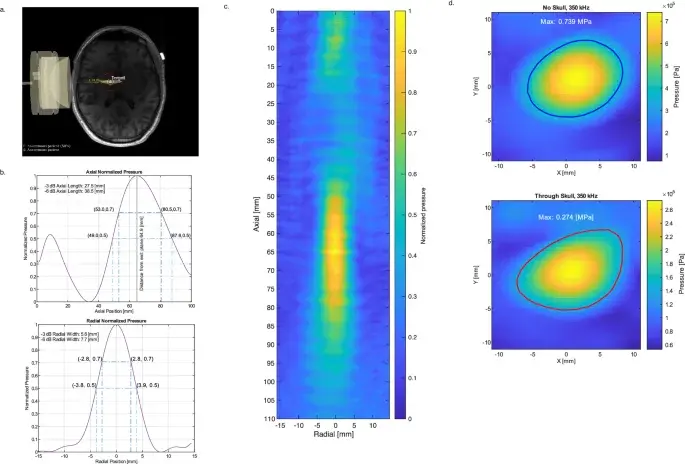
A small pilot study published in Nature found that a single 10-minute session of transcranial ultrasound stimulation (TUS) targeting the right globus pallidus interna (GPi) significantly reduced delusion severity in patients with schizophrenia. While the treatment was safe and well-tolerated, researchers emphasize that larger trials are needed to confirm efficacy, as the current study involved only 10 participants and lacked neuroimaging confirmation of target engagement.
Key points
- Ten outpatients with schizophrenia or schizoaffective disorder received one active TUS session and one sham session, separated by one week.
- Delusion scores decreased significantly more after TUS than after sham (p = 0.002, Cohen’s d = 0.68), with the largest effect observed at day 7.
- No serious adverse events occurred; mild side effects like fatigue and headache were reported in both groups.
- Auditory hallucinations and cognitive function showed no significant changes following the stimulation.
- The study was limited by a small sample size, technical issues with fMRI data, and potential blinding integrity concerns.
Background
This study builds on prior research linking functional abnormalities in the GPi to psychosis severity and treatment response in schizophrenia. Earlier coverage noted that TUS could offer an alternative to antipsychotic medications, which often cause systemic side effects. Recent studies on deep brain stimulation for depression have highlighted the importance of precise neural pathway targeting, a principle relevant to the MRI-guided targeting used in this TUS trial.
How outlets are covering it
Nature reports the primary findings, emphasizing the safety and preliminary efficacy of GPi-targeted TUS while noting limitations such as the lack of neuroimaging confirmation and small sample size. Live Science highlights the potential of ultrasound waves to 'jiggle' deep brain structures, framing the results as a promising hint for future treatments. MedPage Today summarizes the study as a 'modest but significant' drop in delusion scores, placing it within a broader context of mental health research. Inside Precision Medicine focuses on the targeted nature of the brain ultrasound, suggesting it could help relieve schizophrenia symptoms. All outlets agree on the preliminary nature of the findings and the need for larger trials.
Why it matters
This study suggests that non-invasive, targeted brain stimulation could be a viable adjunct or alternative to traditional antipsychotic treatments for schizophrenia, potentially reducing systemic side effects. If confirmed in larger trials, TUS could offer a new therapeutic option for patients with persistent psychotic symptoms, particularly those who do not respond well to current medications.
What to watch
Researchers plan to conduct larger, randomized controlled trials to confirm the efficacy of GPi-targeted TUS. Future studies will likely include neuroimaging to verify target engagement, individualized dosing based on skull attenuation, and longer follow-up periods to assess the durability of the effects. The findings may also inform the development of other TUS protocols for different brain regions and psychiatric conditions.
- Transcranial ultrasound stimulation of the right globus pallidus interna in schizophrenia: A randomized, sham-controlled pilot study | npj Acoustics Nature
- Gentle brain ultrasound may help ease delusions in schizophrenia Medical Xpress
- Ultrasound waves that jiggle deep brain structures may relieve delusions in schizophrenia, small trial hints Live Science
- Ultrasounds for Schizophrenia; 'Circadian' Depression; GLP-1s and Eating Disorders MedPage Today
- Targeted Brain Ultrasound Could Help Relieve Schizophrenia Symptoms Inside Precision Medicine
Want the full story? Read the original reporting
Read on Nature