Tag

Schizophrenia

All articles tagged with #schizophrenia

Early-Development ZNF804A Linked to Hyper-Excitable Neurons in Schizophrenia
science5 days ago

Early-Development ZNF804A Linked to Hyper-Excitable Neurons in Schizophrenia

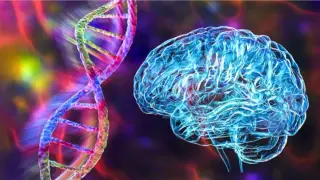
A precision functional genomics study shows the schizophrenia risk gene ZNF804A is most active in glutamatergic neurons during the second trimester. Using CRISPR-Cas9 to suppress ZNF804A in developing neurons increased local protein translation at dendritic tips, raised synapse density, and heightened electrical excitability, linking this genetic risk factor to a specific neurodevelopmental mechanism that may contribute to schizophrenia.

Peripheral Neutrophils Forge C4A Link to Schizophrenia
science6 days ago

Peripheral Neutrophils Forge C4A Link to Schizophrenia

Stanford researchers find neutrophils actively produce C4A, a key schizophrenia risk protein, and in patients these cells pump out more C4A while rapid activation (C4-ana) occurs in plasma. The work links a peripheral immune process to brain synaptic pruning linked to schizophrenia, suggesting blood-based diagnostics and therapies that target the periphery rather than the brain. Clozapine’s neutrophil-depleting effects highlight the need for safer, targeted treatments.

Congenital blindness reveals surprising clues about schizophrenia
science25 days ago

Congenital blindness reveals surprising clues about schizophrenia

Across seven decades of observations and a major 2018 study, scientists have repeatedly found that people born blind due to cortical (brain) damage do not develop schizophrenia, unlike those who become blind later or whose blindness comes from eye disease. The protection seems tied to how the visual cortex is repurposed early in life, potentially stabilizing the brain’s predictive processing and reducing misfired predictions that underlie psychosis. Timing matters: loss of vision later in life doesn’t confer the same protection. These findings point to new directions for treatment that could target perception, learning, and brain circuits (including glutamate systems in the visual cortex) alongside traditional dopamine-focused approaches, though blindness is not a practical safeguard. This line of research deepens our understanding of brain development and the origins of schizophrenia.”

Adolescent Brain Builds Dense Synaptic Hotspots, Challenging Pruning Theory
science29 days ago

Adolescent Brain Builds Dense Synaptic Hotspots, Challenging Pruning Theory

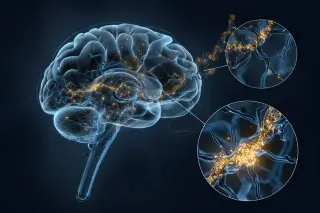
Kyushu University researchers using super-resolution mapping found that adolescence features a dense hotspot of synapses forming along the apical dendrite of Layer 5 neurons, not just widespread pruning; this selective synapse formation emerges between three and eight weeks in mice and depends on intact synapse-building processes, with mutations in schizophrenia-linked genes Setd1a, Hivep2, and Grin1 impairing hotspot formation. The findings, reported in Science Advances, suggest the pruning-centric view of adolescence is incomplete and future work will identify brain regions where these connections form and whether similar mechanisms occur in humans.

Mutant grin2a reveals thalamocortical circuit linked to cognitive deficits in schizophrenia
science2 months ago

Mutant grin2a reveals thalamocortical circuit linked to cognitive deficits in schizophrenia

MIT researchers link a grin2a gene mutation to impaired updating of beliefs in mice via disruption of a mediodorsal thalamus–prefrontal cortex circuit, slowing adaptive decision-making; optogenetic activation of the circuit reversed the behavioral deficits, suggesting circuit-based targets for cognitive symptoms in schizophrenia.

Teen Cannabis Use Triggers Elevated Mental-Health Risks, Study Finds
health2 months ago

Teen Cannabis Use Triggers Elevated Mental-Health Risks, Study Finds

A Johns Hopkins-led study analyzing nearly 700,000 U.S. medical records finds teens with cannabis use disorder have higher risks of schizophrenia, recurrent major depression, and anxiety than peers with other substances, while adults with cannabis use disorder show lower relative psychiatric risk. The researchers propose that cannabis may accelerate onset of mental illness in vulnerable youths or reveal preexisting predispositions, but the results do not prove causation. The findings highlight age-dependent effects and caution against teen use of cannabis, especially high-potency varieties.

Experts push back on RFK Jr.'s keto claim to cure schizophrenia
health3 months ago

Experts push back on RFK Jr.'s keto claim to cure schizophrenia

Experts say RFK Jr.'s assertion that a ketogenic diet cures schizophrenia is not supported by solid evidence; the only hints come from two 2019 case reports by Harvard psychiatrist Christopher Palmer, which are uncontrolled and cannot establish efficacy. Ketosis may aid symptom remission in some cases, but medical supervision is essential and meds should not be stopped. Around 20 trials are exploring keto for psychiatric conditions, with research into mitochondria and brain activity; long-term adherence and cost pose practical challenges, so no cure is proven yet.

Keto Diet Shows Potential for Schizophrenia, But Cure Remains Unproven
health3 months ago

Keto Diet Shows Potential for Schizophrenia, But Cure Remains Unproven

Kennedy’s claim that ketogenic diets cure schizophrenia is not supported by current science. Evidence is preliminary, coming from small studies and case reports that suggest possible symptom improvement when ketosis is achieved under medical supervision, but large, randomized trials showing clear benefit over medication alone are lacking. The Stanford study reported most adherent patients improved but had no control group, and researchers caution that keto should supplement rather than replace antipsychotic treatment while more rigorous research is underway.

Harvard Psychiatrist Refutes Kennedy Keto-Cure Claim for Schizophrenia
health3 months ago

Harvard Psychiatrist Refutes Kennedy Keto-Cure Claim for Schizophrenia

Harvard psychiatrist Christopher Palmer said Kennedy Jr.’s claim that keto diets cure schizophrenia is not accurate; while ketogenic therapy shows promise for some patients, it remains unproven and should not replace antipsychotics without medical supervision. Palmer envisions a future where dietary interventions could play a role, with ongoing trials and funding, as Kennedy’s MAHA movement promotes broader research and access to metabolic treatments.

Brain's self-voice misfire explains hearing voices in schizophrenia
health-and-medicine4 months ago

Brain's self-voice misfire explains hearing voices in schizophrenia

New UNSW research provides the strongest evidence to date that auditory hallucinations in schizophrenia arise when the brain mispredicts its own inner speech, treating thoughts as external voices. EEG tests across three groups (recent AVH, other schizophrenia patients, and healthy controls) showed healthy individuals reduce brain activity for matched imagined/actual sounds, while those currently hearing voices show the opposite pattern, suggesting a disruption in the brain's prediction mechanism and offering a potential biomarker for psychosis and earlier detection.

Mini-Brains Uncover Brain Signals Linked to Schizophrenia and Bipolar Disorder
science4 months ago

Mini-Brains Uncover Brain Signals Linked to Schizophrenia and Bipolar Disorder

Scientists at Johns Hopkins have used lab-grown 'mini-brains' or organoids to identify neural signatures associated with schizophrenia and bipolar disorder, achieving up to 92% accuracy in distinguishing these conditions through electrical activity patterns, which could lead to more objective diagnoses and targeted treatments in the future.