
Single-Nucleus Atlas Maps Genetic Risk Across Brain Cell Types
A coordinated series of nine studies led by the PsychAD Consortium has produced a comprehensive, cell-type-resolved map of genetic risk for major brain disorders. By analyzing over 6 million nuclei from 1,494 donors, researchers identified thousands of gene-trait associations previously missed by bulk tissue analyses. The findings reveal that disorders like Alzheimer’s and schizophrenia share common molecular pathways but exhibit distinct cellular signatures, offering new targets for precision medicine.
Key points
- The PsychAD Consortium published a landmark collection of nine papers across Nature journals, utilizing single-nucleus RNA sequencing data from the dorsolateral prefrontal cortex.
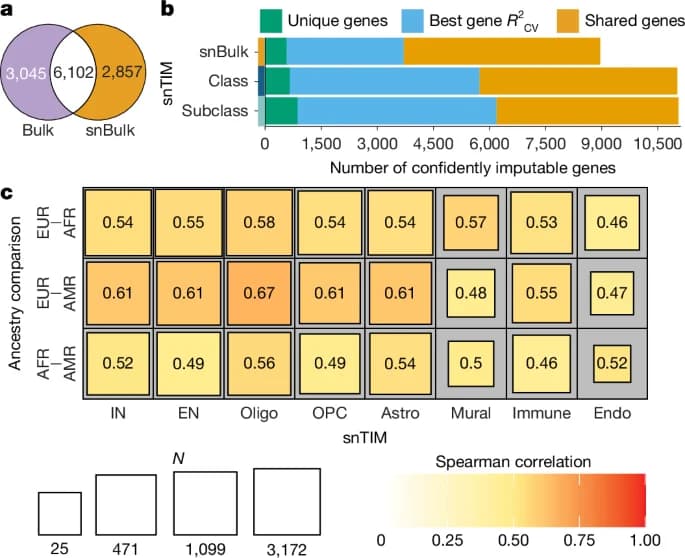
- Researchers developed transcriptomic imputation models that identified thousands of gene-trait associations specific to neuronal, glial, and immune cell populations, which were undetectable in traditional bulk tissue analyses.
- The study confirmed that genetically regulated expression is conserved across European, African, and admixed American ancestries, enabling the mapping of causal genes and pathways.
- Findings highlight shared biological mechanisms across disorders, such as immune cell dysregulation in Alzheimer’s and Parkinson’s disease, while identifying unique signatures for conditions like bipolar disorder and schizophrenia.
- The atlas includes a lifespan analysis showing three distinct molecular phases of brain aging, with significant changes in circadian biology and glial activity after age 60.
Background
This release follows earlier developments in brain research, including the 2026 study on fusing human neurons into mouse brains to probe disorders. While previous work focused on animal models and functional neurological disorders, this new atlas provides a human-centric, population-scale resource for understanding the molecular architecture of neuropsychiatric and neurodegenerative diseases.
How outlets are covering it
Nature emphasizes the technical advancement of single-nucleus transcriptome-wide association studies (snTWAS) in resolving cell-type-specific genetic risks, highlighting the superiority of this method over bulk tissue analyses. Mount Sinai frames the work as a foundational resource for precision medicine, stressing the collaborative scale of the PsychAD Consortium and the potential for new therapeutic targets. Both sources agree on the significance of the data but differ in focus: Nature details the statistical and genetic mechanisms, while Mount Sinai highlights the broader implications for understanding disease convergence and individual patient biology.
Why it matters
This research provides a critical bridge between genetic risk variants and specific cellular mechanisms in the human brain. By identifying cell-type-specific dysregulations, it enables the development of targeted therapies for complex disorders like Alzheimer’s, schizophrenia, and bipolar disorder, moving beyond average disease signatures to address individual molecular diversity.
What to watch
Researchers will utilize this atlas to prioritize therapeutic targets and develop biomarkers for precision medicine. The identified causal genes and pathways will guide future functional studies to validate their roles in disease pathogenesis and potential interventions.
- Single-nucleus transcriptome-wide association study of human brain disorders Nature
- Lifespan single-cell transcriptomic atlas of the human prefrontal cortex Nature
- Nine Studies Led By Mount Sinai Investigators Featured in Coordinated Collection of Papers That Map the Molecular and Cellular Architecture of Brain Disorders Mount Sinai
- Scientists map gene activity in brain's prefrontal cortex Reuters
- Cell map shows the brain ‘changes gear’ twice, aged 24 and 60 The Times
Want the full story? Read the original reporting
Read on Nature