
Study Links Angelman Syndrome to False Stress Signals Triggered by Enzyme Buildup
Researchers at Washington University in St. Louis have identified a molecular mechanism underlying Angelman syndrome, a rare neurodevelopmental disorder. Their study, published in Nature, reveals that the loss of the UBE3A gene leads to an abnormal accumulation of the enzyme asparagine synthetase (ASNS) in neurons. This buildup triggers a false cellular stress response, causing neurons to halt protein synthesis and growth, which results in microcephaly and behavioral deficits. In mouse models, genetically correcting this ASNS overabundance restored normal brain development and improved several behavioral phenotypes, suggesting a potential therapeutic target for the condition.
Key points
- Angelman syndrome, affecting 1 in 20,000 births, is caused by the loss of the maternally inherited UBE3A gene, which encodes an E3 ubiquitin ligase.
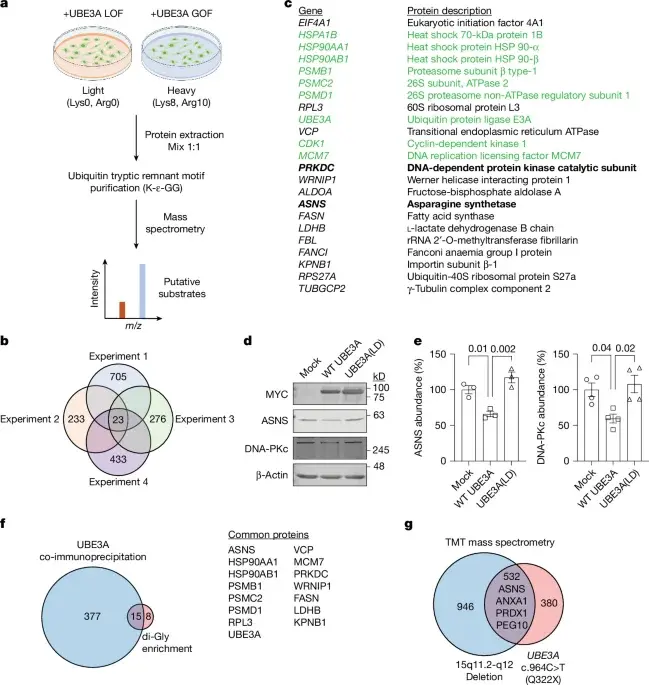
- Using proteomics and gain/loss-of-function mutations, researchers identified 23 potential UBE3A substrates, with asparagine synthetase (ASNS) emerging as a key target.
- In the absence of UBE3A, ASNS protein levels increase in the brains of Ube3a-null mice and human neurons, activating the integrated stress response (ISR).
- This stress response causes a global reduction in neuronal protein synthesis, stunting dendritic growth and leading to microcephaly, a hallmark of the syndrome.
- Genetic correction of ASNS overabundance in mice rescued microcephaly and improved behavioral deficits, including obesity, open field activity, and marble burying, though not all phenotypes were resolved.
- ASNS is expressed predominantly in neurons, with specific enrichment in certain interneuron subclasses, matching the neuron-specific imprinting of UBE3A.
Background
Angelman syndrome has long been known to be caused by the loss of the UBE3A gene, but the specific mechanisms linking this genetic loss to the severe neurological phenotypes remained unclear. Previous research had proposed numerous UBE3A substrates, but establishing a direct link to disease symptoms was difficult. This new study provides a concrete molecular pathway, identifying ASNS as a critical downstream target whose dysregulation drives the disorder's core features. The findings build on earlier understanding of UBE3A's role in neuronal development and the importance of the integrated stress response in cellular homeostasis.
How outlets are covering it
The primary source, Nature, provides a detailed mechanistic account, emphasizing the proteomic identification of ASNS as a UBE3A substrate and the subsequent activation of the integrated stress response. It highlights that while correcting ASNS levels rescues many phenotypes, some deficits, like sleep abnormalities and rotarod performance, persist, indicating other UBE3A substrates are also involved. Secondary sources, including Neuroscience News and WashU Medicine, frame the discovery as a 'false stress alarm' or 'mistaken cellular stress response,' focusing on the therapeutic potential of targeting ASNS. They emphasize the surprise that a normally benign enzyme could trigger such severe developmental arrest. All sources agree on the core finding but differ in emphasis: Nature focuses on the molecular mechanism and incomplete rescue, while the secondary sources highlight the potential for future treatments and the novelty of the discovery.
Why it matters
This research identifies a specific, actionable molecular target for Angelman syndrome, a condition with currently no cure. By demonstrating that correcting ASNS overabundance can restore normal brain development in mice, the study opens a pathway for developing pharmacological inhibitors or other interventions. Understanding the mechanism of 'false stress' in neurons could also have implications for other neurodevelopmental disorders linked to protein imbalances or stress response dysregulation, potentially leading to new therapeutic strategies.
What to watch
The research team is now working to identify the specific receptors and pathways through which ASNS triggers the stress response. They are also mapping the precise anatomical regions and developmental windows where pharmacological inhibitors would be most effective. Further studies are needed to determine if the findings translate to human patients and to identify other UBE3A substrates that contribute to the remaining unresolved phenotypes in Angelman syndrome.
- Persistent neuronal stress signalling underlies Angelman syndrome phenotypes Nature
- Restoring Brain Growth in Angelman Syndrome Neuroscience News
- Buildup of normally harmless enzyme stunts brain growth in mice with Angelman syndrome Medical Xpress
- Build-up of common enzyme stunts brain growth WashU Medicine
Want the full story? Read the original reporting
Read on Nature