
New Atlas Maps Human Neutrophil Diversity to Predict Disease Outcomes
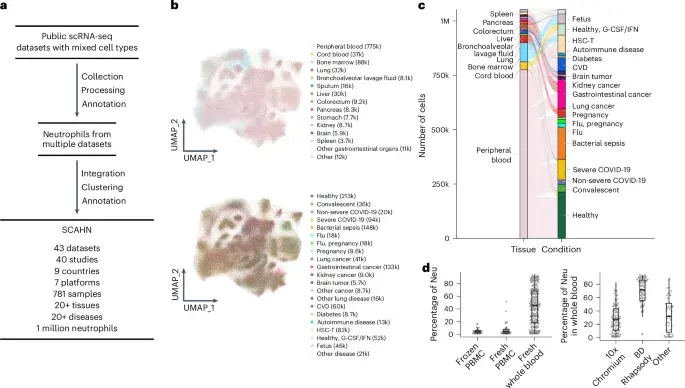
Researchers have created the Single-Cell Atlas of Human Neutrophils (SCAHN), integrating data from one million cells across 781 samples to map neutrophil heterogeneity. The study identifies distinct subsets linked to infection, cancer, and sex differences, demonstrating that neutrophil signatures can predict mortality and disease severity in clinical settings.
Key points
- SCAHN integrates 1 million neutrophils from 43 datasets, revealing multiple subsets with distinct functions across tissues and disease states.
- The atlas identifies robust changes in gene expression and subset proportions during infection, cancer, and immune suppression, highlighting neutrophil complexity.
- Neutrophil-specific signatures predict mortality in acutely ill patients and correlate with cancer survival and metabolic dysfunction.
- Cross-species mapping shows conserved core programs but species-specific differences in granule gene composition between humans, mice, and primates.
- Sex differences were observed, with females showing higher interferon-related subset proportions and males showing higher immature subset markers.
Background
This study builds on recent advances in single-cell immunology, such as the Finnish Immune Atlas and brain cell-type genetic risk maps, which have similarly revealed cellular heterogeneity previously missed by bulk analyses. It aligns with broader trends in precision medicine, where detailed cellular maps are used to identify therapeutic targets and diagnostic markers for complex diseases like cancer and autoimmune disorders.
Why it matters
By unifying neutrophil data across diverse conditions and species, SCAHN provides a standardized framework for understanding innate immune responses. This resource enables better risk stratification for critical illnesses and offers new diagnostic and therapeutic targets, potentially improving patient outcomes in infections and cancers.
What to watch
Researchers will likely apply SCAHN-derived signatures to develop new diagnostic tools and therapies targeting specific neutrophil subsets. Further studies may explore how these signatures influence long-term health outcomes and chronic disease risk using large electronic health record datasets.
Want the full story? Read the original reporting
Read on Nature