
Ancient DNA Analysis Confirms Malaria, Not Poison, Killed Medici Grand Duke
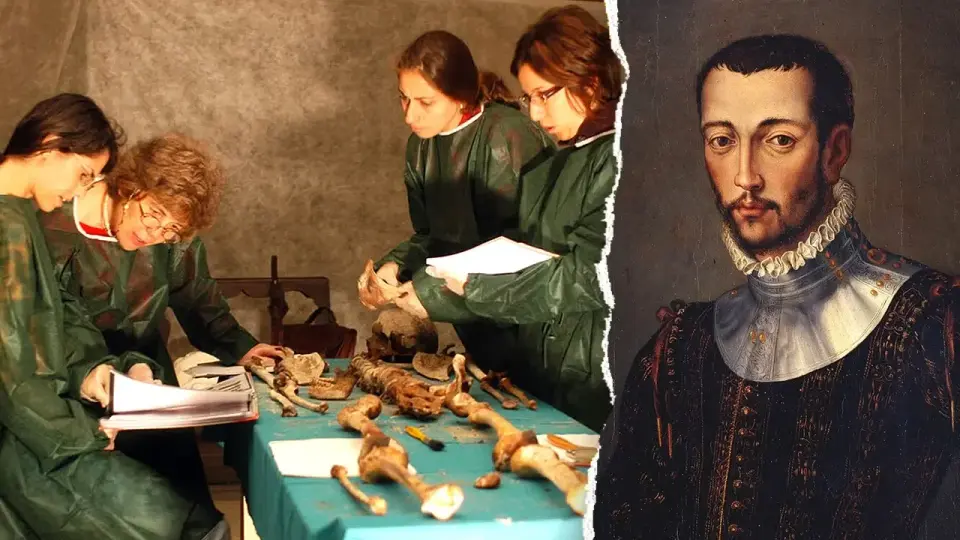
A new study published in iScience uses ancient DNA from the 16th-century Medici family to confirm that malaria, not arsenic poisoning, caused the death of Grand Duke Francesco I de' Medici in 1587. Researchers from Yale and the University of Pisa identified traces of Plasmodium falciparum and P. malariae in his remains, settling a centuries-old debate.
Key points
- Francesco I de' Medici and his wife, Bianca Cappello, died within hours of each other in 1587 after falling ill at a villa in Poggio a Caiano, near Florence.
- Centuries of speculation suggested they were poisoned by Francesco’s brother, Cardinal Ferdinando, to secure the throne, but new genetic evidence points to malaria.
- Researchers analyzed DNA from the ribs of Francesco and his younger brother, Giovanni de' Medici, who died of malaria 25 years earlier.
- The study found genetic traces of two malaria species, Plasmodium falciparum and P. malariae, in Francesco’s remains, suggesting a possible double infection.
- A previously unknown strain of Plasmodium falciparum was identified in Giovanni’s remains, offering insights into the parasite's evolution in Renaissance Italy.
Background
The Medici family ruled Florence and Tuscany from 1434 to 1737, and their history is marked by political intrigue and assassinations. The deaths of Francesco and Bianca in 1587 sparked rumors of arsenic poisoning, supported by a 2006 toxicological study. However, previous paleo-immunological analyses had already suggested malaria, but lacked the definitive genetic proof provided by this new study.
How outlets are covering it
Fox News and The Times of India emphasize that the DNA findings effectively debunk the poisoning theory, calling it 'scientific proof' and 'hard DNA proof.' CNN provides a more nuanced view, noting that while the evidence strongly supports malaria, it cannot completely rule out the possibility of concurrent poisoning. Donatella Lippi, a professor at the University of Florence, maintains that Francesco was poisoned, citing skin eruptions and preserved tissue evidence, though she acknowledges the new DNA findings. CNN also highlights that the study contributes to understanding malaria's evolution, a point echoed by Fox News and The Times of India.
Why it matters
This study demonstrates the power of ancient DNA in resolving historical mysteries and provides valuable data on the evolution of malaria. Understanding how the parasite changed over time can improve modern methods and models for controlling the disease, which still causes hundreds of thousands of deaths annually.
What to watch
Researchers hope that similar genomic approaches can be applied to other historical mysteries. The findings may also prompt further toxicological analyses to definitively rule out or confirm the presence of arsenic in the Medici remains.
- DNA cracks centuries-old murder mystery involving one of history's most famous families Fox News
- Scientists link malaria to deaths of Francesco I de’ Medici and Bianca Cappello Межа. Новини України.
- Medici family murder mystery may be solved after over 400 years with new DNA analysis CNN
- Medici ruler ‘killed with arsenic’ may have died from malaria The Times
- 16th-century murder mystery solved: Ancient DNA indicates Medici ruler 'killed with arsenic' may have died from malaria The Times of India
Want the full story? Read the original reporting
Read on Fox News