
Enzymatic Engineering Yields Safer, More Potent Polyene Antifungals
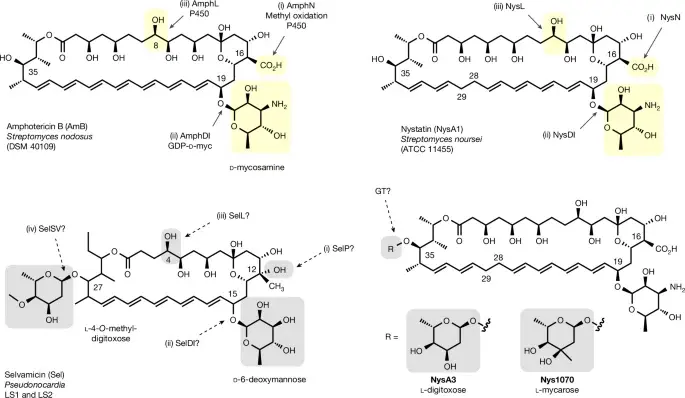
Researchers at Imperial College London and the University of Manchester have developed a new class of polyene antifungal drugs using enzymatic methods. By modifying the structure of nystatin, they created derivatives that are more potent and less toxic than current standards like amphotericin B. The lead candidate, Nys34, showed significant efficacy in mouse models of invasive aspergillosis with reduced toxicity in human cell lines. This approach offers a scalable, cost-effective alternative to traditional chemical synthesis, potentially addressing the global crisis of fungal drug resistance.
Key points
- A team led by Jason Micklefield used genome mining to identify glycosyltransferase and amidotransferase enzymes that modify polyene scaffolds.
- The addition of a second sugar group (L-digitoxose) and modification of the C16 carboxylate group improved antifungal potency and reduced toxicity.
- The lead candidate, Nys34, reduced fungal burden by 87% in a mouse model of invasive aspergillosis without significant toxicity signs.
- Nys34 appears to act via a different mechanism than amphotericin B, potentially allowing it to evade existing resistance mechanisms.
- The enzymatic approach is more efficient and cleaner than traditional multi-step chemical synthesis, which often yields less than 1%.
Background
Polyenes like amphotericin B and nystatin are frontline treatments for fungal infections but are limited by severe toxicity and poor solubility. Previous efforts to improve these drugs relied on costly, step-inefficient chemical syntheses. Fungal diseases are an escalating threat due to rising antimicrobial resistance and a lack of new treatments. This study builds on earlier discoveries of polyene biosynthetic pathways and the need for safer, more effective alternatives.
How outlets are covering it
The primary source, Nature, provides detailed technical data on the enzymatic modifications and their effects on bioactivity and toxicity. C&EN emphasizes the potential for scalable fermentation and the need for further mechanism studies. Genetic Engineering and Biotechnology News highlights the use of genome mining and the potential for evading resistance. Innovation News Network focuses on the broader impact on global health and the potential for improved access to antifungal medicines in lower-income countries. All sources agree on the significance of the findings but differ in their emphasis on technical details, scalability, and global health implications.
Why it matters
Fungal infections are a growing global health threat, with rising resistance to existing treatments. The development of safer, more potent polyene antifungals could save lives and reduce the burden on healthcare systems. The enzymatic approach offers a scalable and cost-effective method for producing these drugs, potentially improving access in lower-income countries. The potential for evading resistance mechanisms is particularly significant in the context of the global antimicrobial resistance crisis.
What to watch
The researchers plan to further develop Nys34 and other promising compounds, with the long-term goal of progressing the most successful candidates towards clinical testing in humans. They are also exploring more combinations of enzymatic modifications to identify additional drug candidates. The team is seeking industry partnerships to continue developing Nys34 as a drug candidate and is looking into engineering the enzymes to access a wider range of molecules.
- Enzymatic glycosylation and amidation reshapes polyene bioactivity Nature
- Enzymes open a new path to improve antifungal drugs C&EN
- Genome Mining Points to Less Toxic, More Potent Polyene Antifungals in Mice Genetic Engineering and Biotechnology News
- UK researchers develop safer antifungal drugs to tackle drug-resistant infections Innovation News Network
- New antimicrobials may help combat deadly drug-resistant infections Bioengineer.org
Want the full story? Read the original reporting
Read on Nature