Tag

Enzyme Engineering

All articles tagged with #enzyme engineering

science3 months ago

New AI-Robotics Platform Achieves 104-Fold Enzyme Activity Boost

Researchers at Tianjin University and Arizona State University developed REAP, a closed-loop platform combining AI and robotics to accelerate enzyme engineering. By using a hybrid loss function called RankReg, the system optimizes both ranking and quantitative accuracy to identify functional hotspots, including distal regions. Applied to cytochrome P450 BM3, REAP achieved a 57-fold activity improvement in five cycles, and up to 104-fold enhancement for Staphylococcus aureus Sortase A, demonstrating a scalable method for biocatalyst discovery.

Enzymatic Engineering Yields Safer, More Potent Polyene Antifungals
science-and-medicine3 months ago

Enzymatic Engineering Yields Safer, More Potent Polyene Antifungals

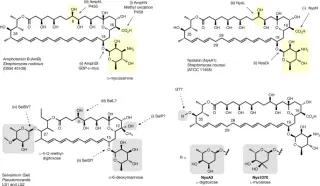
Researchers at Imperial College London and the University of Manchester have developed a new class of polyene antifungal drugs using enzymatic methods. By modifying the structure of nystatin, they created derivatives that are more potent and less toxic than current standards like amphotericin B. The lead candidate, Nys34, showed significant efficacy in mouse models of invasive aspergillosis with reduced toxicity in human cell lines. This approach offers a scalable, cost-effective alternative to traditional chemical synthesis, potentially addressing the global crisis of fungal drug resistance.

"Accelerated Evolution: Harnessing a New E. coli Strain for Gene Modification"
science-and-technology2 years ago

"Accelerated Evolution: Harnessing a New E. coli Strain for Gene Modification"

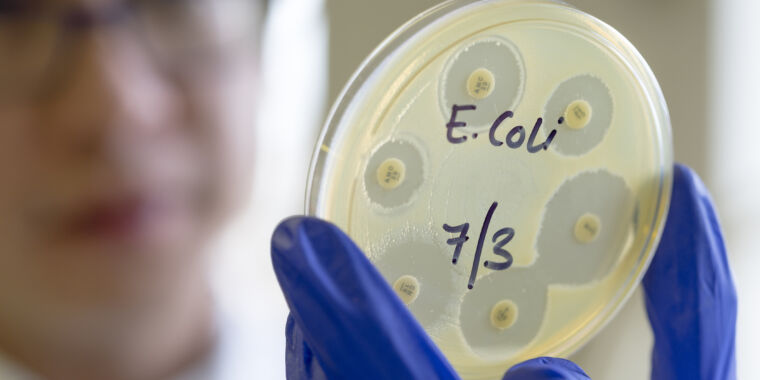
Researchers at Cambridge have developed a synthetic DNA replication system in E. coli that allows for rapid and risk-free generation of genetic mutations, accelerating evolution of specific genes. This system, inspired by nature, uses an error-prone DNA replication enzyme to spur rapid evolution while leaving the organism's essential genes unaffected. The researchers successfully demonstrated the system's ability to evolve new functions, such as antibiotic resistance and increased fluorescence in a gene encoding green fluorescent protein. This approach could have significant implications for developing enzymes and proteins with applications in research, medicine, and industry.

"Harnessing Nature's Power to Disrupt Synthetic Chemical Bonds"
science-and-technology2 years ago

"Harnessing Nature's Power to Disrupt Synthetic Chemical Bonds"

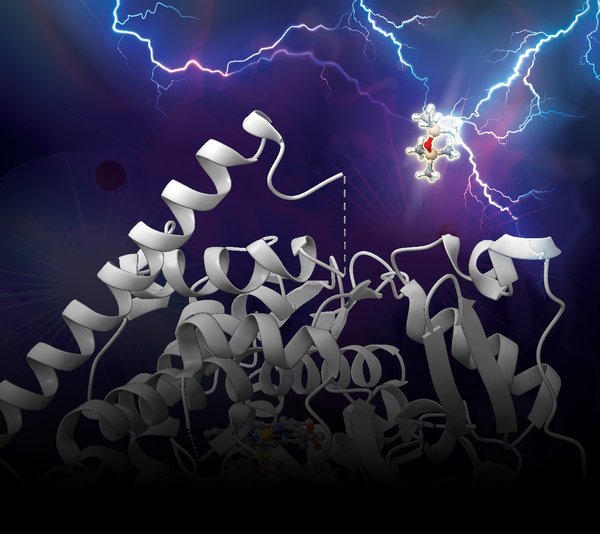
Scientists have successfully engineered an enzyme capable of breaking man-made silicon-carbon bonds found in widely used siloxane chemicals, marking a significant step towards making these chemicals biodegradable. The breakthrough, achieved through directed evolution, could lead to the development of natural organisms or improved enzymes that can degrade siloxanes, which are present in various household and industrial products. The research, published in the journal Science, offers promising implications for environmental and health safety, as siloxanes are known to persist in the environment and pose potential risks.