
UCSF Study: Single Brain Implant Decodes Speech and Gestures Simultaneously
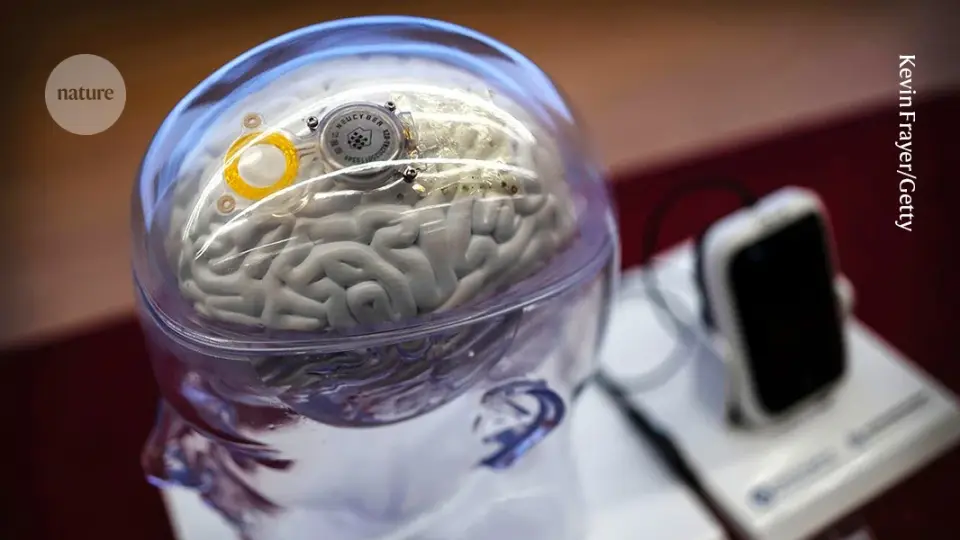
Researchers at the University of California, San Francisco (UCSF) have demonstrated a brain-computer interface (BCI) that decodes both speech and physical gestures simultaneously. Published in Nature Neuroscience on September 14, 2026, the study shows that a single implant can translate neural activity into text and animate a digital avatar, addressing a gap in current BCI technology that typically restores only one communication mode at a time. The system uses machine learning to distinguish overlapping neural signals, offering a potential path toward more natural, multifunctional communication for people with severe paralysis.
Key points
- The new BCI system, developed by UCSF researchers, is the first to translate both verbal and non-verbal communication modes simultaneously within seconds of user intent.
- The device uses an array of 253 electrodes placed on the sensorimotor cortex to capture neural signals related to both speech and body movements.
- Machine learning algorithms were trained on data from simultaneous speech and gesture tasks, proving that combined communication is not merely the sum of separate signals but involves distinct neural patterns.
- The study involved participants with amyotrophic lateral sclerosis (ALS) and brainstem strokes, demonstrating the ability to control a personalized animated avatar and generate text.
- The current system is a wired proof-of-concept; researchers plan to test a fully implantable, wireless version for long-term use.
Background
This development follows recent advances in BCI technology, including a Paradromics device that enabled a 68-year-old woman with a paralyzing disorder to converse in real time by imagining speech (covered in our archive on September 14, 2026). While previous BCIs have restored speech or cursor control individually, this study addresses the limitation that most systems focus on one function at a time. The work builds on earlier UCSF efforts using electrocorticography (ECoG) arrays to control digital faces, now expanding to full-body avatars to capture the holistic nature of human communication.
How outlets are covering it
Nature highlights the technical challenge of decoding overlapping neural signals, noting that simultaneous speech and gesturing creates different neural patterns than isolated tasks. The NIH emphasizes the clinical potential for patients with ALS or brainstem strokes, stating that current eye-tracking technologies are slow and exhausting, whereas this BCI offers a more natural solution. The New York Times focuses on a separate but related Paradromics trial involving a 68-year-old woman, illustrating the broader momentum in real-time speech decoding. Christian Herff of Maastricht University expressed hope that such neural prostheses could enter daily usage, while UCSF’s Edward Chang noted that the system aims to restore the 'freedom and flexibility' of natural expression. Critics may note that the current system is wired and patient-specific, with generalization challenges remaining.
Why it matters
This breakthrough moves BCI technology closer to restoring the full spectrum of human communication, not just speech. For the millions of people affected by paralysis from conditions like ALS or stroke, the ability to convey meaning through gestures and words simultaneously could significantly improve social interaction and independence. It also validates the hypothesis that the brain encodes multimodal communication in distinct ways, guiding future AI training for more accurate neural decoding.
What to watch
The UCSF team plans to test a fully implantable, wireless version of the BCI to improve long-term usability. Researchers will also work to expand the vocabulary and range of gestures the system can decode, moving beyond the limited set used in the proof-of-concept. Broader trials may assess the device’s performance in real-world settings, addressing challenges related to surgical invasiveness and model generalization across different patients.
- ‘Multifunctional’ brain implant translates speech and gestures in real time Nature
- ‘I Have a Lot to Say’: Brain Implant Helps a Disabled Patient Speak The New York Times
- A new device lets severely paralysed patients communicate more effectively economist.com
- Simultaneous speech and gesture decoding for multimodal communication in paralysis Nature
- Neuroprosthesis for paralysis enables simultaneous speech and body language National Institutes of Health (NIH) | (.gov)
Want the full story? Read the original reporting
Read on Nature