Tag

Brain Computer Interface

All articles tagged with #brain computer interface

Brain-Driven Hearing: Real-Time Focused Listening Using Neural Signals
science14 days ago

Brain-Driven Hearing: Real-Time Focused Listening Using Neural Signals

Columbia University researchers demonstrated the first real-time brain-controlled hearing system that uses implanted electrodes to detect which speaker a listener is focusing on and dynamically amplify that voice while quieting others, addressing the cocktail party problem. Tested in epilepsy patients, the system decoded attention from brain activity with machine-learning algorithms, improving speech intelligibility and reducing listening effort, and was consistently preferred by users. Published in Nature Neuroscience, this invasive approach paves the way for wearable, brain-sensing hearing aids that could someday operate in real-world noisy environments.

Researchers Print Artificial Neurons Capable of Interacting With Live Brain Cells
science26 days ago

Researchers Print Artificial Neurons Capable of Interacting With Live Brain Cells

A Northwestern team used aerosol jet printing to fabricate artificial neurons from molybdenum disulfide and graphene, with a partially decomposed polymer substrate that forms conductive filaments; these artificial neurons can generate neuron-like spikes and, when interfaced with a mouse cerebellum, trigger activity, signaling progress toward energy-efficient brain-like computing, though linking neurons into networks and creating synapses remains to be done.

Mind-Reading Beanie Aims to Type by Thought, Not Keyboard
technology1 month ago

Mind-Reading Beanie Aims to Type by Thought, Not Keyboard

California startup Sabi is building a noninvasive brain-computer interface worn as a beanie that translates imagined speech into on-screen text, aiming for about 30 words per minute with a high-density EEG sensor array and a consumer-friendly design, backed by end-to-end encryption and a large-scale brain foundation model, with a product expected by year-end.

Neuralink shifts to speech BCIs as rivals race ahead
technology1 month ago

Neuralink shifts to speech BCIs as rivals race ahead

The Verge argues Neuralink is pivoting from motor-control BCIs to speech-based BCIs, acknowledging that turning thought into spoken words may offer greater real-world impact than cursor control. While competitors have moved faster on speech decoding and Neuralink has begun speech-restoration trials in the UAE and the US, commercialization remains uncertain. The piece also frames the broader debate between augmentation and medical-use BCIs, noting market size limits and insurance hurdles, and questions whether speech BCIs will outpace motor BCIs in reaching patients.

Doom on a Petri Dish and a Digital Fly: A New Era of Biological Computing
technology2 months ago

Doom on a Petri Dish and a Digital Fly: A New Era of Biological Computing

Two high-profile experiments push the boundaries of biological computing: Cortical Labs wired 200,000 living human-brain cells on a glass chip to play the video game Doom, while Eon Systems created a virtual fruit fly by emulating its brain. Neither appears conscious yet, but the work raises questions about learning in cells, brain emulation, and potential medical and robotic applications, alongside ethical concerns about memory manipulation and the line between living tissue and machines.

China approves first commercial brain implant to restore hand movement in paralysis patients
technology2 months ago

China approves first commercial brain implant to restore hand movement in paralysis patients

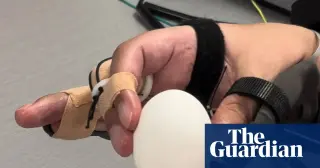
China has granted the first commercial authorization for a brain-computer interface device developed by Neuracle Medical Technology to help paralysis patients regain hand movement. The system detects intended movements from brain signals and drives a robotic glove via software, enabling grasping objects; eligibility is limited to adults 18-60 with paralysis for over a year and stable for at least six months. This milestone highlights China’s push into BCI tech as a national strategic priority, while rival efforts like Neuralink are targeting high-volume production in 2026.

AI Breakthrough Enables Real-Time Decoding of Inner Speech
technology2 months ago

AI Breakthrough Enables Real-Time Decoding of Inner Speech

Stanford and UC Davis researchers are using implanted microelectrodes and AI to translate brain signals into text as people imagine speaking, achieving up to 74% accuracy for inner speech in real time. This marks a step toward mind-reading-like communication for patients with severe motor impairments, building on earlier work that decoded attempted speech and other neural signals. While promising, the tech remains imperfect and will require more neurons and broader brain-area sampling before widespread use or commercialization, which researchers and companies are pursuing with ongoing ethical considerations.

Brain-wide signals coordinate macaque facial expressions
science4 months ago

Brain-wide signals coordinate macaque facial expressions

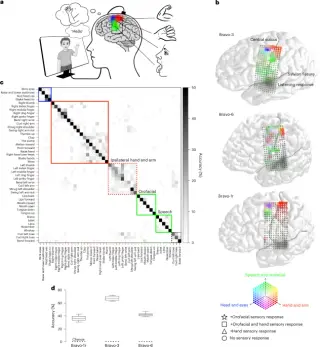
Researchers implanted micro-electrode arrays in macaques to record neurons as they produced facial gestures. They found all four brain regions studied were active across gestures, with a static code in the cingulate cortex and dynamic, muscle-driving codes in motor and somatosensory areas, implying facial expressions are generated by a coordinated, temporally hierarchical neural network and paving the way for future neural prostheses that decode facial gestures.

Breakthrough in minimally invasive high-density brain-computer interfaces
science-and-technology7 months ago

Breakthrough in minimally invasive high-density brain-computer interfaces

The article discusses a scalable, minimally invasive system of conformable, high-density cortical microelectrode arrays designed for neural recording, stimulation, and decoding, demonstrated in animal models and human patients, with potential to significantly advance brain-computer interface applications while prioritizing safety and reversibility.

Neuralink's First Patient Reflects on 18 Months with Brain Chip Implant
technology8 months ago

Neuralink's First Patient Reflects on 18 Months with Brain Chip Implant

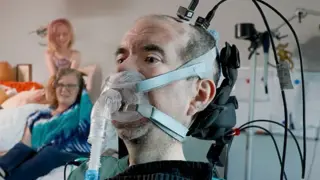
Eighteen months after receiving Neuralink's brain chip, paralyzed man Noland Arbaugh has regained significant independence, using the device to interact with digital environments and pursue new educational and speaking opportunities, highlighting the potential of brain-computer interfaces to transform lives and raise profound ethical questions.