
Aging Macrophages Fail to Clear 'Zombie' Cells Due to Decline in Protein Recycling
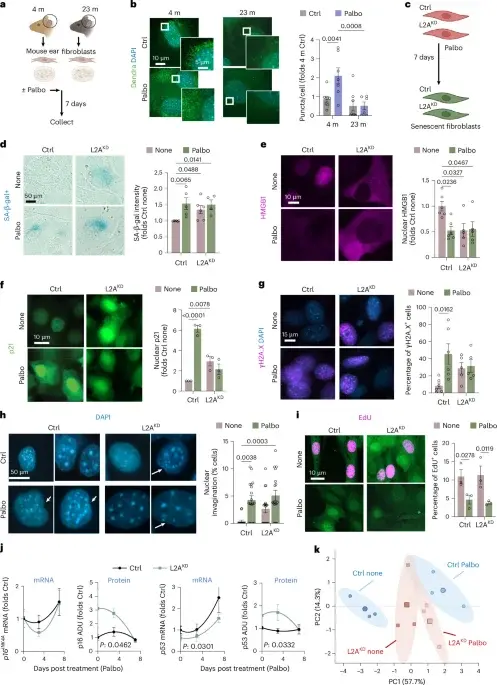
A new study in Nature Aging reveals that the age-related decline of chaperone-mediated autophagy (CMA) prevents macrophages from clearing senescent 'zombie' cells. This failure leads to chronic inflammation and disease, but pharmacological activation of CMA can restore clearance and reduce fibrosis in mice.
Key points
- CMA activity declines in aged cells, preventing them from properly processing proteins during senescence.
- This decline alters the secretory profile of senescent cells, making them harder for macrophages to recognize and engulf.
- Macrophages in aged mice also suffer from reduced CMA, impairing their ability to clear senescent cells during wound healing.
- A small-molecule CMA activator called CA77.1 reduced senescent cell burden and improved lung fibrosis in aged mice.
- The findings suggest that restoring cellular recycling, rather than just killing senescent cells, may be a viable anti-aging strategy.
Background
Recent research has highlighted the role of immune dysfunction in aging. For instance, a September 2026 study found that blocking the EP2 receptor restored macrophage function and improved aging markers in mice. Similarly, earlier work identified 'ferro-aging' as a driver of cellular decay. These studies, along with the current findings, suggest that restoring specific cellular maintenance processes, such as CMA or immune signaling, could be key to combating age-related decline.
How outlets are covering it
Nautilus and News-Medical emphasize the practical implications of the study, highlighting the potential of CMA activators like CA77.1 to treat age-related diseases such as pulmonary fibrosis. They frame the discovery as a shift from 'killing' senescent cells to 'restoring' the body's natural clearance mechanisms. Bioengineer.org provides broader context, noting that CMA is a master regulator of proteome composition and that its decline is linked to neurodegeneration, metabolic syndrome, and cardiovascular disease. All sources agree that the interaction between CMA decline and senescence is a critical driver of aging, but they differ in emphasis: the news outlets focus on therapeutic potential, while the review highlights the fundamental biological role of CMA in homeostasis.
Why it matters
This research identifies a specific molecular mechanism—CMA decline—that explains why senescent cells accumulate in aged tissues. It offers a new therapeutic target for age-related diseases, moving beyond senolytic drugs that simply kill senescent cells to strategies that restore the body's ability to clear them naturally. This could lead to safer, more effective treatments for conditions like pulmonary fibrosis, neurodegeneration, and chronic inflammation.
What to watch
Researchers will likely focus on translating these findings to human clinical trials, testing CMA activators like CA77.1 in patients with age-related diseases. Further studies may explore the long-term effects of CMA activation and its impact on other age-related conditions, such as neurodegeneration and cardiovascular disease. Additionally, the development of more precise CMA activators that target specific tissues or cell types may be a priority to minimize side effects.
- Decline of chaperone-mediated autophagy in aging impairs macrophage clearance of senescent cells Nature
- Why “Zombie Cells” Build Up as We Age Nautilus | Science Connected
- Restoring cellular recycling helps the body clear harmful zombie cells News-Medical
- Cellular recycling changes with age, but not how we expected Medical Xpress
- Cellular Recycling Pathway Emerges as Central Driver of Ageing and Disease Bioengineer.org
Want the full story? Read the original reporting
Read on Nature