Tag

Aging Research

All articles tagged with #aging research

New Mouse Study Links Semaglutide to Slower Aging and Longer Lifespan
health-and-science3 days ago

New Mouse Study Links Semaglutide to Slower Aging and Longer Lifespan

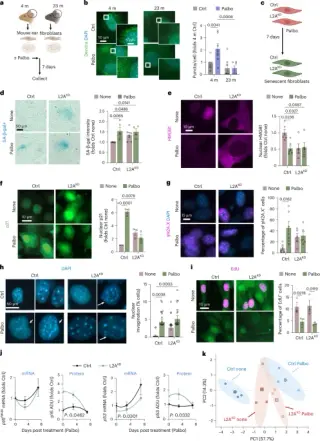
A new study in Nature demonstrates that semaglutide, a GLP-1 receptor agonist, slows aging and extends lifespan in female mice. While these drugs are approved for diabetes and obesity, emerging evidence suggests they offer broader therapeutic benefits beyond weight loss and glucose control, though the specific mechanisms remain unclear.
Scientists push to treat aging as a disease, but human trials lag behind animal success
health9 days ago

Scientists push to treat aging as a disease, but human trials lag behind animal success

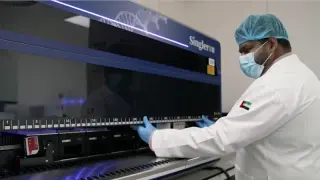
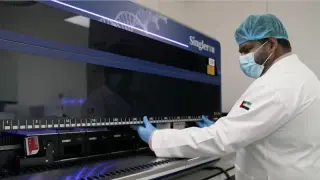
Researchers are moving beyond treating age-related diseases to targeting the biological processes of aging itself, aiming to extend 'health span' rather than just lifespan. While animal studies show that interventions can slow cellular aging, human clinical trials remain in early stages due to the difficulty of measuring long-term outcomes. New biomarkers, such as epigenetic markers, are being developed to predict health outcomes without waiting decades for results. Meanwhile, longevity clinics are emerging globally, with Abu Dhabi becoming the first jurisdiction to formally regulate and license such centers, though experts caution that basic lifestyle changes remain the only proven method for healthy aging.

The race to treat aging as a disease faces a gap between hype and human evidence
health9 days ago

The race to treat aging as a disease faces a gap between hype and human evidence

Scientists are increasingly viewing aging as a treatable biological process rather than an inevitable stage of life, aiming to extend 'health span' by intervening before age-related diseases emerge. While animal studies show promise, human clinical trials remain in early stages due to the complexity of measuring outcomes over decades. Investment in longevity biotech has surged, yet experts warn that the science is outpacing regulatory frameworks and proven efficacy, with basic lifestyle factors remaining the only validated method for healthy aging.

Blocking Chloride Channels May Restore Muscle Strength Lost to Aging

Blocking Chloride Channels May Restore Muscle Strength Lost to Aging

A study in the Journal of Clinical Investigation reveals that age-related muscle weakness is driven by a failure in nerve-to-muscle communication, specifically the loss of sodium channels. Researchers found that blocking chloride channels can restore muscle strength in animal models, offering a potential drug therapy for sarcopenia.

Nottingham Study Links Earth's Magnetic Field to Mitochondrial Aging in Fruit Flies
science14 days ago

Nottingham Study Links Earth's Magnetic Field to Mitochondrial Aging in Fruit Flies

A new study from the University of Nottingham reveals that Earth's magnetic field influences cellular aging and energy metabolism. By shielding fruit flies from the geomagnetic field, researchers found that flies with a Parkinson's-linked gene defect lived 20% longer but moved worse, while healthy flies showed the opposite pattern. These findings suggest the magnetic field is a fundamental biological variable, with potential implications for treating neurodegenerative diseases and preparing astronauts for deep space missions.

Nerve-Muscle Communication Breakdown Identified as Key Driver of Age-Related Muscle Weakness
health-and-science14 days ago

Nerve-Muscle Communication Breakdown Identified as Key Driver of Age-Related Muscle Weakness

Researchers at the University of Missouri-Columbia have identified a failure in communication between nerves and muscles as a primary cause of age-related muscle weakness, or sarcopenia. The study, published in The Journal of Clinical Investigation, found that declining levels of the protein NaV1.4 impair the neuromuscular junction's ability to transmit signals. By partially inhibiting the protein ClC-1, researchers successfully restored muscle responsiveness and strength in animal models. This finding suggests a potential therapeutic pathway for treating sarcopenia, which affects nearly half of adults over 80, by targeting existing muscle fibers rather than replacing lost mass.

New Research Identifies Nerve-Muscle Communication Breakdown as Key Driver of Age-Related Muscle Weakness
health-and-medicine15 days ago

New Research Identifies Nerve-Muscle Communication Breakdown as Key Driver of Age-Related Muscle Weakness

Researchers at the University of Missouri have identified a breakdown in communication between nerves and muscles as a primary cause of age-related muscle weakness, or sarcopenia. By targeting a specific protein, they successfully improved muscle strength in animal models, offering a potential new treatment pathway.

Topical application of senolytic ABT-263 accelerates wound healing in aged mice
science16 days ago

Topical application of senolytic ABT-263 accelerates wound healing in aged mice

Researchers at Boston University found that applying the senolytic drug ABT-263 directly to the skin of aged mice reduced the accumulation of senescent cells and significantly improved wound healing rates. The study suggests that clearing damaged cells before an injury occurs may prime aging skin for a more robust repair response, potentially offering a future strategy for managing slow-healing wounds in older adults.

Rethinking Aging Reversal: Biomarkers Must Meet Functional Gains
science1 month ago

Rethinking Aging Reversal: Biomarkers Must Meet Functional Gains

A Cell Metabolism commentary argues that 'reversing aging' cannot be defined by a single biomarker alone; convincing reversal requires both younger molecular patterns and lasting improvements in function (grip strength, memory, mobility), plus replication across measurements. Trials like CALERIE show mixed aging-marker results (DunedinPACE slowed slightly; PhenoAge/GrimAge unchanged), underscoring the gap between biology and daily function. The authors propose practical checks (same measure before/after, persistence after the intervention, orthogonal replication) and highlight XPRIZE Healthspan as a model for assessing rejuvenation across multiple domains.

Lifespan ceiling: mutations could cap humans around 150–200 years, study finds
science2 months ago

Lifespan ceiling: mutations could cap humans around 150–200 years, study finds

A Skolkovo Institute study estimates that if somatic mutations were the only aging factor, the median human lifespan would cap at about 146–194 years, with liver and skin able to renew for millennia while heart and brain limits would keep the maximum around 208 years, indicating mutations contribute to aging but other mechanisms also constrain mortality.

Study: Human lifespans may cap around 150–190 years due to somatic mutations
science2 months ago

Study: Human lifespans may cap around 150–190 years due to somatic mutations

A computational study from the Skolkovo Institute suggests that, even if other aging processes were eliminated, random somatic DNA mutations could impose a hard ceiling on human lifespan around 146–194 years. The researchers built a mathematical model to quantify how mutation accumulation affects major organs, noting that tissues capable of continual cell replacement (like skin and liver) fare better than long‑lived cells in the heart and brain, which drive the limits. The work doesn’t predict future lifespans but provides a framework to measure the contribution of different aging processes and prioritize research toward a mechanistic theory of aging.

Sea cucumber tissue fragments defy death, hinting at true immortality
science4 months ago

Sea cucumber tissue fragments defy death, hinting at true immortality

A study of the North Atlantic sea cucumber Psolus fabricii found severed tissue fragments that survived for more than three years in untreated seawater, healing and remaining biologically active without a mouth while absorbing nutrients. Researchers say these “zombie” tissues maintain cellular function without becoming a whole organism, revealing a novel model for tissue maintenance, wound healing, and aging—potentially offering alternatives to immortal cell lines like HeLa for research, though whether the tissues are truly immortal remains to be confirmed.

Common high-blood-pressure drug hints at anti-aging potential in animals
science7 months ago

Common high-blood-pressure drug hints at anti-aging potential in animals

A long-used hypertension medication, rilmenidine, extended lifespan in the worm C. elegans and induced youthful metabolic changes in mice, pointing to aging pathways that can be slowed with an existing drug. The study links the effect to the nish-1 receptor and autophagy, with older animals benefiting nearly as much as younger ones, and suggests early human trials could focus on biomarkers if safety remains favorable.