Tag

Senescent Cells

All articles tagged with #senescent cells

health-and-science2 months ago

Two New Studies Identify Mitochondrial and Cell-Cycle Drivers of Chronic Inflammation in Aging Cells

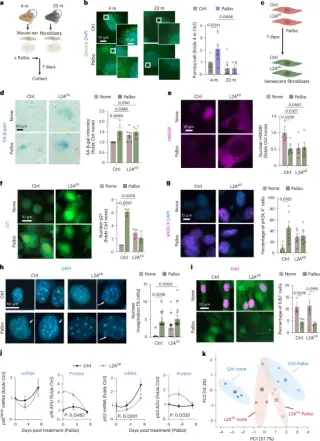
Researchers at Mayo Clinic and Sanford Burnham Prebys Medical Discovery Institute have identified two distinct molecular mechanisms that drive chronic inflammation in senescent, or 'zombie,' cells. A study published in Nature reveals that dysfunctional mitochondria produce acetyl-CoA, which epigenetically activates inflammatory genes, while a companion study in Nature Aging shows that the cell-cycle protein cyclin D1 promotes DNA damage and immune signaling in these non-dividing cells. Both studies suggest that targeting these specific pathways, rather than eliminating senescent cells entirely, could reduce age-related inflammation and improve physical function in older mice.

Not All Aging 'Zombie' Cells Are Bad: Precision Therapies Target Harmful Subtypes
science5 months ago

Not All Aging 'Zombie' Cells Are Bad: Precision Therapies Target Harmful Subtypes

A new Aging-US review argues that senescent cells—often called 'zombie cells'—are not uniformly bad: some support tissue repair while others drive chronic inflammation and disease. This nuanced view is steering anti-aging research toward precision geroprotection, combining targeted therapies such as senolytics, senomorphics, and engineered immunotherapies to remove or modulate specific senescent cell subtypes. Advances rely on single-cell omics and related tools to map cell diversity across organs, but challenges remain, including identifying specific biomarkers, delivering treatments safely, and avoiding interference with beneficial tissue maintenance.

Immune Therapy Reboots Aging Gut, Delivering Year-Long Regeneration in Mice
science10 months ago

Immune Therapy Reboots Aging Gut, Delivering Year-Long Regeneration in Mice

Cold Spring Harbor Laboratory researchers used anti-uPAR CAR T cells to selectively clear senescent cells in aging intestinal tissue, boosting epithelial regeneration, reducing inflammation, and improving nutrient absorption in both young and old mice. After radiation-induced gut damage, treated mice recovered more fully, with benefits persisting for at least a year. Early data also show regeneration signals in human intestinal and colorectal cells, suggesting potential clinical trials to counter age-related gut decline.

"Study: Keto Diet May Harm Health, Suggests Regular Breaks"
health2 years ago

"Study: Keto Diet May Harm Health, Suggests Regular Breaks"

US scientist Professor David Gius suggests taking regular "keto vacations" to mitigate the potential negative effects of a ketogenic diet, such as the accumulation of ageing cells in organs. His study on mice showed that while the keto diet has initial health benefits, prolonged adherence may accelerate organ ageing. Periodically switching back to a standard diet can reduce these ageing cells, indicating that a cycling ketogenic diet might be more beneficial.

"Reprogramming T Cells: A Revolutionary Approach to Slowing Aging"
health-and-science2 years ago

"Reprogramming T Cells: A Revolutionary Approach to Slowing Aging"

Researchers have discovered that T cells in the body can be reprogrammed to slow down and even reverse aging by using CAR T-cell therapy to eliminate damaged or senescent cells in mice. This reprogramming resulted in improved metabolism, glucose tolerance, and increased physical activity in the mice. The study provides a potential strategy for addressing age-related diseases in humans, but further research is needed to optimize the approach and translate the findings into senolytic therapy for humans.

"Senolytic CAR T Cells: The Promising Fountain of Youth Elixir"
health-and-science2 years ago

"Senolytic CAR T Cells: The Promising Fountain of Youth Elixir"

Researchers at Cold Spring Harbor Laboratory have reprogrammed T cells to fight aging by targeting senescent cells, which are linked to age-related diseases. Using CAR T cells, the team found that a single treatment in mice led to lifelong effects, including improved metabolism and physical activity without tissue damage or toxicity. This breakthrough could potentially offer a one-time treatment for chronic conditions like obesity and diabetes, with implications for human longevity.

"Reprogramming T Cells for Anti-Aging Benefits"
health-and-science2 years ago

"Reprogramming T Cells for Anti-Aging Benefits"

Researchers have discovered that T cells can be genetically reprogrammed to combat aging by targeting senescent cells, which contribute to age-related diseases. Using CAR T cell therapy, they demonstrated its potential to slow down and reverse aging in mice, leading to improved metabolism and physical activity. The therapy's long-lasting effects make it advantageous for chronic conditions, and ongoing research aims to determine if it can extend lifespan. T cells play a crucial role in the immune system and have shown promise in medical research, particularly in cancer therapy.

"Breakthrough: Reprogrammed T Cells Slow Aging in Mice and Hold Promise for Humans"
health-and-science2 years ago

"Breakthrough: Reprogrammed T Cells Slow Aging in Mice and Hold Promise for Humans"

A biomedical sciences professor and her team have developed a method to program T-cells to target and eliminate senescent cells, which are linked to aging and age-related diseases. In lab mice, this treatment resulted in rejuvenation for older mice and slower aging for younger ones, with long-lasting effects. If successful in humans, this therapy could potentially provide lifelong anti-aging benefits and may represent a significant breakthrough in medicine.

"Senolytic CAR T Cells: The Ultimate Anti-Aging Elixir?"
health-and-science2 years ago

"Senolytic CAR T Cells: The Ultimate Anti-Aging Elixir?"

Researchers in New York have developed a revolutionary cell therapy using CAR T-cells to target and eliminate senescent cells, which contribute to age-related decline. This therapy has shown long-term effectiveness with a single treatment, potentially improving metabolic function and physical health in mice without noticeable side effects. While more research is needed before human application, the therapy's potential to revolutionize aging and age-related disease treatment is immense.

"Unlocking the Fountain of Youth: Senolytic CAR T Cells and the Secret to Slower Aging"
health-and-science2 years ago

"Unlocking the Fountain of Youth: Senolytic CAR T Cells and the Secret to Slower Aging"

Scientists have discovered a breakthrough in anti-ageing research, revealing that reprogrammed T cells known as CAR T cells can slow and even reduce the effects of ageing by targeting and eliminating senescent cells responsible for age-related conditions and diseases. The treatment, dubbed the 'living drug', has shown promising results in mice, with potential long-lasting effects after a single dose. This discovery could revolutionize anti-ageing therapies and pave the way for a healthier and potentially longer life.

"Senolytic CAR T Cells: A Promising Anti-Aging Therapy"
health2 years ago

"Senolytic CAR T Cells: A Promising Anti-Aging Therapy"

Researchers have found that CAR T cells can be genetically modified to target and eliminate senescent cells, which accumulate in the body as we age and contribute to age-related diseases. In mouse studies, treatment with these modified T cells resulted in slower aging, improved metabolism, glucose tolerance, and increased physical activity. The effects were long-lasting, with a single treatment offering lifelong protection against conditions like obesity and diabetes. This discovery suggests a potential new approach to combating age-related diseases and may offer insights into extending healthy lifespan.

Targeting Mid-Old Cells: Unlocking Anti-Aging Interventions for the Elderly
health3 years ago

Targeting Mid-Old Cells: Unlocking Anti-Aging Interventions for the Elderly

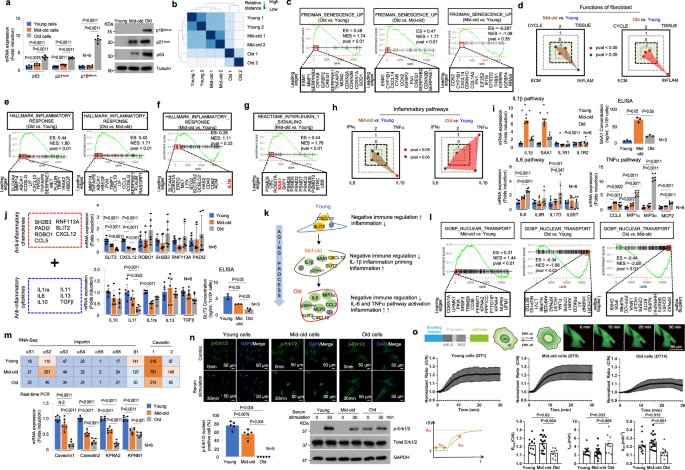
Accumulation of senescent cells in tissues is a major contributor to aging and organ dysfunction. However, a subset of cells in an intermediate stage of cellular senescence, termed "mid-old cells," has been identified. These mid-old cells exhibit distinct gene expression patterns and functional characteristics compared to young and old cells. They are associated with specific inflammation markers and have the capacity to respond to external stimuli. Mid-old cells are found in elderly tissues, particularly in fibroblasts and smooth muscle cells, and contribute to age-related microenvironments. The presence of mid-old cells suggests a potential target for anti-aging interventions in the elderly.