
Ancient Baikal Plague Outbreaks Push Origins of Yersinia pestis Back to Mid-Holocene
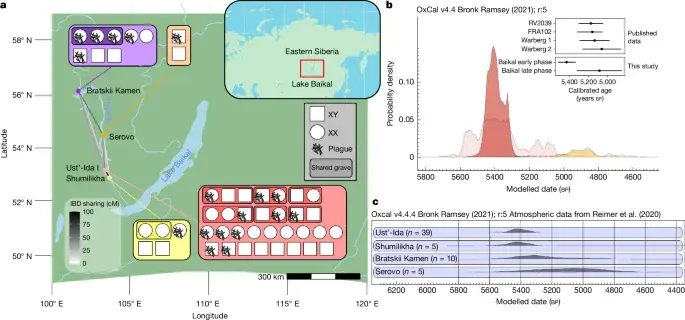
Two waves of lethal Yersinia pestis outbreaks occurred among mid-Holocene hunter-gatherers near Lake Baikal around 5,500 years ago, with a 39% plague detection rate across four cemeteries. The Baikal strains are basal to known plague lineages and lack flea-transmission genes, implying rapid human-to-human spread (likely pneumonic) rather than flea-borne transmission. Outbreaks disproportionately affected children, clustered within tight radiocarbon date ranges, and kin groups show contemporaneous deaths, suggesting swift transmission within mobile communities. These findings push the plague’s origin earlier than Europe’s Neolithic cases and point to longstanding marmot/rodent reservoirs driving recurrent spillovers in Asia.
- Lethal plague outbreaks in Lake Baikal hunter-gatherers 5,500 years ago Nature
- Hunter-gatherer cemeteries reveal an ancient plague’s earliest known victims CNN
- A Deadly Outbreak of Plague, Nearly 5,000 Years Before the Black Death The New York Times
- Oldest evidence of a plague outbreak found in prehistoric graves, rewriting the disease’s history NBC News
- Ancient DNA provides evidence of earliest known plague outbreak | Archaeology The Guardian
Want the full story? Read the original reporting
Read on Nature