
Copenhagen Team Maps Full Taxol Pathway, Boosting Tobacco Yields 587-Fold
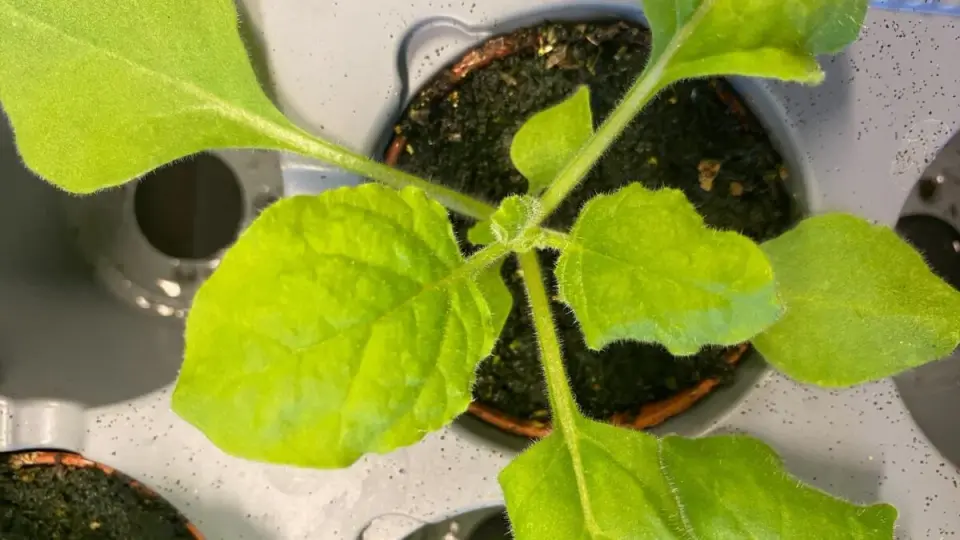
Researchers at the University of Copenhagen have fully reconstructed the 23-step biosynthetic pathway for the cancer drug paclitaxel (Taxol) and successfully replicated it in tobacco plants. By transferring yew tree genes into Nicotiana benthamiana, the team achieved a 587-fold increase in production, reaching levels comparable to natural yew bark. This breakthrough resolves decades of scientific debate regarding the drug's complex enzymatic steps and subcellular localization, offering a potential new platform for scalable, low-cost pharmaceutical manufacturing.
Key points
- The complete biosynthetic pathway for paclitaxel, consisting of 23 steps, has been fully validated and reconstructed in Nicotiana benthamiana tobacco plants.
- The engineered tobacco plants produced paclitaxel at 61.05 micrograms per gram of dry weight, a 587-fold increase over baseline levels and comparable to natural yew bark concentrations.
- The study reveals that paclitaxel production is compartmentalized across multiple organelles, including plastids, the endoplasmic reticulum, cytosol, and peroxisomes, with the peroxisome playing a previously unrecognized critical role.
- Current production methods rely on slow-growing yew trees or complex cell cultures, making the drug expensive; the tobacco platform offers a faster, more engineerable alternative for future large-scale manufacturing.
- The team used transient genetic modifications via agrobacterium for this proof-of-concept; stable, permanent genetic integration is identified as the next major challenge for industrial-scale production.
Background
Paclitaxel, originally isolated from the Pacific yew tree in 1971, is a cornerstone chemotherapy drug used for breast, ovarian, and lung cancers. Its production has long been hindered by the slow growth of yew trees and the drug's complex molecular structure, leading to high costs. Previous attempts to synthesize it or produce it in other systems faced gaps in understanding the full biosynthetic pathway. This study builds on decades of partial research to provide a complete, chemically validated blueprint for the drug's production.
How outlets are covering it
Gizmodo emphasizes the potential for affordable, large-scale production using tobacco as a platform, highlighting the cost reduction from $272,160 per pound a decade ago to over $9,000 per pound today. Nature focuses on the scientific validation of the complete pathway, including the resolution of mechanistic uncertainties and the compartmentalization of biosynthetic steps across organelles. Chemical & Engineering News notes the importance of resolving controversial oxidation steps and the potential for yeast-based production, though it acknowledges that plant factors may be essential. Chosunilbo highlights the 587-fold yield increase and the potential for synthetic biology to produce complex natural product medicines in other plants. All sources agree on the significance of the complete pathway reconstruction but differ in emphasis on immediate industrial application versus scientific validation.
Why it matters
This breakthrough could significantly reduce the cost and increase the availability of paclitaxel, a critical cancer treatment. By providing a complete, validated biosynthetic pathway, the research offers a foundation for developing scalable, low-cost production methods, potentially making the drug more accessible globally. It also advances synthetic biology by demonstrating the feasibility of replicating complex natural product biosynthesis in fast-growing, easily engineered plants.
What to watch
The next major challenge is developing stable, permanently genetically modified tobacco plants for large-scale production in greenhouses. Researchers will also explore whether yeast or other systems can replicate the pathway, though plant-specific factors may be essential. Further optimization of the production process and scaling up to industrial levels will be necessary to realize the potential for affordable, widespread paclitaxel manufacturing.
- Scientists Used Tobacco to Affordably Grow Anti-Cancer Drug Taxol Gizmodo
- Complete biosynthesis and production of paclitaxel in a plant host Nature
- Recipe for one of the world’s most important cancer drugs uncovered: Tobacco plants could produce the medicine EurekAlert!
- Complete biosynthetic pathway of Taxol finally resolved Chemical & Engineering News
- Tak-sol Production Secret Replicated in Tobacco 조선일보
Want the full story? Read the original reporting
Read on Gizmodo