Chemical fingerprints reveal Earth and Mars formed via distinct pathways
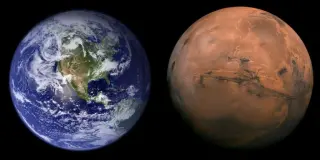
A new study published in Nature Astronomy indicates that Earth and Mars, despite forming in the same solar nebula, utilized different primary mechanisms for growth. Researchers from the University of Copenhagen found that Earth’s mass is largely derived from protoplanets accreting pebbles, while Mars’s mass primarily originated from colliding planetesimals. By analyzing volatile elements like sodium, zinc, and potassium in the planets' mantles, the team reconstructed these 4.5-billion-year-old processes. This hybrid model suggests that while both planets used similar building blocks, their specific assembly methods differed significantly, offering new insights into rocky planet formation.