
Cortical Thinning Timelines Predict Adolescent Mental Health Risks
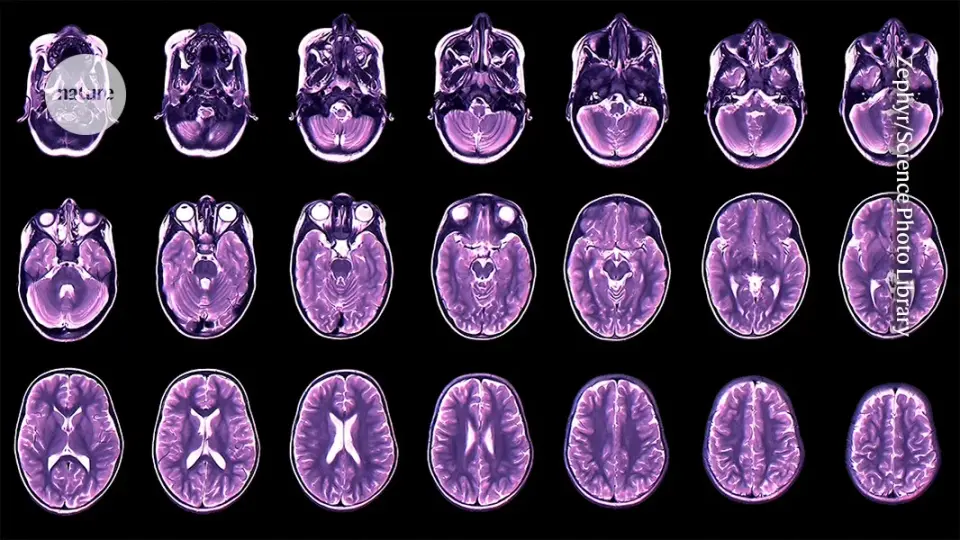
A large-scale study of nearly 12,000 US children reveals that the pace of cerebral cortex thinning during early adolescence can predict the onset of depression and anxiety up to four years before symptoms appear. Researchers mapped brain development using 30,000 MRI scans, finding that sensory areas mature first, followed by regions responsible for complex thought. The findings suggest that mental health vulnerabilities may stem from disruptions in the brain's developmental timeline rather than isolated circuit defects, potentially linked to pre-birth genetic factors. While the data offers a detailed population-level map of cortical maturation, experts caution that these trends are too subtle for individual clinical prediction.
Key points
- Analysis of nearly 30,000 MRI scans from 12,000 US participants shows that the speed of brain maturation forecasts mental health conditions up to four years in advance.
- The cerebral cortex thins in a distinct S-shaped curve, with sensory regions maturing before areas governing complex thought.
- The study challenges the theory that psychiatric disorders result from specific circuit defects, instead pointing to disruptions in the overall developmental timeline.
- Researchers note that while population-level patterns are clear, they cannot yet be used to predict the mental health trajectory of individual children.
- The findings suggest that genes active before birth may influence the timing of brain development and subsequent vulnerability to mental health symptoms.
Background
Recent research has increasingly linked early-life factors to adolescent mental health. A 2026 Australian study connected fruit intake to lower depression risk, while a Canadian study linked maternal childhood trauma to adult anxiety in offspring. Additionally, a 2026 follow-up study found that prenatal therapy for maternal depression was associated with smaller infant hippocampal volume and lower emotional distress. These studies, along with a review linking early reading to brain gains, highlight the growing focus on developmental and environmental influences on mental health.
How outlets are covering it
Nature and The Independent emphasize the predictive power of cortical thinning timelines for depression and anxiety, highlighting the shift from circuit-defect theories to developmental-timing models. Cardiff University’s BEAM study, while not directly analyzing the same dataset, supports the broader effort to map adolescent brain development at a cellular level, noting that brain changes are as significant as hormonal shifts. Bioengineer.org’s analysis of the ABCD Study provides a complementary perspective, showing that functional brain networks in children aged 9-10 already closely mirror adult architecture, suggesting that the 'scaffold' is established early, even as higher-order systems refine. This contrasts with the Nature study’s focus on the *timing* of cortical thinning as a predictor, implying that while the network structure is adult-like, the *pace* of maturation in specific regions may be the critical variable for mental health risk.
Why it matters
Understanding the temporal dynamics of brain development could lead to earlier identification of mental health risks, potentially allowing for preventive interventions before symptoms manifest. However, the current findings are limited to population-level trends and cannot yet be applied to individual clinical diagnoses. The research underscores the importance of longitudinal studies in neuroscience and highlights the need for more precise, individualized metrics to translate population-level insights into clinical practice.
What to watch
Researchers will continue to analyze longitudinal data from the ABCD Study and other large-scale projects to refine predictive models. Future studies may focus on identifying specific genetic or environmental factors that disrupt the S-shaped curve of cortical thinning. Additionally, efforts like the BEAM study aim to create detailed maps of brain microstructure to better understand how subtle changes in brain development relate to learning, emotional functioning, and mental health.
- Teen depression and anxiety predicted by childhood brain development Nature
- Depression and anxiety can be predicted by your childhood brain development The Independent
- Pioneering study to reveal how the teenage brain develops at cellular level Cardiff University
- Childhood Brain Networks Mirror Adult Architecture, Landmark Study of 7,316 Children Finds Bioengineer.org
- Massive MRI collection reveals hidden patterns of adolescent brain wiring Bioengineer.org
Want the full story? Read the original reporting
Read on Nature