Tag

Brain Development

All articles tagged with #brain development

Early Glymphatic Dysfunction May Predict Psychosis Risk
science14 days ago

Early Glymphatic Dysfunction May Predict Psychosis Risk

Researchers tracking 85 people with 22q11.2 deletion syndrome over 25 years found that impaired brain waste clearance (glymphatic function) in childhood is linked to later psychosis. Those who developed psychotic symptoms showed weaker glymphatic development (lower ALPS index) and an excitatory/inhibitory imbalance, suggesting brain-cleaning failures early in life may contribute to psychosis and could offer avenues for preventive interventions.

Three Gradients Shape Lifespan Cortical Hierarchy
neuroscience16 days ago

Three Gradients Shape Lifespan Cortical Hierarchy

A large-scale lifespan study maps three core functional gradients—sensory–association (SA), visual–somatosensory (VS), and modulation–representation (MR)—across birth to 100 years, showing early anchoring to primary sensory systems, differentiation along association and control axes through development, and later dedifferentiation with aging; these gradients relate to cognitive performance, structure–function coupling, and transcriptomic patterns, providing a normative lifespan atlas for brain organization.

Brain’s life-long map: four turning points shape our abilities across a lifetime
science1 month ago

Brain’s life-long map: four turning points shape our abilities across a lifetime

A Cambridge-led study analyzed MRI diffusion scans from 3,802 people—from newborns to age 90—identifying four major turning points that divide life into five brain-wiring eras: birth to about age 9, adolescence to about 32, adulthood, early aging around 66, and late aging around 83. The evolving neural wiring correlates with changes in learning, memory, and intelligence, suggesting the brain’s development and aging follow a staged timeline that could inform education and elder care.

Brain wiring revealed: tissue stiffness steers neural signals through Piezo1
science1 month ago

Brain wiring revealed: tissue stiffness steers neural signals through Piezo1

New findings show brain tissue stiffness triggers production of chemical guidance cues via the mechanosensitive Piezo1, linking mechanical forces to neuronal wiring; Piezo1 also helps maintain tissue structure by regulating cell adhesion proteins, suggesting mechanical cues actively shape brain development and may influence disease.

Lineage Guides Brain Assembly: A Simple Rule for Complex Neural Organization
science1 month ago

Lineage Guides Brain Assembly: A Simple Rule for Complex Neural Organization

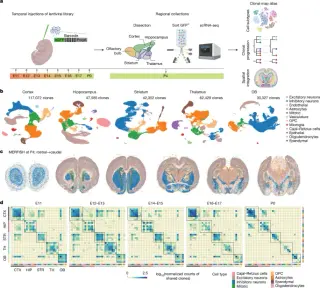
Researchers propose that brain cells determine their position not only via chemical signals but also through lineage, with descendants of the same progenitor tending to remain near one another. The lineage-based model of scalable positional information, tested in mouse brains and confirmed in zebrafish, suggests spatial organization can emerge from cell division/migration patterns, complementing chemical cues and potentially informing developmental biology and AI design.

Sensitive Infants Sleep Shallowly: Deep Sleep Less Restorative in Highly Sensitive Babies
science1 month ago

Sensitive Infants Sleep Shallowly: Deep Sleep Less Restorative in Highly Sensitive Babies

A University of East Anglia study using brainwave monitoring shows eight- to eleven-month-old infants with high sensory sensitivity spend similar amounts of time in deep sleep as peers, but their deep sleep is shallower with weaker slow waves, making it less restorative; while noise worsens sleep disruption, these babies remain lighter sleepers even in quiet environments, suggesting an intrinsic sensory wiring difference that could relate to autism traits and early brain development.