
The Biochemical Ceiling: Why Snailfish Cannot Survive Beyond 8,300 Meters
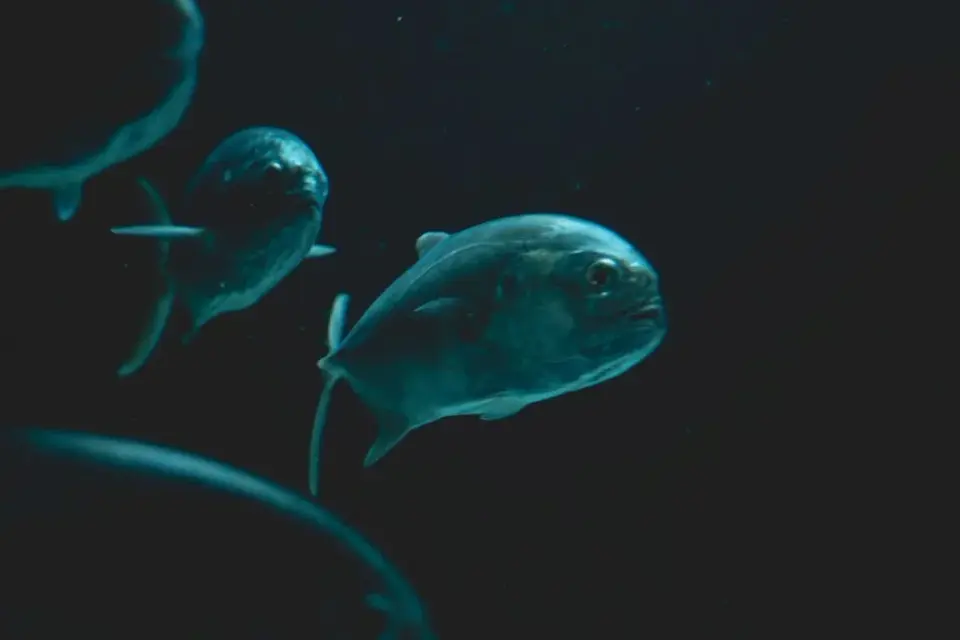
A juvenile snailfish filmed at 8,336 meters in the Izu-Ogasawara Trench represents the deepest confirmed fish observation, but its survival is limited by a biochemical ceiling. While its soft, gelatinous body and lack of a swim bladder prevent physical crushing, the accumulation of trimethylamine N-oxide (TMAO) to stabilize proteins eventually disrupts osmoregulation. This chemical constraint likely prevents bony fish from thriving in the deepest ocean trenches, where invertebrates still dominate.
Key points
- In August 2022, a baited camera captured a juvenile snailfish at 8,336 meters in the Izu-Ogasawara Trench, setting the record for the deepest confirmed video of a fish. Shortly after, two Pseudoliparis belyaevi were physically recovered from 8,022 meters in the Japan Trench.
- Hadal snailfish survive extreme pressure not by resisting it with rigid structures, but by matching the external pressure with their internal fluids. They lack gas-filled swim bladders and possess soft, gelatinous tissues and lightly mineralized skeletons to minimize the risk of implosion and reduce energy costs for buoyancy.
- The primary molecular adaptation is the accumulation of trimethylamine N-oxide (TMAO), a piezolyte that stabilizes protein folding under high pressure. In Kermadec snailfish at 7,000 meters, TMAO concentrations reached 386 millimoles per kilogram of muscle, approaching the osmolality of seawater.
- However, accumulating TMAO creates a physiological limit. As internal fluid concentration rises to match seawater, the fish loses the ability to expel excess salts and must reverse its osmoregulatory mechanisms. Research suggests this isosmotic state occurs around 8,200 meters, creating a hard boundary for bony fish survival.
- Additional adaptations include expanded gene families for fatty-acid metabolism to maintain membrane fluidity in cold, high-pressure water, and the loss of pigmentation and vision genes due to the absence of sunlight. These fish primarily feed on amphipods, which constitute over 97% of their prey items.
Background
This story builds on previous discussions of how extreme environments drive unique biological adaptations, such as the recent findings on octopus ribosomal modifications for protein stability. While earlier archive items focused on terrestrial or atmospheric challenges, this piece highlights how deep-sea life navigates chemical boundaries that mimic physical impossibilities, similar to how dissolved salts alter freezing points in Antarctic ponds.
Why it matters
Understanding the biochemical limits of hadal snailfish provides critical insights into the potential for life in high-pressure environments, such as the subsurface oceans of moons like Europa. While the snailfish cannot survive in the deepest trenches due to osmotic constraints, its adaptations demonstrate how life can function under extreme pressure by modifying molecular chemistry rather than resisting physical force. This knowledge informs astrobiology by defining the specific chemical and physiological barriers that organisms must overcome to thrive in alien oceans.
What to watch
Researchers will continue to investigate the specific functional roles of TMAO and modified enzymes like Hsp90 in hadal species. Future studies may focus on whether any invertebrates can surpass the 8,400-meter threshold where bony fish disappear, and how these chemical limits might apply to hypothetical life forms in extraterrestrial oceans with different salinity and pressure profiles.
Want the full story? Read the original reporting
Read on Space Daily