
Fatty liver steatosis shifts colorectal cancer liver metastases toward aggressive replacement pattern via MYC–proline–collagen axis
TL;DR
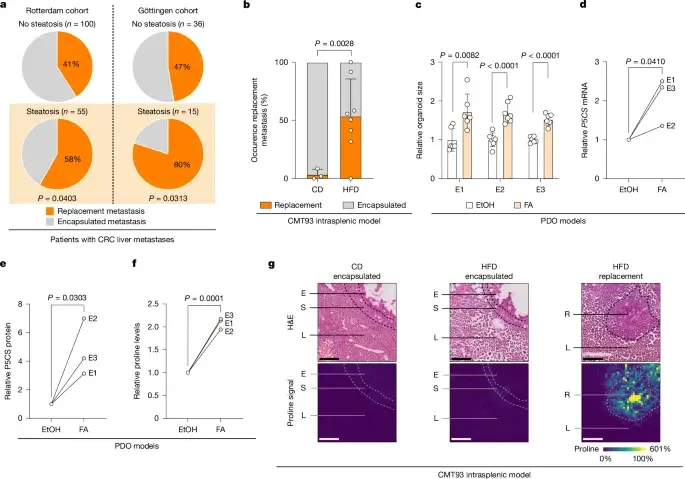
In treatment-naive colorectal cancer, liver steatosis increases the frequency of replacement-type liver metastases, which have poorer prognosis; the mechanism is fatty-acid-oxidation–driven stabilization of MYC via acetylation, promoting proline synthesis and collagen production that support replacement metastases; targeting MYC, P5CS, or COL1A1 blocks replacement metastases in patient-derived organoids, mouse models, and PDXs, offering potential therapeutic strategies.
Want the full story? Read the original reporting
Read on Nature