
Imputing Fluid Intelligence Scores Boosts UK Biobank Genetic Discovery
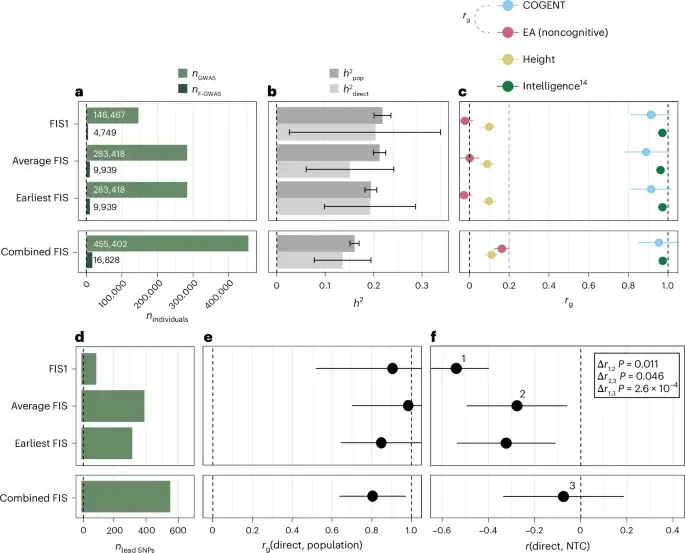
Researchers have developed a method to impute fluid intelligence scores for UK Biobank participants who did not take cognitive tests, expanding the sample size from approximately 270,000 to over 455,000. This approach increases the power to detect genetic associations, identifying 550 independent common SNP associations and 26 genes linked to rare variants. The method also reduces ascertainment bias caused by the higher education levels of those who originally completed the tests.
Key points
- The study integrates multiple fluid intelligence measures to impute scores for unmeasured individuals, significantly increasing the effective sample size for genetic analysis.
- Combining measured and imputed data raises the number of independent significant common SNP associations from 390 to 550.
- Rare variant analyses identify 26 significantly associated genes, with 21 of these discovered only when using the combined imputed and measured dataset.
- The imputation process reduces ascertainment bias, as participants who took the fluid intelligence tests were generally more educated than the broader UK Biobank population.
- Validation confirms that imputed phenotypes genetically resemble measured fluid intelligence, though some non-cognitive signal remains in the imputed data.
Background
Previous studies, such as the 2024 Nature article by Huang et al., have explored the role of common variants in rare neurodevelopmental conditions. This new research builds on that foundation by addressing the limitations of smaller, self-selected samples in large biobanks like the UK Biobank. By imputing missing cognitive data, the study aims to provide a more representative picture of the genetic architecture of intelligence and its link to neurodevelopmental disorders.
Why it matters
This methodological advance allows for more robust genetic studies of cognitive function and neurodevelopmental conditions by leveraging the full UK Biobank cohort. It reduces biases inherent in self-selected test takers and uncovers new genetic associations that were previously missed due to limited sample sizes, potentially leading to better understanding of the biological basis of intelligence and related disorders.
What to watch
The imputed fluid intelligence phenotype is not publicly available due to privacy policies, but the code to regenerate it is available on GitHub. Researchers can use this tool to re-analyze other phenotypes in the UK Biobank, potentially uncovering more genetic associations for cognitive and neurodevelopmental traits.
Want the full story? Read the original reporting
Read on Nature