Tag

Genetics

All articles tagged with #genetics

Genes influence GLP-1 weight-loss drug responses and side effects
health1 day ago

Genes influence GLP-1 weight-loss drug responses and side effects

Genetic differences, including a GLP1R variant and a GIPR variant, modestly affect how much weight people lose and their risk of nausea on GLP-1 obesity drugs; the weight-loss difference is small—about 1.7 lb more at eight months for one copy and ~3.3 lb for two copies. A GIPR variant was linked to higher nausea with tirzepatide. Separately, higher GLP-1 doses may confer cardiovascular benefits that seem independent of weight loss, suggesting dosing could optimize heart outcomes; tissue data indicate potential direct cardiac effects, warranting further study.

DNA Clues Shed Light on Why GLP-1 Weight-Loss Varies
health1 day ago

DNA Clues Shed Light on Why GLP-1 Weight-Loss Varies

A large 23andMe GWAS of 27,885 GLP-1 med users links variants in GLP1R and GIPR to both weight-loss efficacy and nausea risk. A GLP1R missense variant (rs10305420) is associated with about 0.76 kg more weight loss per allele, while GIPR variants predict nausea specifically for tirzepatide (Zepbound/Mounjaro) but not semaglutide. 23andMe’s Total Health service now offers an interactive tool to estimate individual weight loss (roughly 6–20% of starting weight) and side-effect risk, moving toward precision obesity care where genetics is one piece of the puzzle though not the sole determinant.

Two Gene Variants Linked to Different Weight-Loss Responses on Obesity Drugs
health2 days ago

Two Gene Variants Linked to Different Weight-Loss Responses on Obesity Drugs

A Nature study of about 15,000 people using obesity drugs (Wegovy and Mounjaro) finds that certain genetic variants influence weight loss. One variant, especially in two copies, is associated with more weight loss; another variant may raise the risk of nausea. On average, participants lost 11.7% of body weight over eight months, with some achieving as much as 30%. Differences by sex, age, and ancestry, plus drug type, dose, duration and lifestyle, also shape outcomes. While promising for tailoring treatment, these findings are early and not yet practice-changing; further trials are needed to guide precision medicine in obesity care.

Genes help explain why obesity drugs work differently for people
health2 days ago

Genes help explain why obesity drugs work differently for people

Nature reports a study of nearly 28,000 23andMe users who used obesity drugs, linking a GLP-1 receptor gene variant to greater weight loss (about 0.76 kg per copy, ~1.5 kg for two copies) over a median of 8 months, and other variants to higher risk of side effects like nausea. Overall genetic effects on weight loss are modest, but associations with adverse effects are stronger; findings come from self-reported data and are not yet ready to guide clinical practice.

Genes Partly Predict Response to GLP-1 Weight-Loss Shots
science3 days ago

Genes Partly Predict Response to GLP-1 Weight-Loss Shots

Scientists analyzed data from 27,885 patients taking GLP-1 obesity drugs and found two gut-hormone gene variants may partly explain why weight loss and side-effects vary: rs10305420 is linked to slightly more weight loss, while rs1800437 is linked to nausea with tirzepatide. But the genetic contribution is modest; non-genetic factors like sex, drug type, dose, and duration explain much more of the variability, so genetics are not yet ready to guide routine treatment, though the findings could inform future precision approaches.

6 Million Genomes Uncover Shared Genetic Threads Across Mental Illnesses
science11 days ago

6 Million Genomes Uncover Shared Genetic Threads Across Mental Illnesses

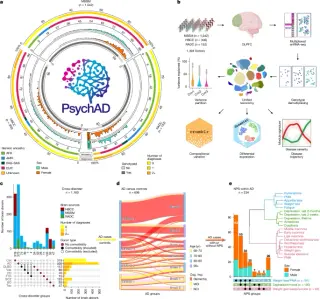
A large international genetic study of over 6 million people finds that major psychiatric disorders share substantial genetic risk, clustering into five broad groups (compulsive disorders; schizophrenia and bipolar; neurodevelopmental disorders; internalizing disorders; and substance-use disorders). The work links these patterns to specific brain cell types and argues for a biology-based reclassification of mental illness and treatments that target shared pathways, while noting that genetics influence risk but environmental factors also shape outcomes.

RNU2-2 biallelic variants reveal a prevalent recessive neurodevelopmental syndrome
genetics11 days ago

RNU2-2 biallelic variants reveal a prevalent recessive neurodevelopmental syndrome

A UK-led genetic analysis of 100KGP and Genomics England data identifies biallelic variants in RNU2-2 as the cause of a recessive neurodevelopmental disorder (ReNU2 syndrome), with strong BeviMed support and replication across multiple cohorts. Affected individuals typically present with intellectual disability, global developmental delay and seizures, and the disorder arises from loss of U2-2 snRNA expression due to destabilizing variants in stem-loop and binding regions of the RNA. Monoallelic carriers show partial compensation by increased U2-1, while biallelic cases exhibit markedly reduced U2-2 in blood. The recessive form is relatively prevalent—about 60% as common as the dominant RNU4-2 ReNU syndrome in the UK—highlighting diagnostic and counseling implications, especially in populations with consanguinity.

Genome in Parliament: how organisms curb selfish genes
science11 days ago

Genome in Parliament: how organisms curb selfish genes

Nature’s book review on The Paradox of the Organism argues that internal genetic conflict is a central feature of biology: a germline–somatic separation, meiotic reshuffling, and genome-wide ‘parliament’ mechanisms suppress selfish elements, allowing organisms to function while balancing disruptive elements, with implications for development, evolution, and disease.

Serial mouse cloning hits a hard biological limit after 58 generations
science13 days ago

Serial mouse cloning hits a hard biological limit after 58 generations

A 20-year mouse cloning study from the University of Yamanashi shows that repeating cloning builds up genome-level damage, reduces fertility, and cannot sustain a mammal line beyond 58 generations—the last generation died soon after birth—despite producing over 1,200 clones from a single donor, indicating current nuclear-transfer cloning methods have a hard biological limit.

New African Mushroom Rewrites the Evolutionary Tale of Psychedelic Fungi
science14 days ago

New African Mushroom Rewrites the Evolutionary Tale of Psychedelic Fungi

Researchers identify Psilocybe ochraceocentrata in southern Africa as a distinct species from the cultivated P. cubensis, dating their last common ancestor to about 1.5 million years ago and challenging the idea that cubensis spread to the Americas with 16th‑century cattle. Using multi-locus phylogenetics, molecular clocks, and ecological niche modeling, the team shows the two mushrooms diverged long ago, and that popular NSS/Transkei strains belong to the new species. The work highlights Africa’s under-sampling of fungal diversity and reshapes the origin story of magic mushrooms.

Exome sequencing of 44,028 British South Asians uncovers thousands of rare knockouts and novel gene–phenotype links
genetics14 days ago

Exome sequencing of 44,028 British South Asians uncovers thousands of rare knockouts and novel gene–phenotype links

Sequencing 44,028 British Pakistani/Bangladeshi volunteers with high autozygosity creates a large South Asian exome resource linked to health records, identifying ~4.7 million variants, 2,991 genes with rare biallelic loss-of-function genotypes (546 novel), and over 100 newly linked gene–phenotype associations. Meta-analysis with UK Biobank reinforced cardiometabolic signals, and analyses of recessive burdens and human knockouts illustrate how knockout genotypes can inform drug target safety and efficacy, aiding disease interpretation and guiding drug development. Data and code are publicly available via cloud and GitHub.

Ancient DNA reveals Europe’s Neanderthals collapsed to a single surviving lineage before extinction
archaeology15 days ago

Ancient DNA reveals Europe’s Neanderthals collapsed to a single surviving lineage before extinction

A new study of Neanderthal mitochondrial DNA from sites across Belgium, France, Germany, and Serbia shows that Europe hosted multiple Neanderthal mtDNA lineages until about 65,000 years ago, after which a single southwestern France–origin lineage replaced the others and spread across the continent. This led to reduced genetic diversity among Late Neanderthals and, together with climate pressures, may help explain why Neanderthals in Europe went extinct around 40,000 years ago, though researchers caution that no single cause is responsible.

Cloning Limit Exposed: Mouse Line Dies After 58 Generations
science15 days ago

Cloning Limit Exposed: Mouse Line Dies After 58 Generations

A two-decade Japanese study recloned a female mouse across 58 generations. By generation 58, all offspring died within a day of birth, with no outward defects, and DNA analysis showed accumulating mutations and occasional loss of an X chromosome. The research indicates a hard limit to mammalian cloning and challenges hopes for infinite lineages, with implications for livestock cloning and de-extinction efforts; no method yet exists to overcome this genetic deterioration.