
Japanese Study Links Brain Waste Clearance to 40% Drop in Tau Protein
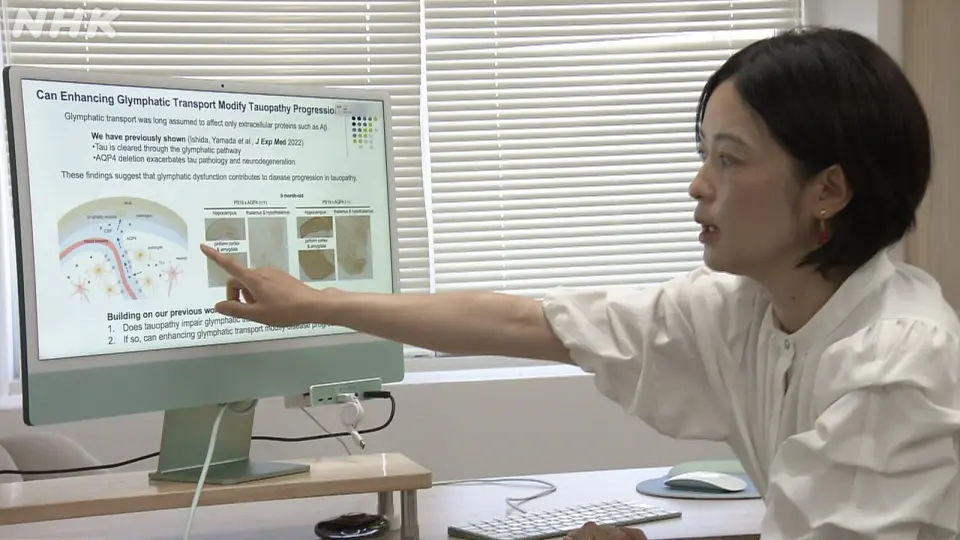
A Japanese research team reports that activating the brain's glymphatic waste-clearance system in mice reduced tau protein accumulation by 40%. While this suggests a potential path to slowing Alzheimer's progression, experts caution that human safety and efficacy remain unverified. Concurrent research highlights the complexity of brain waste removal, with new studies identifying additional lymphatic-like channels and emphasizing the critical role of sleep and cardiovascular health in maintaining this system.
Key points
- Researchers from the University of Tokyo and Niigata University found that medication facilitating cerebrospinal fluid flow reduced tau buildup by 40% in engineered mice over three months.
- The glymphatic system, discovered in 2012, uses pulsing blood vessels and cerebrospinal fluid to clear metabolic waste, a process that is most active during non-REM sleep.
- New preprint research from University College London identifies a previously unknown network of tiny channels formed by fibroblastic reticular cells that may transport proteins like tau and amyloid beta out of the brain.
- Experts warn that while glymphatic dysfunction is linked to Alzheimer's, Parkinson's, and stroke, current measurement methods like DTI-ALPS MRI are disputed, and no approved treatments exist yet.
- Lifestyle factors such as consistent sleep, moderate exercise, and deep breathing may support glymphatic function, though direct evidence for home-based 'detox' methods remains limited.
Background
This development follows recent advancements in understanding neurodegenerative mechanisms, including studies on tau prion-like transmission and stem cell therapies for stroke. It builds on the 2012 discovery of the glymphatic system by Maiken Nedergaard and colleagues, which revealed how the brain clears waste during sleep. The current findings add to a growing body of research exploring how to intervene in this clearance process to prevent or slow neurodegenerative diseases.
How outlets are covering it
NHK World focuses on the specific Japanese study's success in reducing tau via medication, emphasizing the need for cautious verification before human application. The Washington Post highlights practical lifestyle interventions, such as sleep hygiene and exercise, to support glymphatic function, citing Maiken Nedergaard and Lauren Hablitz. New Scientist provides a broader critical analysis, noting the field's hype, measurement controversies, and the lack of approved treatments, while also detailing experimental methods like near-infrared light and carbon dioxide inhalation. ScienceAlert reports on a new preprint from University College London identifying a distinct channel network for waste removal, adding a new structural dimension to the understanding of brain clearance that complements the glymphatic system.
Why it matters
Understanding and potentially enhancing the brain's waste clearance mechanisms could lead to new strategies for preventing or slowing Alzheimer's and other neurodegenerative diseases. While the Japanese study shows promise in animal models, the broader scientific community is still working to validate measurement techniques and develop safe, effective human interventions, making this a critical area for future medical breakthroughs.
What to watch
Researchers will continue to investigate the safety and efficacy of glymphatic-activating medications in humans. Further studies are needed to validate the function of the newly identified channel network in living humans and to determine if boosting glymphatic flow through lifestyle or experimental interventions can effectively prevent disease progression.
- Researchers suppress Alzheimer-linked protein in mice | NHK WORLD-JAPAN News NHKニュース
- Column | 3 science-backed ways to help your brain clear out waste The Washington Post
- Can we harness the brain’s deep-cleaning system to prevent Alzheimer’s? New Scientist
- In 2026, We're Still Finding Out How The Brain Clears Its Waste. Scientists Just Found a Missing Piece. ScienceAlert
Want the full story? Read the original reporting
Read on NHKニュース