
Massive Muscle Genome Map Links 3,500 Disease Signals to Cell-Specific Regulation
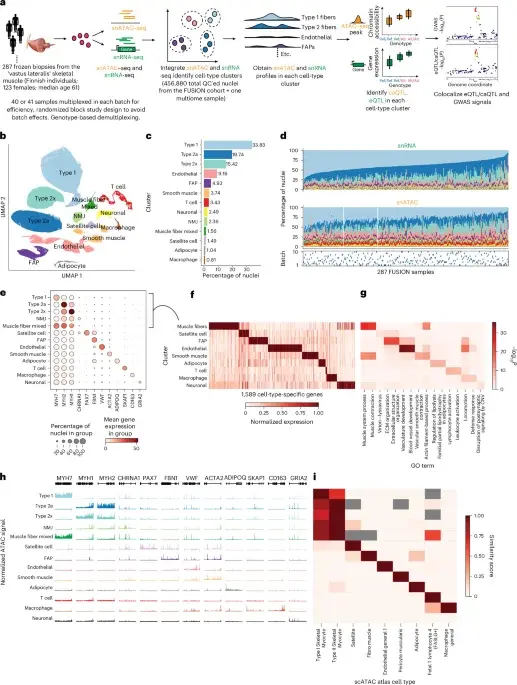
Researchers have created the largest single-nucleus map of human skeletal muscle, identifying 13 distinct cell types and linking thousands of genetic variants to specific regulatory mechanisms. This study reveals how genetic differences influence gene expression and chromatin accessibility in muscle, providing new insights into metabolic diseases like type 2 diabetes.
Key points
- Analysis of 287 frozen human muscle biopsies identified 13 distinct cell types using single-nucleus RNA and chromatin accessibility sequencing.
- The study discovered over 7,000 expression quantitative trait loci and more than 100,000 chromatin accessibility quantitative trait loci across these cell types.
- Nearly 3,500 genome-wide association study signals for 38 metabolic traits were linked to these genetic regulatory elements, often in a cell-specific manner.
- Findings suggest that chromatin accessibility variants, rather than direct gene expression changes, are more frequently associated with disease risk in muscle tissue.
- The research provides a detailed map of genetic regulation in muscle, which is critical for understanding polygenic metabolic traits and diseases.
Background
This study builds on recent advances in single-cell genomics, such as the 2026 brain atlas that mapped genetic risk across cell types. It also complements earlier findings on muscle insulin resistance, such as the identification of Miro1 as a driver of type 2 diabetes, by providing a broader genetic context for metabolic dysfunction in skeletal muscle.
Why it matters
Understanding the cell-specific genetic regulation of skeletal muscle is crucial for developing targeted therapies for metabolic diseases. This map helps identify causal variants and regulatory elements that may be missed by bulk tissue analyses, potentially leading to more precise interventions for conditions like type 2 diabetes and obesity.
What to watch
Researchers will likely use this map to identify new drug targets and therapeutic interventions for metabolic diseases. The data may also inform personalized medicine approaches by linking individual genetic profiles to specific muscle cell types and their regulatory mechanisms.
Want the full story? Read the original reporting
Read on Nature