
MKM: a natural antibiotic locking the bacterial ribosome at the E-site
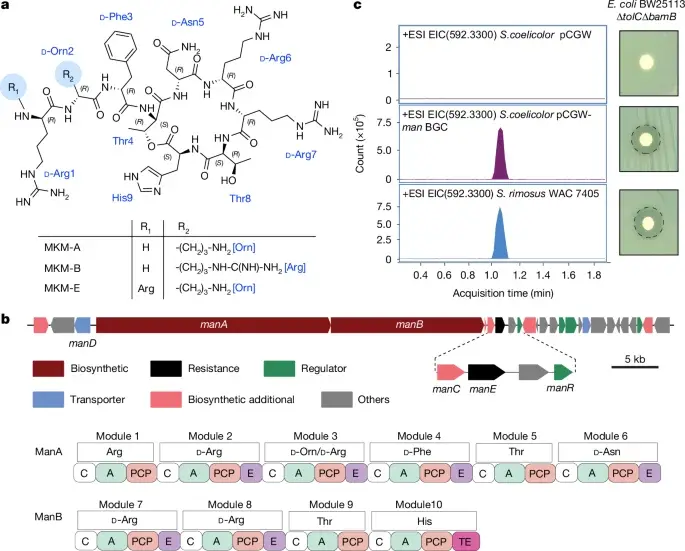
Manikomycin (MKM), a newly identified cyclic depsipeptide from Streptomyces rimosus, binds the E-site of the bacterial 50S ribosome to block translocation and halt protein synthesis. It kills multidrug‑resistant Enterobacteriaceae and mycobacteria, with resistance arising from mutations in 23S rRNA near the E-site or loss of ribosomal protein L35; the producer carries ManE, a methyltransferase that methylates Cm2395 to confer self-resistance. Cryo-EM reveals MKM in the primary E-site pocket formed by 23S rRNA and L35; biochemical and ribosome profiling data show context‑dependent translation inhibition. Activity is limited in many bacteria due to uptake, but MKM offers a new scaffold for antibiotic development, supported by in vitro, ex vivo, and pharmacokinetic data.
- A natural depsipeptide antibiotic binds the E-site of the bacterial ribosome Nature
- New synthetic antibiotics could defeat MRSA and prevent relapsing infections The Brighter Side of News
- McMaster researcher’s latest antibiotic discovery offers new way to kill drug-resistant bacteria McMaster News
- New Antibiotic, Manikomycin, Acts on Novel Ribosomal Target Genetic Engineering and Biotechnology News
- New approach helps design better antibiotics to fight drug-resistant infections News-Medical
Want the full story? Read the original reporting
Read on Nature