Tag

Antibiotic Resistance

All articles tagged with #antibiotic resistance

Tuberculosis Stages a Modern Comeback in the U.S., Raising Drug-Resistance Fears
health17 days ago

Tuberculosis Stages a Modern Comeback in the U.S., Raising Drug-Resistance Fears

TB is resurging in the United States, with provisional 2025 data showing 10,260 cases nationwide (967 in New York). The disease often exists as latent infections (up to 13 million nationwide) that can activate, fueling spread and antibiotic resistance (589 cases resistant to at least one frontline drug in 2023). Active and latent TB require long antibiotic regimens (6–9 months), and early detection plus vaccination considerations are key to prevention. Globally TB remains one of the deadliest infectious diseases, underscoring the ongoing public-health challenge in America and beyond.

New TB Antibiotics Target Bacteria’s Protein Recycling, Offering Hope Against Drug-Resistant TB
science17 days ago

New TB Antibiotics Target Bacteria’s Protein Recycling, Offering Hope Against Drug-Resistant TB

Researchers analyzed three experimental anti-TB compounds—ecumicin, ilamycins, and cyclomarins—and found they all disrupt the M. tuberculosis protein-recycling machine ClpC1-ClpP1P2, each in a different way, causing widespread disturbances across thousands of bacterial proteins and triggering stress responses (ecumicin notably raises Hsp20). This mechanistic mapping provides a clearer path to designing more precise anti-TB drugs as drug-resistant TB remains a major global threat; the work was published in Nature Communications.

Light-Activated Graphene Coating Promises On-Demand Germ-Killing Shield
technology23 days ago

Light-Activated Graphene Coating Promises On-Demand Germ-Killing Shield

Swiss researchers developed ultra-thin graphene-oxide coatings that, when illuminated with near-infrared light, heat to about 44°C and generate reactive oxygen species to kill bacteria. In lab tests, the coating nearly eliminated a drug-resistant strain and reduced another by over 90%, and it can be activated through tissue, offering a potential implant coating solution, though clinical use is years away.

New York Faces a Rising Superbug Challenge Fueled by Antibiotic Misuse
health23 days ago

New York Faces a Rising Superbug Challenge Fueled by Antibiotic Misuse

New York is confronting a surge in the drug‑resistant fungus Candida auris and other 'nightmare bacteria'; infections are rising, largely driven by improper antibiotic use, while experts urge better antibiotic stewardship, the development of new drugs, and the PASTEUR Act to stabilize the market and spur research. Statewide last year recorded 623 clinical and 849 surveillance Candida auris cases, with the NYC metro area accounting for about 20% of US cases.

Honey: potent wound ally but not a universal cure
health25 days ago

Honey: potent wound ally but not a universal cure

Honey has antimicrobial components and may aid wound healing, but it is not an antibiotic and its effects vary by source; medical-grade honey is used topically for wounds due to sterilization requirements, while raw honey can carry botulism spores and should not be given to infants under 12 months. Evidence for cough relief and gut health is limited and inconclusive, and standardizing non-Manuka honeys for clinical use remains challenging.

3D Blueprint of E. coli–Targeting Virus Bas63 Boosts Phage Therapy Prospects
science1 month ago

3D Blueprint of E. coli–Targeting Virus Bas63 Boosts Phage Therapy Prospects

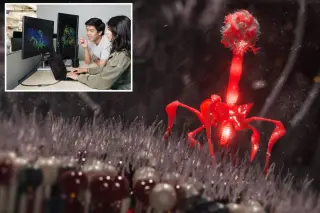
Scientists released a high-resolution cryo-EM map of Bas63, a bacteriophage that infects E. coli, revealing how its tail and distinctive surface proteins enable infection and offering a framework to select and optimize phages for treating drug-resistant bacteria; the study also highlights deep evolutionary links between bacteriophages and herpesviruses and builds on prior viral-structure work by the same team.

Typhoid’s Drug-Resistant Wake-Up Call Goes Global
health1 month ago

Typhoid’s Drug-Resistant Wake-Up Call Goes Global

The typhoid fever bacterium is rapidly gaining extensive drug resistance and spreading internationally, threatening all oral antibiotics as resistance reaches both frontline drugs and newer treatments like azithromycin. A 2014–2019 genome study of 3,489 S. Typhi samples from South Asia and beyond shows accelerating spread of extensively drug-resistant Typhi, prompting calls for expanded vaccination and new antibiotic research to avert a global typhoid crisis.

Ancient ice-borne bacteria resist modern antibiotics
science1 month ago

Ancient ice-borne bacteria resist modern antibiotics

Researchers thawed a 5,000-year-old bacterium from Romania’s Scarisoara cave and found it resistant to 10 of 28 antibiotics, showing that antibiotic resistance evolved naturally in the environment long before humans. The microbe also carries genes that may help kill other microbes, offering potential avenues for new drugs, though warming glaciers could release unknown ancient microbes.

Microgravity uncovers space phages that could curb antibiotic resistance
science1 month ago

Microgravity uncovers space phages that could curb antibiotic resistance

A study comparing phage-bacteria dynamics on the ISS and on Earth shows that the T7 phage infecting E. coli slows in microgravity but can still replicate after a long interval. Space conditions drive distinct mutation patterns in both phage and host, and researchers used microgravity-informed mutations to engineer phage variants that outperform Earth-informed ones against drug-resistant uropathogenic E. coli. The findings suggest extreme environments can reveal new design principles for phage therapy to combat antibiotic resistance and are reported in PLOS Biology.

science1 month ago

Ancient Romanian Ice Cave Bacterium Carries 100+ Resistance Genes, Defies 10 Antibiotics

A Frontiers in Microbiology study details Psychrobacter SC65A.3 isolated from a 5,000-year-old ice core in Romania’s Scărișoara Ice Cave. Genomic analysis reveals over 100 antibiotic-resistance genes (and ~600 genes of unknown function) and resistance to ten modern antibiotics, including ciprofloxacin. While thawing ice due to climate change could release resistance genes into contemporary bacteria, the enzymes and compounds from this ancient microbe also offer potential biotechnological applications; the finding underscores the need for monitoring ancient genomes as glaciers and caves thaw and consider implications for antimicrobial resistance.

Ancient Romanian Ice Bacteria Could Help Fight Superbugs—With Caution
science1 month ago

Ancient Romanian Ice Bacteria Could Help Fight Superbugs—With Caution

Researchers studying a 5,000-year-old Psychrobacter strain from Romania’s Scărișoara Ice Cave found it resistant to multiple modern antibiotics yet capable of inhibiting several antibiotic‑resistant pathogens, suggesting ancient microbes could inspire new antibiotics but also carry a risk of spreading resistance genes if melted; calls for more research into cold-environment microbes and their biotechnological potential.

Spaceflight Drives Bacteria-Phage Evolution, Boosting Attack on Drug-Resistant Infections
science2 months ago

Spaceflight Drives Bacteria-Phage Evolution, Boosting Attack on Drug-Resistant Infections

ISS experiments with Escherichia coli and T7 phage (plus Earth controls) over ~25 days show spaceflight–driven mutations in bacterial stress responses and surface proteins, prompting phage adaptations that continue to kill bacteria. Some space-specific phage mutations were especially effective against antibiotic‑resistant, UTI-causing strains, offering insights to engineer potent phages on Earth; findings published in PLOS Biology.

Four advances aim to outpace antibiotic resistance and reboot modern medicine
science-tech2 months ago

Four advances aim to outpace antibiotic resistance and reboot modern medicine

Antibiotic resistance threatens a century of medical progress, but four broad advances are reshaping the landscape: faster, on-site diagnostics; expansion beyond traditional antibiotics through nontraditional therapies (including bacteriophages and microbiome-based approaches and CRISPR antimicrobials); recognizing resistance spreads across ecosystems with One Health approaches; and policy reforms to incentivize antibiotic development, aiming to diagnose earlier, widen treatment options, and safeguard medicines for the future.