
New Studies Suggest Spatial Navigation Relies on Brain-Wide Networks, Not Just the Hippocampus
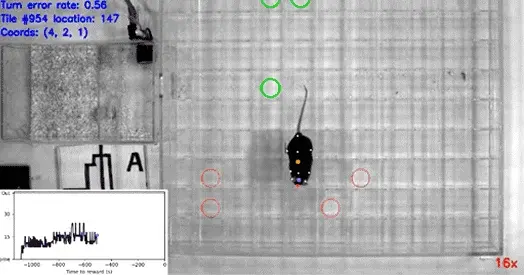
Two preprints posted on bioRxiv in September challenge the traditional view that the hippocampus and cortex are the primary centers for spatial learning. One study found that mice born without a hippocampus and most of the neocortex could still learn and remember complex maze routes, though with initial delays. A separate study recorded over 20,000 neurons in typical mice, finding spatial information encoded across the visual, motor, and somatosensory cortices, as well as the hippocampus. While the hippocampus-free mice eventually matched control performance, experts note that developing without these structures may have allowed other brain areas to compensate. The findings suggest that spatial navigation is a brain-wide function rather than a specialized task of a single region.
Key points
- Mice lacking a hippocampus and most of the neocortex learned a complex maze, initially slower but eventually matching control mice in retention and generalization.
- A separate study found that neurons in the visual, motor, and somatosensory cortices, along with the hippocampus, carried spatial information in typical mice.
- The hippocampal formation encoded position less precisely than the visual cortex in the one-dimensional corridor test, though it covered the space more uniformly.
- Researchers propose that subcortical circuits, such as the superior colliculus or basal ganglia, may handle spatial navigation in the absence of a hippocampus.
- Experts caution that the acortical mice may have developed compensatory mechanisms during development, and that the hippocampus might still be the primary broadcaster of spatial data in typical brains.
Background
Recent research has highlighted the hippocampus's role in various cognitive functions, including memory shifts during aging and neurochemical changes from overtraining. For instance, a 2026 study linked chronic overtraining to dopamine imbalances in the mouse hippocampus, while another suggested aging brains shift from hippocampal detail storage to frontal cortex pattern recognition. Additionally, prenatal therapy has been associated with smaller infant hippocampal volumes, and the enzyme PLA2G2F was identified as a driver of cognitive resilience in aging. These studies underscore the hippocampus's importance, making the new findings that spatial navigation can occur without it particularly significant.
Why it matters
These findings could reshape our understanding of brain plasticity and the distribution of cognitive functions. If spatial navigation is not confined to the hippocampus and cortex, it may explain how some individuals retain navigational abilities despite damage to these areas. It also opens new avenues for research into how different brain regions collaborate or compensate for one another, potentially informing treatments for neurological disorders that affect memory and spatial awareness.
What to watch
Researchers plan to transiently silence the hippocampus in typical mice to determine if other brain regions can independently handle spatial memory or if they merely receive input from the hippocampus. Further studies will also test acortical mice on tasks that critically rely on the hippocampus, such as contextual fear conditioning, to assess the limits of subcortical compensation.
Want the full story? Read the original reporting
Read on The Transmitter