
Red Sea Octopuses Punch Fish Partners to Enforce Hunting Discipline
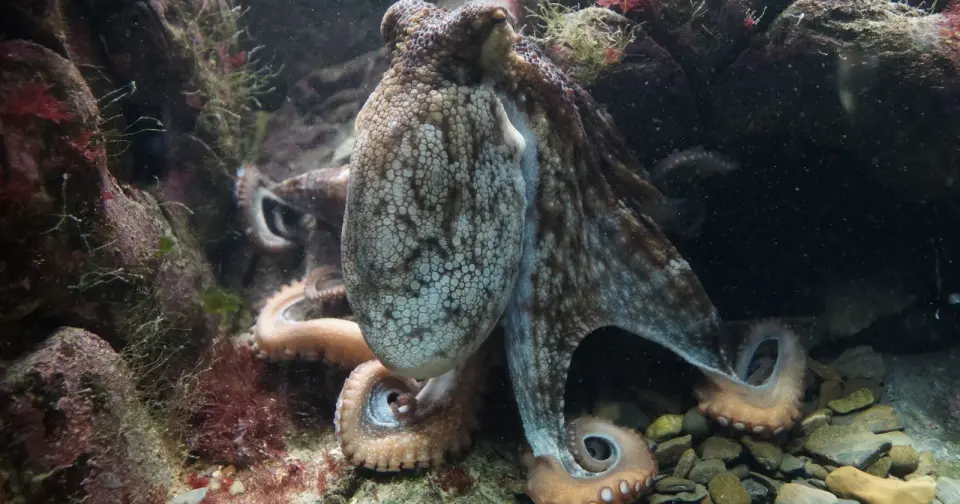
New footage from the Red Sea and Great Barrier Reef reveals that day octopuses actively punish fish partners during collaborative hunts. Researchers led by Eduardo Sampaio documented instances where octopuses strike loitering fish, such as groupers, to enforce group movement. While some strikes clear rivals from food, others appear to serve no immediate caloric purpose, suggesting complex social control mechanisms in cephalopods.
Key points
- Eduardo Sampaio’s 2021 study in Ecology identified eight incidents of octopuses punching fish partners during hunts in Eilat, Israel, and El Quseir, Egypt.
- A 2024 follow-up in Nature Ecology & Evolution analyzed over 100 hours of footage, confirming that octopuses act as central decision-makers who inhibit group movement until the right moment to strike.
- Fish like blacktip groupers, which tend to wait for prey to be flushed out rather than actively scouting, are disproportionately targeted by these strikes.
- Some punches occur without any apparent food reward for the octopus, leading researchers to debate whether the behavior is functional punishment, low-effort control, or spite.
- Octopus cognition researcher Jennifer Mather disputes the 'partner' model, arguing the fish are merely followers exploiting the octopus’s disturbance, making the punch a solitary predator clearing an opportunist.
Background
This behavior aligns with recent findings that octopus brain complexity is driven by ecological challenges rather than social interactions, as noted in July 2026 archive coverage. The ability to manage mixed-species groups suggests a level of cognitive sophistication previously underestimated in asocial cephalopods.
Why it matters
Understanding how octopuses enforce cooperation in mixed-species groups challenges traditional views of cephalopod social behavior. It suggests that even solitary predators can develop complex behavioral strategies to manage external agents, offering new insights into the evolution of intelligence and social control in marine ecosystems.
What to watch
Researchers aim to gather larger datasets to resolve whether the no-reward strikes are driven by spite or other motivations. Further studies will likely focus on distinguishing between genuine partnership and opportunistic following in these interspecific hunting groups.
Want the full story? Read the original reporting
Read on Space Daily