
Phage T7 kinase triggers genome-wide phosphorylation to disable bacterial defenses
TL;DR
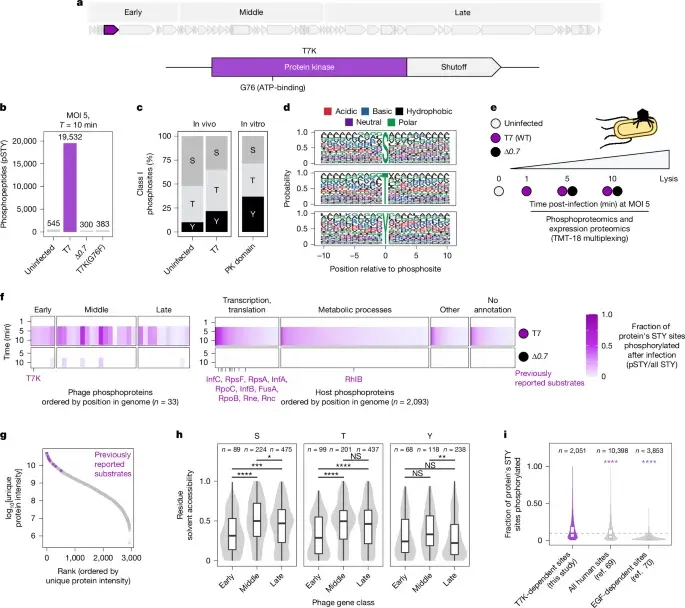
New work reveals bacteriophage T7 encodes a hyperpromiscuous dual‑specificity kinase (T7K) that rapidly phosphorylates most host and phage proteins with high stoichiometry and no motif preference, biased toward nucleic‑acid–binding substrates via a DNA‑binding C‑terminal domain. This widespread phosphorylation disables DNA‑targeting bacterial defence systems, notably Retron‑Eco9 and DarTG1, and is effective across diverse E. coli isolates, suggesting a general phage‑encoded anti‑defence mechanism. The activity hinges on a divergent motif enabling hyperactivity, with T7K homologues found across Autographiviridae, highlighting an underappreciated layer of phage–bacteria arms races.
- Pervasive phosphorylation by phage T7 kinase disarms bacterial defences Nature
- Mutation hotspots help 'friendly' viruses outmaneuver the bacteria in your gut EurekAlert!
- Gut viruses evolving tricks could help fight superbugs Euronews.com
- Viral Enzyme Disables Bacterial Defenses for Phages Mirage News
- Phage contingency loci let viruses hedge against bacterial defenses bioengineer.org
Want the full story? Read the original reporting
Read on Nature