Tag

Pancreatic Cancer

All articles tagged with #pancreatic cancer

Roger Rollett’s delayed diagnosis highlights the urgent need for better pancreatic cancer detection
health2 days ago

Roger Rollett’s delayed diagnosis highlights the urgent need for better pancreatic cancer detection

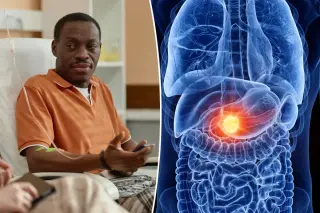
Roger Rollett, 59, was diagnosed with advanced pancreatic cancer in July after ignoring vague symptoms like fatigue and indigestion until jaundice appeared. While the UK faces a grim prognosis with 80% of cases diagnosed too late for surgery, new treatments like daraxonrasib offer hope. A recent trial showed a 76.6% one-year survival rate for patients on this drug, compared to 40-45% for chemotherapy alone. Meanwhile, the UK is trialing blood and breath tests to improve early detection.


Arcus Halts Phase 3 Trial of CD73 Inhibitor After Survival Data Misses Target
biotech3 days ago

Arcus Halts Phase 3 Trial of CD73 Inhibitor After Survival Data Misses Target

Arcus Biosciences has discontinued its phase 3 PRISM-1 trial for the CD73 inhibitor quemliclustat after an interim analysis showed no improvement in overall survival for metastatic pancreatic cancer patients. The study, which involved approximately 650 participants, failed to meet its primary endpoint, with secondary metrics also showing no significant benefit over chemotherapy alone. While the company noted that patients achieved the longest survival times recorded in a first-line global study, the lack of incremental efficacy led to the decision to stop the trial. This setback follows previous failures in the CD73 inhibitor space and impacts Arcus’s pipeline, which now relies heavily on its HIF-2α inhibitor casdatifan.

Widow Eats Husband’s Ashes to Process Grief
personal-essay5 days ago

Widow Eats Husband’s Ashes to Process Grief

Carolyn Hamilton, a writer and widow, publicly shares her decision to consume her late husband Jeff Hamilton’s ashes as a method of processing profound grief. Jeff, a former speed skier, died of pancreatic cancer in 2024 after a 13-month battle. Hamilton describes the act as a ritual to close the physical and emotional distance between them, stating that the taste of his remains brought her a sense of peace and connection. This account is derived from her memoir, 'The Hum of Love,' and highlights her ongoing efforts to integrate his memory into her daily life through writing and ritual.

Daraxonrasib trial shows near-doubling of survival in advanced pancreatic cancer
health6 days ago

Daraxonrasib trial shows near-doubling of survival in advanced pancreatic cancer

A phase 1/2 trial presented in Barcelona shows that combining the oral drug daraxonrasib with standard chemotherapy significantly improved outcomes for patients with metastatic pancreatic cancer. The regimen halted tumor growth in over 90% of participants and doubled the median time before disease progression compared to historical chemotherapy benchmarks. While early results are promising, researchers emphasize that larger randomized trials are needed to confirm long-term survival benefits.

Daraxonrasib Trial Shows 8% of Advanced Pancreatic Cancer Patients Achieve Undetectable Tumours
health7 days ago

Daraxonrasib Trial Shows 8% of Advanced Pancreatic Cancer Patients Achieve Undetectable Tumours

A new trial of the KRAS inhibitor daraxonrasib, combined with chemotherapy, has shown that 8% of patients with advanced pancreatic cancer achieved undetectable tumours, with 90% seeing halted growth. While hailed as a major breakthrough, experts caution it is not a cure and requires longer studies to confirm durability.

UC Study Finds Distinct Tumor Cell and Immune Profiles in Black Pancreatic Cancer Patients
health8 days ago

UC Study Finds Distinct Tumor Cell and Immune Profiles in Black Pancreatic Cancer Patients

A University of Cincinnati study published in Cancer Research reveals that pancreatic tumors from Black patients exhibit distinct cellular and immune characteristics compared to those from non-African American patients. Analyzing 22 tumors, researchers found that tumors from Black patients contained fewer common cancer cells and more mixed-cell types, along with higher levels of B cells and larger immune cell clusters. While these differences may explain why the disease is 20% more prevalent in Black Americans, the study does not yet confirm if these traits affect treatment outcomes or survival. Experts emphasize that these biological variations highlight the need for diverse clinical trials and personalized medicine, though current findings are preliminary and do not yet change standard care.

Study reveals distinct immune and cellular traits in pancreatic tumors across racial groups
health9 days ago

Study reveals distinct immune and cellular traits in pancreatic tumors across racial groups

A University of Cincinnati study published in Cancer Research found that pancreatic tumors from Black patients exhibit different cellular compositions and immune responses compared to those from non-African American patients. The research, which analyzed 22 tumors, suggests these biological differences may contribute to health disparities and could inform future personalized treatments, though the clinical significance remains unproven.

Three Preclinical Studies Identify IL-18, SLC6A14, and ANO6 as Targets to Restore Immune Function in Pancreatic Cancer
health9 days ago

Three Preclinical Studies Identify IL-18, SLC6A14, and ANO6 as Targets to Restore Immune Function in Pancreatic Cancer

Three independent preclinical studies reveal distinct mechanisms by which pancreatic cancer suppresses immune responses. MD Anderson researchers found that the protein IL-18 helps tumors evade macrophages and undermines KRAS inhibitors. A separate study identified the transporter SLC6A14 as a mechanism for starving immune cells of nutrients. Fox Chase researchers discovered that the protein ANO6 facilitates lipid transfer that exhausts T-cells. All findings suggest combination therapies could improve outcomes, though human trials are years away.

New KRAS Vaccine Trial Shows Strong Immune Response but Raises G12D Paradox
health-and-science18 days ago

New KRAS Vaccine Trial Shows Strong Immune Response but Raises G12D Paradox

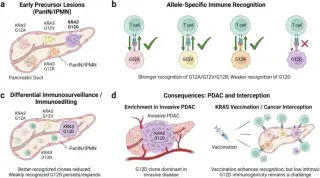
A first-in-human study demonstrates that a pooled mutant KRAS peptide vaccine can induce durable T-cell responses in high-risk individuals, potentially intercepting pancreatic cancer before it becomes invasive. While 18 of 20 participants showed strong immune activation, the vaccine elicited a weaker response against the G12D mutation, which is the most prevalent form in pancreatic ductal adenocarcinoma. This 'immunogenicity paradox' suggests that poor immune recognition of G12D may contribute to its evolutionary success in tumors. Although the trial proves the concept of pre-cancer vaccination, it was not powered to confirm cancer prevention, and broader phase 2 trials for similar vaccines have yet to show statistically significant survival benefits.

Gastroenterologist Highlights Indigestion as Key Early Warning for Pancreatic Cancer
health18 days ago

Gastroenterologist Highlights Indigestion as Key Early Warning for Pancreatic Cancer

A gastroenterologist warns that persistent indigestion after meals may signal early pancreatic cancer, a disease with a 13% five-year survival rate. While the pancreas’s deep location makes early detection difficult, experts emphasize that new or persistent digestive changes, combined with symptoms like weight loss or jaundice, warrant immediate medical evaluation. Although no routine screening exists for the general population, risk factors such as smoking, family history, and new-onset diabetes increase the likelihood of developing the disease. Advocacy groups are pushing for increased research funding to improve early detection methods and treatment outcomes.

Half of High-Risk Pancreatic Surveillance Patients Show Imaging Abnormalities, Most Benign
health-and-medicine20 days ago

Half of High-Risk Pancreatic Surveillance Patients Show Imaging Abnormalities, Most Benign

A large international study finds that over half of individuals with high-risk genetic variants undergo pancreatic surveillance and show imaging abnormalities, yet the majority are benign and stable. While 54% of participants had findings, only 9% were concerning, and the incidence of new pancreatic cancer was low. The data offers crucial baseline information for counseling high-risk patients on expected imaging outcomes.